

NASA Opens Astronaut Applications as Extreme Selection Winnows Thousands to a Handful
With applications due by Dec. 3, NASA seeks its next astronaut class from a pool requiring advanced STEM degrees and years of experience, following a cycle that accepted only 10 candidates.
By The Global Wire Newsroom · Reported from TOI Science Desk
Link preview · horizonglobalnews.com
NASA Opens Astronaut Applications as Extreme Selection Winnows Thousands to a Handful
With applications due by Dec. 3, NASA seeks its next astronaut class from a pool requiring advanced STEM degrees and years of experience, following a cycle that accepted only 10 candidates.
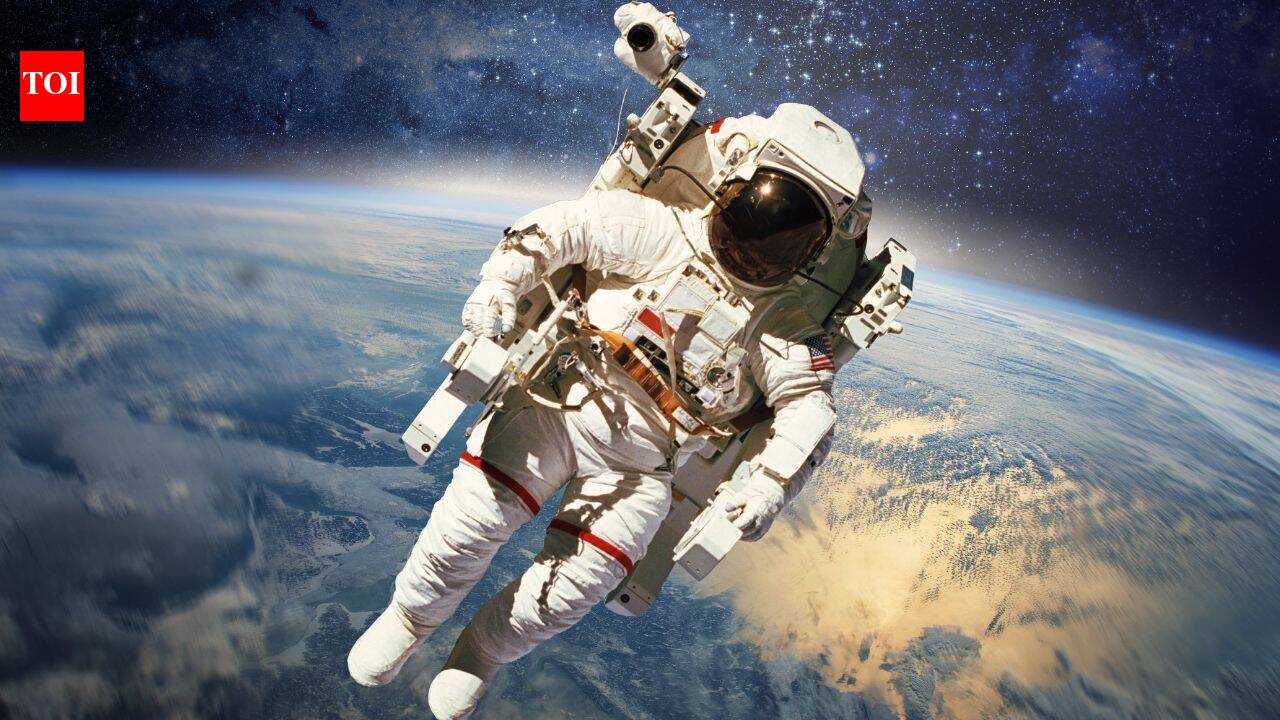
The National Aeronautics and Space Administration is currently accepting applications for its next class of astronaut candidates, launching an intense, multi-stage vetting process that will conclude with only a tiny fraction of applicants reporting for duty. The federal application window, which remains open through Dec. 3, seeks qualified professionals to support an expanding portfolio of human spaceflight missions spanning low-Earth orbit, lunar exploration under the Artemis program, and long-range planning for deep space operations. The recruitment push follows a previous selection cycle in which more than 8,000 hopefuls submitted dossiers, from which the agency ultimately selected just 10 individuals. Prospective applicants must meet rigorous baseline requirements, principally holding an accredited master’s degree in a science, technology, engineering, or mathematics field combined with at least three years of progressively responsible professional experience.
Key facts
What happened
NASA opened its federal application portal to recruit the next cadre of civilian and military astronaut candidates, initiating an evaluation protocol that runs through the federal government's employment database. The intake window runs until Dec. 3, marking the official deadline for United States citizens to assemble and submit extensive documentation, including official transcripts, detailed employment histories, security clearance questionnaires, and references.
Securing a slot in the corps remains one of the most statistically challenging hiring competitions in the public sector. During the last intake, the agency received more than 8,000 complete submissions. Following an exhaustive series of background checks, reference reviews, medical board screenings, and panel interviews conducted at the Lyndon B. Johnson Space Center in Houston, Texas, the agency appointed just 10 candidates to the Astronaut Candidate Class.
To pass initial automated and administrative filters, applicants must satisfy strict educational baselines established by the agency. Candidates must hold a master's degree in a STEM discipline, including engineering, biological science, physical science, computer science, or mathematics. Alternatively, applicants can qualify with two years of doctoral study in an eligible STEM field, a completed Doctor of Medicine or Doctor of Osteopathic Medicine degree, or graduation from a recognized, nationally or internationally accredited test pilot school program. Beyond academics, applicants must present at least three years of related, professional-level experience gained after acquiring their qualifying degree, or log at least 1,000 hours of pilot-in-command flight time, with at least 850 of those hours completed in high-performance jet aircraft. Applicants must also be capable of passing the demanding NASA long-duration flight physical, which evaluates cardiovascular endurance, visual acuity, blood pressure standards, and psychological resilience.
Why it matters
The composition and capabilities of the astronaut corps directly shape the operational success of major national space initiatives over the coming three decades. As the International Space Station approaches its planned retirement toward the end of the decade, NASA is simultaneously managing complex orbital operations, supporting the maturation of commercial low-Earth orbit space stations, and executing the Artemis campaign to return humans to the lunar surface. The candidates chosen from this applicant pool will not simply maintain a presence in orbit; they will serve as mission commanders, lunar lander pilots, and orbital laboratory researchers for missions targeting the lunar South Pole and establishing baseline systems for eventual crewed voyages to Mars.
Selecting a class from thousands of candidates requires balancing technical specialization with operational temperament. Modern long-duration spaceflight demands cross-disciplinary versatility. An astronaut must function as an orbital mechanic, an experimental biologist, a robotics operator, and a field medic, often under severe physical confinement and psychological stress. The high educational barrier—requiring a STEM master's degree rather than a traditional bachelor's degree—ensures that incoming personnel can quickly absorb cutting-edge research protocols and interface with advanced avionics systems built by diverse commercial aerospace vendors. Furthermore, with the growth of international partnerships under the Artemis Accords, selected astronauts will increasingly operate alongside international partners from agencies such as ESA, JAXA, and CSA, making cross-cultural communication and collaborative operational skills vital strategic assets for the agency.
The background
NASA’s qualification criteria and candidate profiles have undergone significant structural changes since the agency selected the original "Mercury Seven" military test pilots in 1959. During the Gemini and Apollo eras, the agency prioritized high-performance jet flight testing and combat aviation backgrounds to manage unproven, highly volatile spacecraft systems. However, starting with the selection of the fourth astronaut group in 1965—the "Scientists"—NASA began integrating geologists, physicians, and physicists into its ranks to maximize the scientific return of lunar and orbital missions.
With the debut of the Space Shuttle program in the late 1970s, NASA institutionalized two primary career tracks: pilot astronauts, who managed vehicle handling and trajectory operations, and mission specialists, who conducted spacewalks, operated the robotic arm, and oversaw orbital experiments. Following the retirement of the Space Shuttle fleet in 2011 and the expansion of continuous expeditions aboard the International Space Station, the distinction between pilots and mission specialists blurred, prompting the agency to seek candidates who possessed combined operational and scientific proficiencies.
In recent selection rounds, applicant numbers have fluctuated at historic highs. The 2017 astronaut class set an agency record when more than 18,300 people applied for what became a 12-member cohort. The following recruitment round attracted over 12,000 applicants, and the most recent campaign drew more than 8,000 individuals, producing the 10-member group that completed basic training. In 2020, NASA officially raised its minimum educational requirement from a bachelor's degree to a master's degree in a STEM field, reflecting the increasing technical complexity of modern space architecture, autonomous docking systems, and planetary surface science.
Reaction
The announcement of the Dec. 3 application deadline has generated active interest across aerospace research institutions, university engineering departments, military aviation wings, and civilian science organizations nationwide. University career offices and professional STEM societies routinely hold informational seminars to counsel qualified alumni on navigating the intricate federal application process via USAJOBS.
While agency leadership and senior flight operations officials have not issued political commentary regarding the ongoing cycle, the Director of Flight Crew Operations and the Astronaut Selection Board at Johnson Space Center are expected to present the final cohort directly to the NASA Administrator upon conclusion of the vetting sequence. Flight directors and existing corps members consistently highlight that humility, team cohesion, operational reliability, and field adaptability weigh just as heavily in interview evaluations as academic publication records or high-performance flight logs.
What we don't know yet
Several key logistical and operational specifics surrounding the ongoing selection cycle remain unannounced. NASA has not disclosed the precise target size for the incoming astronaut class, as final cohort numbers depend on projected flight manifests, attrition rates among active astronauts, and federal budget allocations for human spaceflight operations over the next five to seven fiscal years.
Additionally, the exact timeline for the interview phases remains unconfirmed. While initial paper screenings occur shortly after the Dec. 3 close, the scheduling of the initial 120-person interview pool and the subsequent down-select to roughly 50 finalists for week-long medical and psychological evaluations in Houston has not been published. It is also unknown how the agency will balance appointments between active-duty military personnel detailed to NASA and purely civilian researchers, an internal proportion that varies with every selection cycle.
What to watch
The immediate milestone to monitor is the formal closing of the federal job listing at 11:59 p.m. Eastern Time on Dec. 3, after which NASA's Human Resources team and the Astronaut Selection Board will begin categorizing applications to verify basic STEM degrees, professional experience, and citizenship eligibility.
Over the subsequent eight to twelve months, observers should watch for the invitation of preliminary finalists to Johnson Space Center for first-round interviews and baseline physical testing. A second round of intensive medical evaluations, psychological screenings, team-oriented exercises, and high-pressure situational tests will follow for the top tier of candidates. The process will culminate when the NASA Administrator holds a public ceremony in Houston to introduce the newest class of astronaut candidates, who will then commence a demanding two-year basic training syllabus covering spacewalk training in the Neutral Buoyancy Laboratory, T-38 jet flight operations, Russian language proficiency, robotics, and survival skills.
This account draws upon reporting published by TOI Science Desk regarding the application requirements, deadline, and historical candidate selection statistics for NASA's astronaut corps.
How this story was produced
This report was written by The Global Wire newsroom from reporting first published by TOI Science Desk. We verify the core facts against the original report, write our own account, and add the background and consequences a short wire item leaves out. Drafting is AI-assisted inside an editor-supervised pipeline, and every story is checked for accuracy of attribution, structure and duplication before it appears — full detail in our AI and funding disclosure.
Spotted an error? Tell us at corrections@horizonglobalnews.com and read our corrections policy or editorial standards.





Reader comments
Loading comments…