

Mobile Accessories at IFA 2026 Feature Liquid Cooling and Semi-Solid-State Tech
Hardware makers demonstrated advanced thermal controls and novel battery chemistries at the annual Berlin electronics show.
By The Global Wire Newsroom · Reported from Harry Padoan
Link preview · horizonglobalnews.com
Mobile Accessories at IFA 2026 Feature Liquid Cooling and Semi-Solid-State Tech
Hardware makers demonstrated advanced thermal controls and novel battery chemistries at the annual Berlin electronics show.
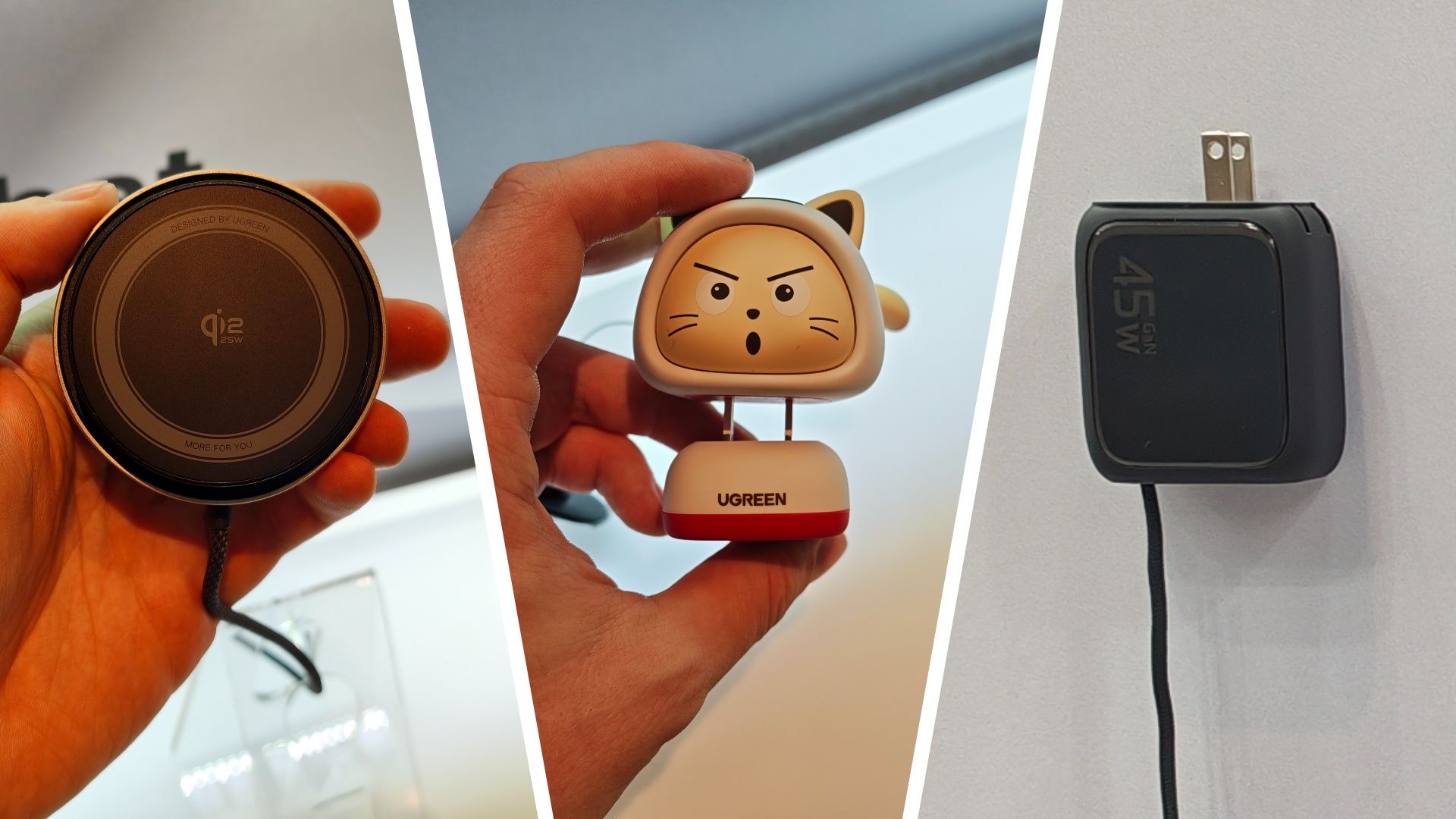
At the IFA consumer electronics exhibition in Berlin, major mobile accessory manufacturers showcased next-generation power systems featuring liquid-cooling mechanisms and semi-solid-state battery chemistry. According to reporting by Harry Padoan published on September 7, 2026, accessory developers including UGreen, Belkin, and ESR presented hardware prototypes and upcoming commercial products designed to address heat dissipation and energy density limits in mobile charging. The showcase highlighted an industry effort to incorporate active thermal management and safer battery architectures into mainstream consumer charging hardware.
Key facts
What happened
During the annual IFA technology conference in Berlin, several leading peripheral and accessory brands introduced charging accessories built around active cooling and advanced battery cells, according to reporting by Harry Padoan. The engineering implementations target long-standing trade-offs in mobile charging: thermal throttling caused by high wattage and the physical bulk of standard battery packs.
Among the companies displaying updated designs were UGreen, Belkin, and ESR. Padoan reported seeing power banks and charging stations incorporating internal liquid-cooling circuits alongside portable power packs built with semi-solid-state cell architecture. While fast-charging protocols typically push electrical current through power adapters and receiving coils at high rates—generating significant ambient heat—integrated liquid cooling loops use fluid circulation to transfer heat away from sensitive charging circuits. Concurrently, semi-solid-state battery cells replace standard liquid electrolyte solutions with gel or polymer matrices, allowing manufacturers to increase cell energy density while reducing physical chassis volume.
The demonstrations took place during the early September consumer electronics showcase in Germany, an event where hardware vendors traditionally unveil accessories slated for release in upcoming retail cycles. Padoan observed that while major trade show coverage often focuses on flagship mobile phones and smart home ecosystems, the power delivery solutions displayed by accessory specialists represented some of the show's most practical hardware iterations.
Why it matters
The integration of liquid-cooling pathways and semi-solid-state battery cells into consumer power accessories addresses significant performance bottlenecks created by modern fast-charging standards. Over recent years, smartphone makers have increased device charging limits from standard 5-watt or 12-watt power transfers to rates exceeding 45 watts, 65 watts, and higher. However, electrical resistance during high-wattage energy transfer generates heat. When internal temperatures cross safety thresholds, device software automatically throttles charging speeds to prevent damage to lithium-ion cells and internal microprocessors.
By introducing closed-loop or active liquid cooling directly into wireless charging pads and desktop docks, hardware makers can maintain peak power delivery rates for longer periods without triggering thermal throttling. This is particularly relevant for wireless induction charging under standards like Qi and Qi2, where electromagnetic induction inherently creates thermal dissipation between transmitter and receiver coils.
For portable power banks, the transition toward semi-solid-state battery architecture provides both functional and safety advantages. Standard lithium-ion and lithium-polymer batteries rely on liquid electrolytes that are susceptible to thermal runaway, swelling, or combustion if damaged or overheated. Semi-solid-state batteries replace a significant portion of this liquid with solid or gel polymer electrolytes. Industry engineering data indicates that semi-solid-state cells offer higher energy density per unit of volume while significantly lowering flammability risks. For end users, this allows the creation of lighter, smaller portable chargers with higher milliampere-hour (mAh) capacities that comply more easily with international travel and aviation safety rules.
From an industry standpoint, accessory brands like Belkin, UGreen, and ESR are seeking product differentiation in a mature market. As standard silicon power bricks become commoditized, offering advanced thermal management and higher-density battery chemistry allows manufacturers to target high-end power users, mobile gamers, and commercial travelers requiring sustained rapid charging.
The background
To understand the significance of the hardware displayed at IFA 2026, it is helpful to look at the history of mobile power standards and trade show developments. Held annually in Berlin, Germany, at the Messe Berlin exhibition grounds, IFA (Internationale Funkausstellung) is one of the world's oldest industrial technology fairs, tracing its origins back to 1924. While historically focused on radio receivers and consumer appliances, the event has grown into a major international venue for mobile accessories, computer peripherals, and consumer hardware.
Over the past decade, mobile peripheral engineering has undergone several key transitions. The industry moved away from proprietary charger connectors toward universal standards such as USB Type-C and the USB Power Delivery (USB-PD) specification, including Programmable Power Supply (PPS) protocols. On the component level, the introduction of Gallium Nitride (GaN) semiconductors in the late 2010s allowed manufacturers to replace traditional silicon switches. GaN components conduct higher voltages and switch faster with less heat energy lost, enabling much smaller wall adapters than was previously possible.
Despite the efficiency gains offered by GaN technology in wall plugs, portable battery packs and high-power wireless chargers remained limited by traditional chemistry and heat management. Conventional lithium-ion battery packs produce heat during high-speed discharge, forcing power bank controllers to limit sustained output wattage. Meanwhile, full solid-state battery technology—long viewed as the ultimate goal for electric vehicles and mobile electronics—remains expensive and difficult to manufacture at mass commercial scale.
Semi-solid-state battery chemistry emerged as an intermediate solution. By blending semi-solid matrix materials into established battery manufacturing processes, cell producers can achieve higher energy density and improved safety profiles at lower production costs than pure solid-state designs. Adapting miniature liquid-cooling architectures—originally developed for high-end gaming laptops and custom personal computers—to mobile charging stations represents the convergence of these two distinct engineering efforts.
Reaction
Detailed commercial reactions from retail distributors and technical review outlets are anticipated once manufacturers publish full technical specifications and commercial release schedules following the exhibition. Trade show floor showcases often include early prototype builds alongside consumer-ready units, making final pricing and availability the key factors for retail adoption.
Industry analysts note that consumer demand for high-performance thermal management is growing alongside resource-intensive mobile applications. On-device artificial intelligence processing, high-brightness displays, and high-frame-rate mobile gaming increase continuous battery drain and operating temperatures, creating a receptive market for active cooling chargers.
Regulatory bodies and transportation agencies, including aviation authorities that regulate lithium battery capacities for passenger flights, are also paying attention to semi-solid-state consumer devices. The potential reduction in thermal runaway risk associated with semi-solid-state chemistry could influence future safety guidelines for carrying high-capacity power banks on commercial flights.
What we don't know yet
While reporting by Harry Padoan confirms that UGreen, Belkin, and ESR presented liquid-cooled and semi-solid-state charging systems at IFA 2026, several details remain unconfirmed:
What to watch
Several key factors will determine how quickly these charging technologies move into widespread commercial use:
This news report is based on original trade show reporting published by Harry Padoan from IFA 2026 in Berlin.
How this story was produced
This report was written by The Global Wire newsroom from reporting first published by Harry Padoan. We verify the core facts against the original report, write our own account, and add the background and consequences a short wire item leaves out. Drafting is AI-assisted inside an editor-supervised pipeline, and every story is checked for accuracy of attribution, structure and duplication before it appears — full detail in our AI and funding disclosure.
Spotted an error? Tell us at corrections@horizonglobalnews.com and read our corrections policy or editorial standards.




Reader comments
Loading comments…