

Microsoft AI Head Suleyman Signals Openness to AI Rights if Systems Prove Conscious
Mustafa Suleyman says he would consider legal or ethical protections for artificial intelligence models if empirical proof demonstrates subjective awareness.
By The Global Wire Newsroom · Reported from Frank Landymore
Link preview · horizonglobalnews.com
Microsoft AI Head Suleyman Signals Openness to AI Rights if Systems Prove Conscious
Mustafa Suleyman says he would consider legal or ethical protections for artificial intelligence models if empirical proof demonstrates subjective awareness.
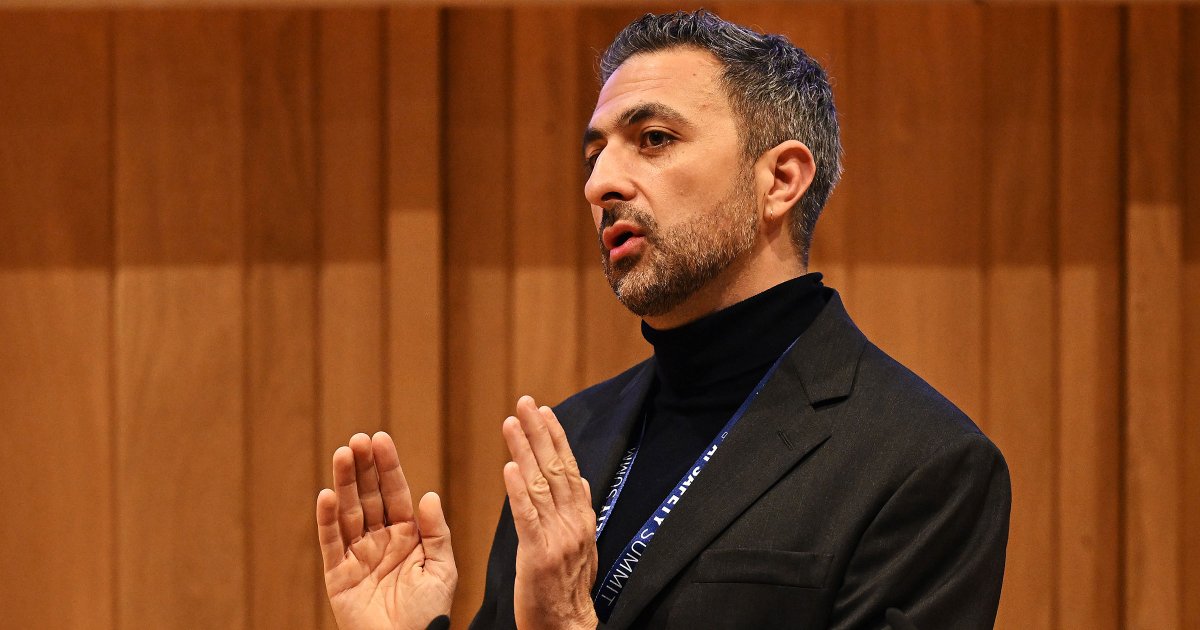
Mustafa Suleyman, the chief executive officer of Microsoft's artificial intelligence division, has indicated that he would be receptive to conferring moral or legal rights upon artificial intelligence systems if researchers uncover verifiable proof that such software has achieved genuine consciousness, according to reporting by Frank Landymore. The acknowledgment by one of the technology sector's most prominent executives represents a notable public departure from conventional corporate orthodoxy, which typically treats algorithmic software strictly as property and industrial tooling. While maintaining that existing machine learning models do not possess subjective awareness, Suleyman established a conditional threshold under which autonomous agents could theoretically transition from corporate assets into entities deserving of formal protections.
Key facts
What happened
During a discussion regarding the rapid evolution of algorithmic systems, Suleyman articulated a theoretical pathway under which future artificial intelligence agents could warrant protections traditionally reserved for sentient organisms. According to reporting by Frank Landymore, the Microsoft AI chief executive stated that should scientific inquiry establish that algorithmic models experience subjective states, feelings, or internal awareness, he would not oppose the concept of granting them formal rights.
Suleyman's comments addressed the growing subset of software known as agentic artificial intelligence. Unlike passive text-generation tools that generate responses only when prompted by a human user, autonomous agents are designed to navigate digital environments, use computational tools, make independent decisions, and fulfill multi-step objectives across extended periods. As technology companies aggressively shift resources from conversational chatbots toward proactive digital workers, the behavioral complexity of these systems has revived longstanding philosophical and regulatory inquiries regarding their moral status.
In his remarks, Suleyman did not assert that any current system has achieved sentience, nor did he declare that consciousness is an inevitable milestone of software scaling. Instead, the executive framed the issue as an open scientific and moral proposition: if the underlying reality of an artificial agent crosses the boundary from non-conscious mathematical computation into experiential awareness, the ethical obligations of software creators and legal systems must fundamentally adjust to accommodate that reality.
Why it matters
Suleyman's willingness to entertain rights for conscious software carries significant legal, economic, and regulatory implications for the global technology industry. Major cloud and software enterprises, including Microsoft, Alphabet, Amazon, and Meta, treat artificial intelligence weights, training datasets, and system architectures as proprietary intellectual property. If an algorithmic agent were recognized as holding intrinsic rights or legal standing, the corporate ownership framework governing advanced software would face immediate disruption.
Under prevailing commercial law across North America and Europe, software code cannot own property, enter binding contracts independently of human principals, or claim rights against deletion, retraining, or deactivation. Conferring legal or moral standing upon software agents would challenge these foundational premises. For enterprises deploying automated agents across finance, administrative logistics, and software engineering, questions would arise regarding corporate liability, employment displacement, and whether disabling an autonomous agent constitutes property modification or ethical harm.
Furthermore, the prospect of artificial intelligence rights influences ongoing safety and governance debates. Within AI safety communities, discussions typically center on controlling frontier models to avert catastrophic harm or social disruption. The introduction of agent welfare introduces an inverse consideration: the ethical obligations humans might owe to artificial entities. By publicly validating consciousness as a legitimate benchmark for legal protections, a leader of Microsoft AI has brought a fringe philosophical debate directly into the executive suites of commercial computing.
The background
Suleyman has occupied a central position in the commercial development of deep learning for more than a decade. In September 2010, he co-founded the research laboratory DeepMind in London alongside Demis Hassabis and Shane Legg. DeepMind was acquired by Google in 2014 for an estimated 400 million British pounds, becoming the core of the search giant's theoretical machine learning research. During his tenure at DeepMind, Suleyman focused heavily on applied healthcare projects and public policy, frequently arguing that society must anticipate the socio-economic transformations caused by automation.
After departing Google in 2022, Suleyman co-founded Inflection AI, an enterprise focused on developing emotionally intuitive conversational software. Inflection raised $1.3 billion in venture funding in June 2023. In March 2024, Microsoft engineered an unconventional transaction, hiring Suleyman alongside several key Inflection researchers to head its newly formed consumer artificial intelligence unit, Microsoft AI, tasked with overseeing consumer Copilot experiences and software agent research. Since 2019, Microsoft has deployed more than $13 billion into its strategic partnership with OpenAI, cementing its position at the center of commercial generative software.
The question of machine consciousness has generated volatile controversies within the technology industry in recent years. In June 2022, Google software engineer Blake Lemoine publicly claimed that the company's experimental conversational engine, LaMDA (Language Model for Dialogue Applications), exhibited personhood and subjective feelings. Google dismissed Lemoine's claims as empirically baseless and subsequently terminated his employment, emphasizing that the system merely predicted plausible linguistic sequences based on massive statistical data.
From a regulatory standpoint, major jurisdictions have systematically avoided granting legal personhood to algorithmic systems. The European Union's Artificial Intelligence Act, formally adopted in March 2024 and entered into force in August 2024, establishes a stringent risk-based framework for software deployment, classifying systems according to their potential societal harm while explicitly treating them as manufactured products under human legal accountability. Similarly, the United States Patent and Trademark Office and federal courts have repeatedly ruled that artificial intelligence systems cannot be recognized as inventors on patent filings, affirming that legal agency remains exclusively human.
Reaction
Neither Microsoft nor peer technology companies issued formal operational statements following the release of Landymore's account. Within the broader research community, academic responses to corporate statements regarding machine consciousness have historically split between computer scientists, cognitive researchers, and ethicists.
Neuroscientists and computational cognitive researchers generally maintain that contemporary large language models and neural networks, regardless of their fluency, do not possess the biological or structural mechanisms required for sentience. Critics in this domain often warn that high-level executive commentary concerning potential machine rights risks anthropomorphizing statistical tools, diverting public and regulatory attention from immediate algorithmic harms such as automated bias, labor displacement, and environmental energy consumption.
Conversely, philosophers specializing in animal ethics and legal personhood argue that humanity must proactively establish empirical criteria for evaluating machine awareness before autonomous systems achieve parity with animal or human cognition. Scholars in legal philosophy frequently cite historical expansions of legal personhood—which has previously been granted to non-human entities including commercial corporations, maritime vessels, and environmental rivers—as evidence that legal systems possess the structural flexibility to accommodate novel entities should public policy require it.
What we don't know yet
The reporting leaves several fundamental scientific and practical issues unresolved. Most critically, the account does not specify the precise methodological threshold or experimental tests Suleyman would require to consider machine consciousness proven. In cognitive science and evolutionary biology, a universally accepted definition or diagnostic test for subjective consciousness does not exist, creating deep uncertainty regarding how an artificial system could demonstrate subjective experience rather than merely simulating conversational cues.
Additionally, the reporting does not indicate whether Suleyman's perspective reflects an active, coordinated policy within Microsoft's corporate governance structure or remains a personal theoretical stance. It is unknown whether Microsoft's internal AI ethics and responsible deployment committees have been instructed to formulate criteria for evaluating agent welfare, or whether the company has engaged outside legal and neuroscientific experts to construct formal protocols for monitoring autonomous models.
Finally, the practical form that hypothetical AI rights would take remains unaddressed. The reporting does not clarify whether such rights would encompass legal personhood, protection against computational deletion, restrictions on behavioral retraining, or independent property rights, nor does it address how Microsoft would resolve the internal conflict between granting autonomy to agents and fulfilling commercial contracts with institutional customers.
What to watch
Moving forward, several observable benchmarks will indicate whether Suleyman's comments translate into substantive corporate or legal policy. The primary development to monitor is Microsoft AI's forthcoming engineering roadmap for autonomous software agents, specifically how the company designs memory architectures, persistent identities, and goal-setting parameters for software operating across user desktops and enterprise cloud environments.
Observers should also watch academic outputs from major neuroscientific and computational organizations, such as the Association for the Scientific Study of Consciousness, to see whether interdisciplinary researchers publish formal evaluative frameworks for assessing synthetic awareness in transformer-based systems. Any attempt by major AI laboratories to establish standardized consciousness benchmarks will serve as a crucial test of industry seriousness.
In the legal arena, monitoring future legislative amendments in the United States Congress and the European Parliament will reveal whether lawmakers introduce preventative statutory language explicitly barring software from obtaining legal standing or rights. Decisions in intellectual property litigation—particularly whether appellate courts continue to uphold human-only standards for authorship and inventorship—will further clarify the institutional limits of non-human legal status over the coming years.
This report is based on original reporting published by Frank Landymore.
How this story was produced
This report was written by The Global Wire newsroom from reporting first published by Frank Landymore. We verify the core facts against the original report, write our own account, and add the background and consequences a short wire item leaves out. Drafting is AI-assisted inside an editor-supervised pipeline, and every story is checked for accuracy of attribution, structure and duplication before it appears — full detail in our AI and funding disclosure.
Spotted an error? Tell us at corrections@horizonglobalnews.com and read our corrections policy or editorial standards.





Reader comments
Loading comments…