

Maxwell Demonstrates M1 Hybrid Amphibious Cargo Plane in 1,150-Mile Flight Test
The diesel-electric M1 seaplane completed an endurance flight using electric boost for water takeoffs and diesel power for long-distance cruise.
By The Global Wire Newsroom · Reported from Omar Kardoudi
Link preview · horizonglobalnews.com
Maxwell Demonstrates M1 Hybrid Amphibious Cargo Plane in 1,150-Mile Flight Test
The diesel-electric M1 seaplane completed an endurance flight using electric boost for water takeoffs and diesel power for long-distance cruise.
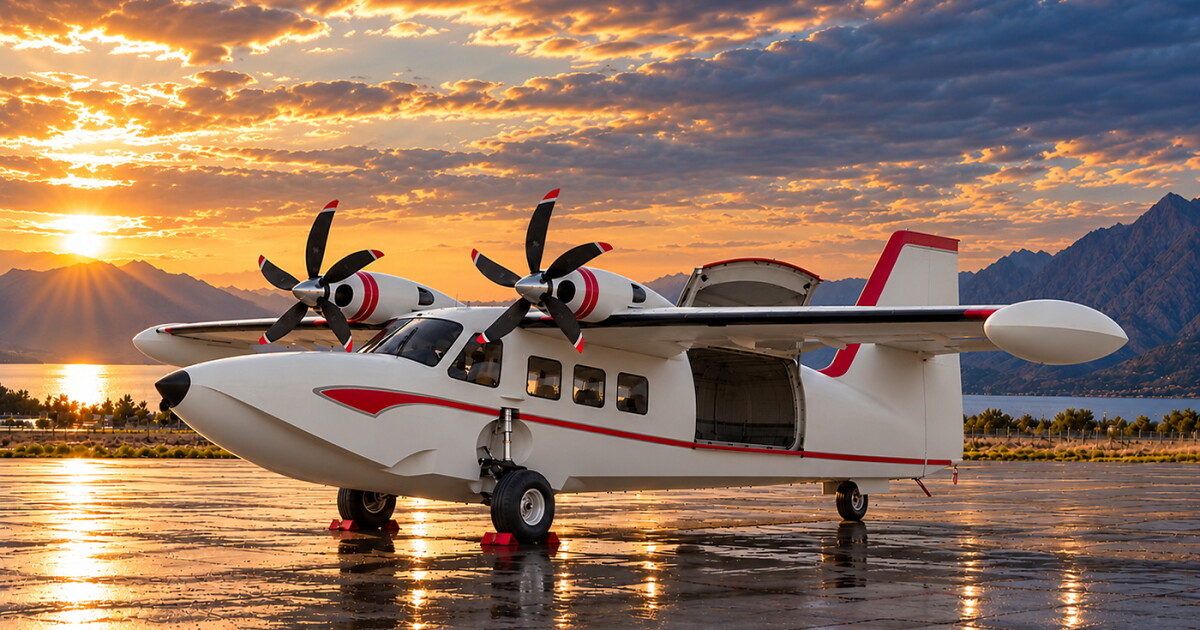
A novel hybrid-electric amphibious cargo aircraft, the Maxwell M1 Hybrid, has completed an endurance flight covering 1,150 miles, validating an architecture designed to solve one of the most persistent efficiency penalties in maritime aviation. The aircraft combines high-output battery-electric propulsion for the energy-intensive initial climb with an internal-combustion diesel system engineered for sustained cruise, aiming to provide heavy-lift logistical access to remote waterways and coastal archipelagos without relying on paved runway infrastructure.
Key facts
What happened
During flight testing, the Maxwell M1 Hybrid traversed 1,150 miles utilizing its dual-source powertrain, as detailed in reporting by aviation journalist Omar Kardoudi. The aircraft’s propulsion architecture is specifically configured around the disparate power demands of waterborne flight operations, which require an immense surge of thrust to overcome hydrodynamic friction before transitioning to a far more aerodynamic cruise phase.
To break free of water surface tension and reach rotational speed, the M1 Hybrid draws on its electric motors for an initial sprint lasting roughly six minutes. During this high-power burst, the electrical system supplies the supplementary torque and thrust necessary to overcome the drag produced by water displacement and hull suction. Once the hull breaks clean from the water and the aircraft establishes a stable climb, the power demand drops precipitously.
At that junction, the aircraft throttles back its high-output electric assist and transitions to its diesel combustion power unit to sustain aerodynamic cruise. By relying on energy-dense liquid fuel for the remaining cruise phase, the aircraft managed to sustain forward flight over a 1,150-mile route, demonstrating an operational profile that pure battery-electric aircraft of comparable scale cannot currently match due to current chemical energy density constraints.
Why it matters
The validation of a 1,150-mile operational range on an amphibious cargo platform has direct ramifications for middle-mile logistics, remote territorial supply chains, and the broader commercial aviation decarbonization sector. Conventional aviation decarbonization efforts have largely stalled in the regional freight segment because batteries remain roughly 40 to 50 times less energy-dense by weight than standard hydrocarbon jet fuels or diesel. As a result, fully electric aircraft designs are typically restricted to ultralight passenger hops or short cargo routes rarely exceeding 150 to 250 miles once required safety reserves are factored in.
By restricting battery deployment strictly to the six-minute takeoff and climb-out window, the M1 Hybrid circumvents the severe mass penalty that cripples pure electric seaplanes. Seaplanes are inherently heavier and drag-heavier than landplanes due to structural hull reinforcement, corrosion protection, and buoyant sponsons or floats. Consequently, attempting to power a seaplane entirely with lithium-based batteries creates a compounding weight spiral: heavier batteries require greater hull displacement, which generates higher hydrodynamic drag, demanding even more battery mass to achieve hydroplaning speed.
Maxwell’s hybrid compromise directly targets remote coastal communities, island nations, and resource-extraction regions where constructing 5,000-foot paved asphalt runways is environmentally destructive or economically unfeasible. A freight aircraft capable of delivering payloads across 1,150 miles using unpaved water bodies as runways can integrate isolated logistics nodes directly into global supply networks. Furthermore, by burning compression-ignition diesel, operators can leverage widely available maritime and ground diesel distribution networks, avoiding the specialized aviation gasoline infrastructure that has become increasingly scarce and expensive in remote frontier areas.
The background
Amphibious aviation enjoyed its commercial zenith in the 1930s and 1940s, when massive flying boats such as the Boeing 314 Clipper, the Martin M-130, and military workhorses like the Consolidated PBY Catalina spanned oceanic distances precisely because terrestrial runways were rare and inadequate. As concrete runways proliferated across the globe following the Second World War, flying boats were largely retired due to inherent aerodynamic penalties, complex maintenance routines associated with saltwater corrosion, and structural weight premiums.
In contemporary aviation, amphibious utility has survived primarily through rugged, specialized platforms such as the de Havilland Canada DHC-6 Twin Otter on floats, the Viking Air Canadair CL-415 amphibious water bomber, and specialized military platforms like Japan's ShinMaywa US-2. In every instance, however, these aircraft struggle with high operating costs driven by the immense fuel burn required during water takeoffs. In fluid dynamics, an amphibious hull must pass through distinct displacement, hump, and planing regimes before achieving flight speed. The "hump speed" phase—where the hull transitions from plowing through water to skimming across the surface—creates an enormous peak in mechanical resistance, forcing conventional seaplanes to carry oversized, thirsty turbine or piston engines that operate far below peak efficiency during long cruising phases.
The advent of high-torque, lightweight permanent-magnet electric motors has opened a new engineering pathway. Hybrid-electric propulsion systems allow aerospace engineers to decouple takeoff power sizing from cruise power sizing. In automotive applications, parallel hybrids use electric motors to assist internal combustion engines during acceleration; the M1 Hybrid adapts this concept to the fluid dynamics of water. Combining a small, efficient diesel cruise generator or engine with an electric boost pack allows the airframe to clear water resistance without requiring an oversized combustion powerplant that wastes fuel for the rest of the flight.
Reaction
While formal public statements from major international civil aviation regulators, including the United States Federal Aviation Administration and the European Union Aviation Safety Agency, have not been released regarding the flight milestone, the achievement has sparked intense discussion among regional logistics operators and maritime aviation specialists. Industry analysts have tracked the trial closely as an indicator of whether hybrid architectures can bridge the operational gap between legacy fossil-fuel freighters and elusive zero-emission aircraft.
Commercial shipping analysts note that island logistics in territories such as the Caribbean, the South Pacific, the Scottish Hebrides, and coastal Alaska frequently suffer from fragmented maritime shipping schedules and prohibitive air cargo charter costs. In these sectors, operators are anticipated to review Maxwell's efficiency metrics closely, evaluating whether the combined operating expenses of diesel fuel and battery cycle replacement can undercut existing floatplane alternatives that rely on expensive aviation kerosene or leaded avgas.
Environmental and aviation engineering observers are expected to focus attention on the aircraft’s carbon accounting. While the aircraft continues to burn petroleum-based diesel during its cruise phase, the elimination of peak fuel burn during takeoff—and the potential future compatibility of compression-ignition engines with drop-in synthetic e-fuels or hydrotreated vegetable oil—offers a distinct regulatory and public-relations narrative compared to unmitigated legacy aircraft.
What we don't know yet
Several essential technical and operational metrics remain unverified following the initial flight announcement. Chief among these is the aircraft’s actual useful payload capacity over the 1,150-mile flight profile. In air freight, range figures are meaningful only when paired with payload mass; carrying minimum structural weight on an endurance test is fundamentally different from transporting standardized commercial cargo containers or bulk freight. Neither the empty weight, gross takeoff weight, nor payload capacity were detailed in initial reports.
Furthermore, the precise mechanical layout of the powertrain remains undisclosed. It is currently unclear whether the M1 Hybrid utilizes a parallel hybrid system—where both electric motors and the diesel engine directly drive propellers—or a series hybrid configuration, in which a diesel-powered generator provides electrical power to all-electric drive units while buffering a battery pack. Specifics regarding battery chemistry, thermal runaway suppression systems within a marine operating environment, and engine manufacturing partners are also unconfirmed.
Crucially, the regulatory certification pathway for the M1 Hybrid has not been publicly mapped. Certifying hybrid aircraft with dual power units under transport category safety rules represents uncharted territory for global aviation bodies. How regulators will treat the safety margins of the six-minute battery discharge window during an aborted water takeoff or balked landing remains an entirely open question.
What to watch
The trajectory of the Maxwell M1 Hybrid program will depend on several clear technical milestones and administrative checkpoints over the coming months. Observers should watch for forthcoming flight test disclosures providing hard numbers on fuel consumption rates, cruise speeds, battery recharging intervals, and specific cargo volume dimensions. Flight tests demonstrating full-load water takeoffs in adverse sea states—such as high chop or long-period ocean swells—will be vital, as seaplane performance degrades significantly outside calm water basins.
On the commercial front, observers should monitor whether Maxwell establishes strategic partnerships with global logistics integrators, regional island airlines, or defense agencies specializing in littoral logistics. Formal filings for type certification with aviation authorities will serve as the definitive benchmark for whether the M1 Hybrid can transition from a technology demonstrator into a revenue-generating commercial platform. Finally, the long-term durability of electric propulsion units and high-voltage electrical cabling under continuous exposure to marine salt fog and water ingress will determine whether the platform's lifecycle maintenance costs deliver on their promised economic advantage.
This report is based on original reporting by Omar Kardoudi.
How this story was produced
This report was written by The Global Wire newsroom from reporting first published by Omar Kardoudi. We verify the core facts against the original report, write our own account, and add the background and consequences a short wire item leaves out. Drafting is AI-assisted inside an editor-supervised pipeline, and every story is checked for accuracy of attribution, structure and duplication before it appears — full detail in our AI and funding disclosure.
Spotted an error? Tell us at corrections@horizonglobalnews.com and read our corrections policy or editorial standards.





Reader comments
Loading comments…