

Massachusetts Governor Invokes Emergency Power to Protect New Reproductive Rights Law
Gov. Maura Healey filed an emergency preamble to take immediate effect of expanded abortion access legislation, neutralizing an effort by opponents to freeze the statute.
By The Global Wire Newsroom · Reported from Brendan Nordstrom
Link preview · horizonglobalnews.com
Massachusetts Governor Invokes Emergency Power to Protect New Reproductive Rights Law
Gov. Maura Healey filed an emergency preamble to take immediate effect of expanded abortion access legislation, neutralizing an effort by opponents to freeze the statute.
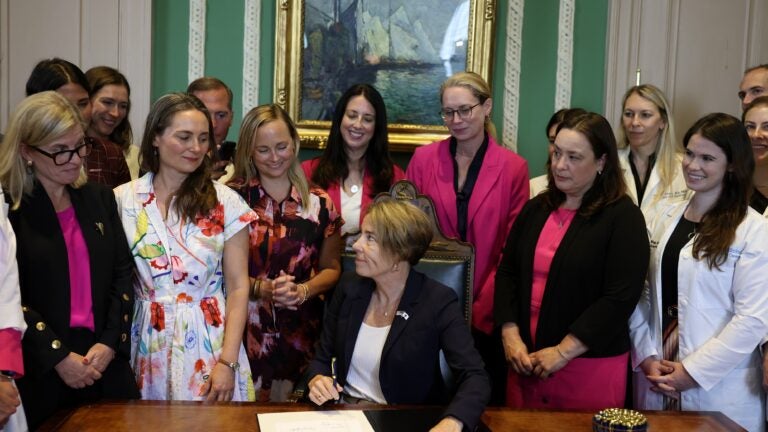
BOSTON — Massachusetts Governor Maura Healey has exercised executive authority under the state constitution to enact an emergency preamble on legislation expanding reproductive healthcare access, thwarting an effort by political opponents to suspend the statute through a citizen referendum petition. By declaring the measure an emergency law, Healey ensured that the expanded abortion protections take effect immediately, precluding a procedural mechanism that would have halted the statute's implementation while challengers gathered signatures to place a repeal question before voters.
Key facts
What happened
According to reporting by Brendan Nordstrom, the conflict centers on new statutory measures designed to broaden abortion rights and protections within the Commonwealth. Following the passage of the legislation by the Massachusetts General Court and its delivery to the executive branch, grassroots opponents initiated a formal referendum challenge under the state's direct democracy statutes.
Under standard Massachusetts legislative procedure, acts passed by the Legislature do not become enforceable until 90 days have elapsed from the date of gubernatorial approval. This three-month window is specifically protected under the state constitution to allow citizens who object to a newly enacted statute to mount a referendum drive. If petitioners collect and submit a specified number of certified signatures from registered voters within that window, the contested law is automatically stayed—effectively paused—until the electorate can vote on whether to sustain or repeal it at the subsequent biennial state election.
Recognizing that an ongoing signature campaign threatened to suspend the implementation of the reproductive healthcare statute, Healey intervened by filing an emergency letter with the Secretary of the Commonwealth. This procedural device, known formally as an emergency preamble, certifies that the law must take effect without delay for the immediate preservation of public peace, health, safety, or convenience. Healey's executive declaration instantly stripped the signature drive of its ability to suspend the law's operational enforcement, ensuring healthcare facilities, practitioners, and patients operate under the expanded legal framework without interruption.
Why it matters
The executive action carries significant consequences for the regulatory landscape of reproductive healthcare in New England and highlights a recurring institutional clash between executive authority and direct democracy mechanisms. In practical terms, healthcare providers operating in Massachusetts gain immediate legal certainty. Had the statute been suspended, clinicians, hospital networks, and family planning clinics would have been forced to navigate a legal limbo lasting up to two years, delaying investments in expanded services and clouding compliance protocols.
Beyond clinical operations, the decision underscores the durability of state-level statutory shields. Since the U.S. Supreme Court eliminated federal constitutional abortion rights in 2022, Massachusetts has positioned itself as an interstate safe haven, shielding local providers who prescribe medication abortion or provide procedural care to out-of-state patients from civil litigation and criminal extradition initiated by jurisdictions with strict bans. An administrative freeze on new protections would have weakened that posture, potentially deterring out-of-state patients and subjecting clinicians to increased interstate legal exposure.
For voters and civic organizers, Healey’s intervention alters the mechanics of the citizen referendum. While filing an emergency preamble does not extinguish the right of opponents to place a repeal question on the general election ballot if they meet statutory signature thresholds, it eliminates their primary tactical advantage: the interim suspension of the law. Campaigners must now convince voters to dismantle an active, functioning regulatory regime rather than asking the electorate to reject an unexecuted statute.
The background
The constitutional framework governing this dispute originates in the early twentieth century. Massachusetts voters ratified Article 48 of the Amendments to the Massachusetts Constitution at the Constitutional Convention of 1917–1918. Designed as an instrument of Progressive Era reform, Article 48 created both the initiative petition, which allows citizens to propose new laws or constitutional amendments, and the veto referendum, which grants the electorate the power to repeal acts passed by the General Court.
Under Article 48, a law subject to a referendum petition is temporarily suspended if opponents collect signatures equal to roughly 1.5 to 2 percent of the total vote cast for governor in the preceding election, distributed across multiple counties to ensure statewide representation. However, the framers of Article 48 established an explicit exception for emergency measures. The Legislature can attach an emergency preamble directly to a bill prior to enactment through a recorded two-thirds vote in both the House of Representatives and the Senate. Alternatively, if lawmakers decline or fail to muster a supermajority, the governor possesses the independent constitutional power to file an emergency declaration with the Secretary of the Commonwealth at any point before the 90-day window expires.
Massachusetts has seen this procedural mechanism deployed in high-profile policy disputes before. In 2022, after the Legislature overrode a gubernatorial veto to pass the Work and Family Mobility Act—allowing undocumented immigrants to apply for standard driver's licenses—opponents organized a referendum drive and gathered sufficient signatures to put the law on the November ballot as Question 4. Because the Legislature had not attached an emergency preamble and the governor at the time did not issue one, the measure was contested at the ballot, where voters ultimately approved it. In other contentious instances, governors have issued emergency letters to prevent pauses on regulatory frameworks, budget appropriations, and public health directives.
In the realm of reproductive healthcare, the Massachusetts General Court has maintained an aggressive posture toward codifying access. In late 2020, lawmakers overrode an executive veto to pass the ROE Act, which codified abortion rights into state law and lowered age restrictions. Following the Supreme Court's ruling in Dobbs v. Jackson Women's Health Organization, state officials enacted comprehensive shield statutes to insulate medical personnel from extra-territorial investigations, stockpiled emergency medication, and mandated access to reproductive care across public university campuses. The legislation targeted by the recent referendum represents the latest iteration of this broader legislative program.
Reaction
The invocation of the emergency preamble shifts the political battlefield into the administrative and electoral arenas. While the reporting by Brendan Nordstrom did not transcribe specific public statements, institutional reactions in comparable disputes follow defined ideological and structural contours.
Reproductive rights advocacy organizations, clinical associations, and progressive legislative leaders consistently back the use of emergency preambles on reproductive access bills, arguing that regulatory certainty is vital for clinical safety and patient stability. In their view, leaving healthcare policy subject to immediate procedural suspension leaves both clinicians and vulnerable patients in administrative peril.
Conversely, conservative policy groups, family advocacy organizations, and grassroots anti-abortion coalitions typically voice strong procedural and substantive objections to such executive maneuvers. Opponents of the underlying legislation frequently argue that gubernatorial emergency preambles subvert the intent of Article 48 by neutralizing the suspension power that the constitutional convention explicitly granted to the citizenry. Leaders of the signature drive are expected to address whether they will redirect their resources toward completing the signature submission process to secure a spot on the next statewide ballot or seek administrative and judicial scrutiny of the governor's emergency declaration.
What we don't know yet
Several legal and logistical elements remain unresolved following the governor’s announcement. The available reporting does not detail the total volume of signatures already gathered by the referendum campaign, nor does it specify whether organizers have crossed intermediate thresholds required by the Office of the Secretary of the Commonwealth.
It is also unclear whether the coalition challenging the law plans to initiate litigation before the Massachusetts Supreme Judicial Court. While the high court historically grants broad deference to executive determinations regarding what constitutes an emergency under Article 48, challengers in prior disputes have occasionally tested whether an emergency declaration met constitutional standards or whether specific ballot summary language drafted by the Attorney General was fair and neutral. Additionally, the reporting leaves open the precise operational provisions of the underlying statute that take immediate effect, including specific funding lines, regulatory oversight mandates, or licensing protections.
What to watch
The trajectory of the dispute will depend on several upcoming milestones:
First, organizers of the veto referendum must meet strict statutory deadlines to submit petition papers to local city and town registrars of voters for certification, followed by final submission to the Elections Division of the Secretary of the Commonwealth. Tracking these filing dates will reveal whether opponents have the organizational capacity to secure the necessary verified signatures.
Second, observers should watch for potential legal filings in state courts. If opponents contest the emergency preamble or the Attorney General's certification of the measure, the Supreme Judicial Court would be required to weigh in on the validity of the challenge.
Finally, if the signature threshold is satisfied, the Secretary of the Commonwealth will assign a formal ballot question number for the next statewide biennial election. That step would initiate a multi-million-dollar statewide campaign pitting healthcare organizations and progressive donors against conservative coalitions, testing voter sentiment on reproductive freedom in an off-year or general election cycle.
This report is based on original reporting published by Brendan Nordstrom.
How this story was produced
This report was written by The Global Wire newsroom from reporting first published by Brendan Nordstrom. We verify the core facts against the original report, write our own account, and add the background and consequences a short wire item leaves out. Drafting is AI-assisted inside an editor-supervised pipeline, and every story is checked for accuracy of attribution, structure and duplication before it appears — full detail in our AI and funding disclosure.
Spotted an error? Tell us at corrections@horizonglobalnews.com and read our corrections policy or editorial standards.






Reader comments
Loading comments…