

K72 Disaster Prep App Launches in Montijo to Build 72-Hour Household Resilience
Created with municipal civil protection in Montijo, the K72 app gives Portuguese households an interactive roadmap to assemble critical three-day survival kits.
By The Global Wire Newsroom · Reported from Ricardo Figueira
Link preview · horizonglobalnews.com
K72 Disaster Prep App Launches in Montijo to Build 72-Hour Household Resilience
Created with municipal civil protection in Montijo, the K72 app gives Portuguese households an interactive roadmap to assemble critical three-day survival kits.
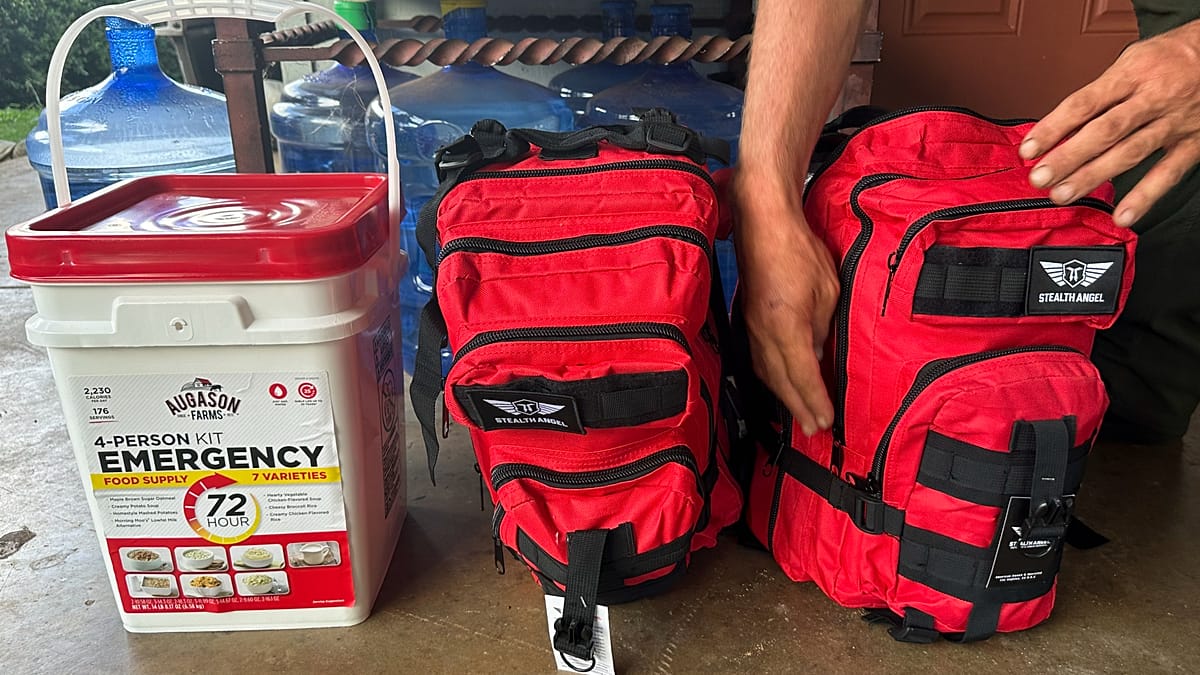
A new civic technology platform designed to help Portuguese residents assemble essential survival supplies for major emergencies has been introduced in the Setúbal district municipality of Montijo. Developed by software creator Carlos Batista in direct partnership with Montijo's municipal civil protection service, the application, designated K72, provides structured guidance to help families survive the initial 72 hours following a catastrophic event before institutional emergency services can fully mobilize. Although conceived and tested within the local administrative framework of Montijo, the digital tool has been engineered for nationwide application across mainland Portugal and the autonomous island regions of the Azores and Madeira.
Key facts
What happened
Software developer Carlos Batista coordinated with the municipal civil protection operational team in Montijo to develop K72, a standalone application designed to bridge the gap between civil defense advisories and actual household readiness, according to reporting by Ricardo Figueira. The software functions primarily as an interactive checklist and planning dashboard, categorizing post-disaster necessities into manageable logistical tiers.
Users entering the system input basic household parameters, including the number of family members, the presence of dependent children or elderly relatives, dietary restrictions, and household pets. Based on these inputs, K72 generates an inventory of essential items required to sustain the occupants for an absolute minimum of three days without municipal water, electrical power, gas supplies, or commercial retail access.
Key supplies cataloged by the application include clean drinking water—standardized at three liters per person per day for hydration and basic sanitation—shelf-stable food that requires no cooking or refrigeration, personal medical supplies, physical copies of vital state identity documents, basic hygiene materials, manual tools, portable lighting, and battery-powered or hand-crank telecommunications gear. The software also provides maintenance reminders to ensure that expired foodstuffs, degrading batteries, and out-of-date prescription medications are rotated out on a regular schedule, preventing survival kits from deteriorating over long periods of non-use.
While developed within the municipal jurisdiction of Montijo—a Tagus estuary community located in the Lisbon Metropolitan Area—Batista and municipal civil protection planners deliberately designed the user experience to be jurisdiction-agnostic. The hazards covered by the application, ranging from seismic shocks to broad-scale infrastructure failures, apply across the Portuguese territory.
Why it matters
In widespread civil emergencies, professional first responders are frequently overwhelmed during the opening 48 to 72 hours. Search and rescue personnel, fire brigades, and medical teams must prioritize life-critical interventions at sites of major structural collapse, critical infrastructure failure, and mass-casualty incidents. For the general population, surviving this initial triage window depends on household-level self-sufficiency.
Despite periodic public information campaigns conducted by Portugal's National Emergency and Civil Protection Authority (Autoridade Nacional de Emergência e Proteção Civil, or ANEPC), practical household preparedness across the country remains low. Traditional educational brochures and institutional websites provide extensive lists of recommended emergency kit contents, but they frequently fail to induce long-term behavior change. By digitizing the assembly process, offering tailored calculations for water and food supplies, and scheduling inventory refresh alerts, K72 addresses the logistical friction that causes citizens to abandon disaster preparedness.
Furthermore, institutional reliance on centralized disaster assistance creates systemic vulnerabilities. If thousands of households require immediate emergency water distribution or food rations within hours of an event, civil defense logistics can face rapid operational gridlock. By fostering local self-reliance at the neighborhood and municipal level, scalable digital platforms can significantly lower initial strain on municipal emergency services, allowing incident command teams to concentrate resources on containment and specialized rescue operations.
The background
Portugal occupies a geographical position subject to recurring natural and environmental hazards. The mainland's proximity to the Azores-Gibraltar Transform Fault exposes the southern and central coastline, including the densely populated Lisbon Metropolitan Area, to severe seismic and tsunami risks. The historical precedent of the 1755 Lisbon earthquake, along with significant 20th-century events such as the 1969 Cabo de São Vicente earthquake (magnitude 7.8), underscores the standing scientific consensus that southwestern Iberia will inevitably experience another major seismic crisis.
Beyond earthquakes, mainland Portugal confronts acute wildfire hazards during summer months due to interior forest density, shifting climate dynamics, and rural depopulation. The catastrophic wildfires of 2017—most notably the Pedrógão Grande complex in June and the subsequent fires of October, which collectively claimed more than 100 lives—led to fundamental restructurings of Portugal's national emergency apparatus. That overhaul emphasized localized community resilience, decentralized fuel management, and improved public alerting through emergency SMS messaging.
Urban flooding and severe Atlantic windstorms also present recurring threats. In December 2022, severe precipitation events inundated parts of the Lisbon metro area, stranding residents and submerging transit infrastructure within hours.
Under Portuguese administrative law (Law No. 65/2007), municipal civil protection services (SMPCs) serve as the frontline operational entities responsible for local risk assessment, preventative planning, and initial emergency response coordination within their respective municipal boundaries. These local bodies work beneath the coordinating umbrella of the ANEPC. The partnership between Carlos Batista and the Montijo SMPC illustrates a growing trend among local services to cultivate community-level tools rather than relying exclusively on directives issued by the national authority in Carnaxide.
Internationally, the "72-hour kit" or "go-bag" is a foundational civil defense concept championed by disaster agencies globally, including the United States Federal Emergency Management Agency (FEMA) and the European Civil Protection and Humanitarian Aid Operations (DG ECHO). K72 adapts this established standard into the specific regulatory and domestic framework of Portugal.
Reaction
Civil protection professionals and local emergency coordinators have broadly emphasized that digital solutions must supplement, rather than replace, municipal emergency planning. Local officials in the Lisbon Metropolitan Area have increasingly noted that public education remains the most cost-effective tool in risk mitigation, especially given that public awareness campaigns such as the annual national earthquake drill, "A Terra Treme," run for only a single minute each November.
Emergency planners expect that the deployment of K72 will prompt similar municipal civil protection services across the country to examine how digital civic technology can be integrated into municipal civil defense planning. Data privacy advocates and technology analysts, however, are anticipated to examine the application's underlying architecture, monitoring whether user profiles, household location details, or personal readiness inventories are collected centrally or stored entirely locally on end-user hardware. In the digital governance sector, municipal initiatives often face scrutiny regarding long-term maintenance, security updates, and institutional support once initial enthusiasm subsides.
What we don't know yet
Significant technical and administrative details concerning the broader rollout of K72 remain unconfirmed in public reporting. It is not yet specified whether the software is available across both major mobile operating systems, Apple's iOS and Google's Android, or if it is currently distributed as a progressive web application.
The exact data storage architecture has not been publicly detailed. Whether household supply data and family configurations remain isolated on the user's mobile device or are synchronized with cloud infrastructure—and potentially shared with municipal civil protection dashboards—remains unstated. Clarification on this point is critical for assessing user data privacy under European Union General Data Protection Regulation (GDPR) standards.
Additionally, the financing model sustaining K72 is not described in initial disclosures. It is unclear whether the development was funded entirely by Carlos Batista as an open-source civic effort, backed by a grant from the Municipality of Montijo, or designed to incorporate in-app purchases, external sponsorship, or commercial product recommendations. Finally, it remains unconfirmed whether the application functions reliably in a total offline mode—a mandatory operational requirement if power grids and cellular telecommunication towers collapse during an actual emergency.
What to watch
In the coming months, the key indicator of K72's viability will be its formal engagement with Portugal's national civil protection hierarchy. Observers will watch to see if the National Emergency and Civil Protection Authority (ANEPC) formally endorses, tests, or integrates the tool into its nationwide public readiness initiatives, or if the application remains primarily an independent municipal asset.
Adoption statistics within Montijo and surrounding Tagus-region municipalities will provide the first concrete measure of citizen engagement. Local government bodies often introduce educational apps that suffer from steep drop-offs in active usage after initial publicity.
Observers will also monitor potential software updates, particularly the introduction of multi-language support. With Portugal hosting large expatriate and foreign-resident populations, as well as high annual tourist volumes, translating emergency kit instructions into English and other widely spoken languages would expand the tool's practical utility. Finally, future national preparedness drills, such as future editions of "A Terra Treme," will reveal whether municipal civil protection offices actively recommend K72 to the broader public.
Attribution
Reporting on the development and municipal coordination of the K72 application is based on coverage by journalist Ricardo Figueira.
How this story was produced
This report was written by The Global Wire newsroom from reporting first published by Ricardo Figueira. We verify the core facts against the original report, write our own account, and add the background and consequences a short wire item leaves out. Drafting is AI-assisted inside an editor-supervised pipeline, and every story is checked for accuracy of attribution, structure and duplication before it appears — full detail in our AI and funding disclosure.
Spotted an error? Tell us at corrections@horizonglobalnews.com and read our corrections policy or editorial standards.





Reader comments
Loading comments…