

Inside Scramjet Engineering: How Air-Breathing Engines Power Hypersonic Cruise Missiles
An engineering analysis details how scramjet propulsion uses supersonic airflow and atmospheric compression to drive hypersonic cruise missiles past Mach 5.
By The Global Wire Newsroom · Reported from Atharva Gosavi
Link preview · horizonglobalnews.com
Inside Scramjet Engineering: How Air-Breathing Engines Power Hypersonic Cruise Missiles
An engineering analysis details how scramjet propulsion uses supersonic airflow and atmospheric compression to drive hypersonic cruise missiles past Mach 5.
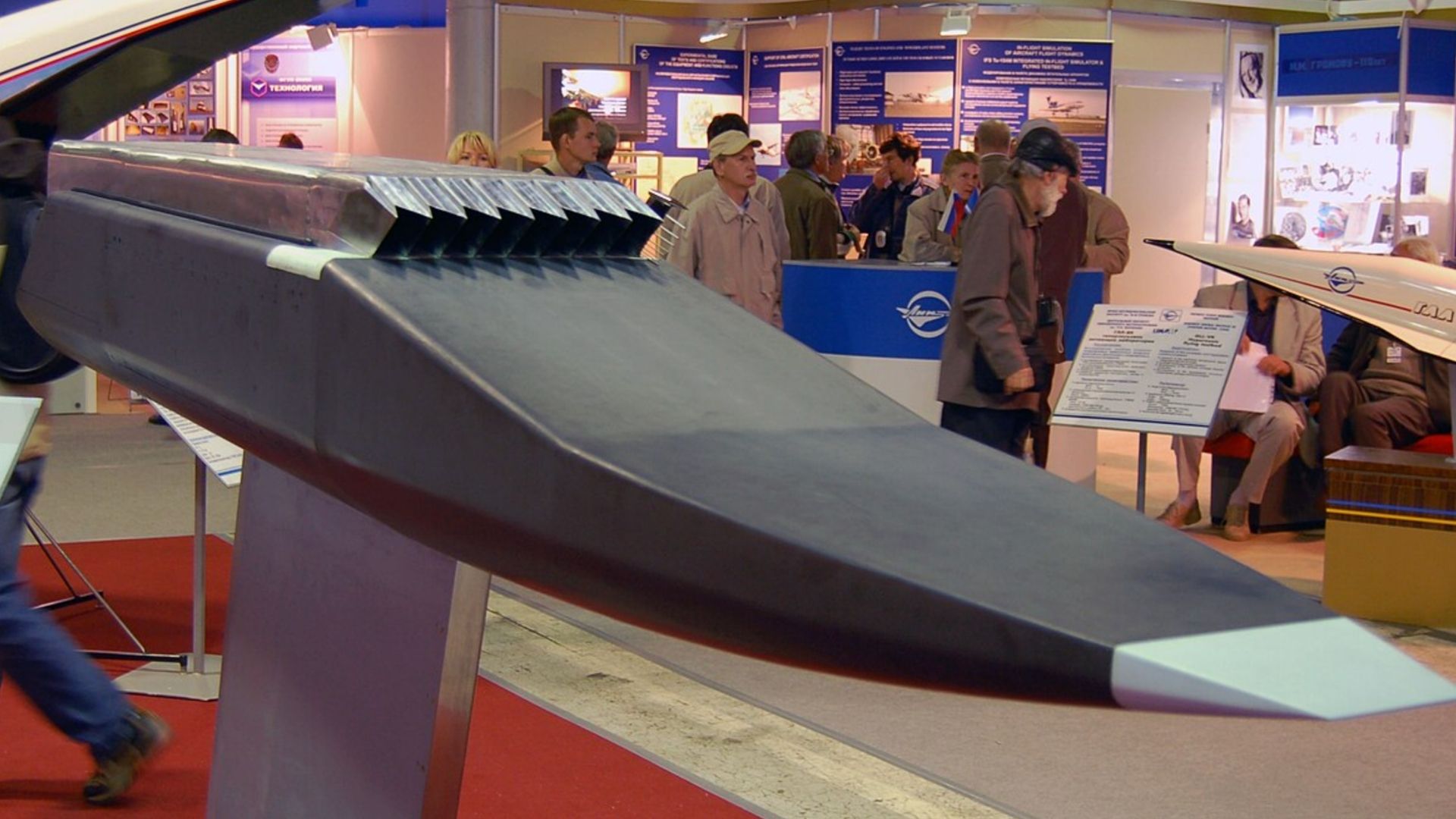
An engineering analysis published on September 19, 2026, by technology analyst Atharva Gosavi has detailed the fundamental aerodynamic and thermodynamic mechanisms behind air-breathing hypersonic cruise missiles. The report focuses on the operation of supersonic combustion ramjet, or scramjet, engines, which enable flight vehicles to sustain velocities far exceeding Mach 5 without carrying heavy internal oxygen supplies. By ingesting atmospheric air at extreme velocities, compressing it through engine geometry, and maintaining combustion within a supersonic airflow, scramjets represent a pivotal evolution in high-speed propulsion technology. This technical breakdown illuminates how modern aerospace engineering overcomes severe thermal and fluid-dynamic hurdles to achieve sustained atmospheric flight at hypersonic speeds.
Key facts
What happened
The technical process outlined in the reporting by Atharva Gosavi breaks down the complex sequence of aerodynamic and thermodynamic steps required for a scramjet engine to propel a vehicle at hypersonic speeds. Unlike conventional turbojets found on commercial or military aircraft, which rely on rotating mechanical fan blades and turbine spools to compress incoming air, a scramjet contains no moving parts inside its internal duct. Instead, the propulsion sequence begins when an external boost system—typically a solid-propellant rocket motor—accelerates the missile vehicle past supersonic thresholds to operational speeds generally exceeding Mach 3 or Mach 4.
At these high velocities, ambient atmospheric air enters the engine intake ramp at supersonic speed. The precisely calculated internal geometry of the engine inlet forces the high-velocity air stream through a sequence of angled, oblique shock waves. These shock waves compress the incoming air, dramatically increasing its pressure and density while retaining its supersonic momentum.
Once compressed, the air stream passes directly into the combustion chamber. In a traditional ramjet engine, the internal duct geometry slows the incoming air down to subsonic speeds before fuel injection occurs. In a scramjet, however, slowing the air to subsonic levels at high Mach numbers would generate intolerable heat and pressure drag, leading to severe structural failure or total engine flameout. The scramjet overcomes this limitation by injecting fuel—typically liquid hydrocarbon compounds or compressed hydrogen gas—directly into air moving through the combustor at supersonic velocities.
Achieving stable combustion in this high-speed environment requires igniting and thoroughly mixing fuel in a fraction of a millisecond as the air sweeps through the engine core. The extreme heat released by this continuous chemical reaction causes the high-pressure gas mixture to expand exponentially. The expanding exhaust gases are directed out through a convergent-divergent exhaust nozzle, generating intense thrust that propels the missile forward at velocities ranging from Mach 5 to Mach 10 and beyond.
Why it matters
The operational mechanics of scramjet engines carry major consequences for global strategic stability, defense procurement, and military aerospace architecture. Traditional ballistic missiles rely on rocket motors to push payloads into high-altitude suborbital arcs, following predictable parabolic trajectories that early warning radar systems can readily detect, track, and compute. By contrast, air-breathing hypersonic cruise missiles powered by scramjets operate entirely within the dense atmosphere, maneuvering at lower altitudes where terrestrial radar horizons limit detection ranges until late in the vehicle's flight path.
Furthermore, the weight efficiency offered by scramjet propulsion fundamentally alters missile design constraints. Standard rocket motors must carry both their fuel and a heavy chemical oxidizing agent, with oxidizer commonly accounting for 70 to 80 percent of total propellant mass at launch. By harvesting oxygen directly from the surrounding atmosphere, an air-breathing scramjet missile achieves a vastly superior specific impulse—a core metric of rocket and jet engine fuel efficiency—allowing for smaller, lighter airframes with greater operational range or larger payload capacities compared to solid-fuel rocket systems.
From a defensive perspective, the combination of sustained hypersonic velocity, atmospheric agility, and low-altitude flight paths presents severe challenges for existing air and missile defense networks. Conventional interceptor missiles, such as those used in land-based or sea-based regional defense batteries, are optimized to engage either high-altitude ballistic warheads or slower subsonic and supersonic cruise missiles. The development of functional scramjet cruise missiles drastically reduces the reaction window for command-and-control networks, compressing decision-making timelines from tens of minutes down to seconds and prompting defense agencies to pursue space-based tracking layers and novel interception assets.
The background
The conceptual foundation of continuous atmospheric jet propulsion without moving parts dates back to 1913, when French engineer René Lorin patented the fundamental principles of the ramjet engine. Lorin's early work established that forward vehicle motion could compress intake air for combustion, but the concept lacked practical applications until mid-20th-century advances in high-speed flight and rocket boosting made supersonic operational speeds achievable.
During the Cold War, aerospace research organizations recognized the inherent physical limitations of the standard ramjet. While ramjets were successfully deployed on target drones and specialized surface-to-air missile systems, decelerating incoming air from supersonic to subsonic speed within the combustor created extreme pressure losses and intense thermal drag at speeds exceeding Mach 5. To surpass this performance ceiling, aerodynamicists proposed the supersonic combustion ramjet, or scramjet, in the late 1950s and 1960s.
Translating theoretical scramjet physics into flight-proven hardware required decades of computational fluid dynamics modeling, high-enthalpy wind tunnel testing, and specialized materials science research to develop thermal barrier coatings capable of resisting internal engine temperatures surpassing 2,000 degrees Celsius (3,600 degrees Fahrenheit).
Key historical milestones in scramjet flight testing highlight the gradual evolution of the technology:
Reaction
Defense analysts, military planners, and aerospace engineers view air-breathing scramjet technology as a transformational capability in modern military power projection. Industry executives note that manufacturing complexities—particularly the precision fabrication of complex internal cooling channels and thermal protection systems—represent the primary bottleneck in scaling scramjet systems from experimental test vehicles to mass-produced military inventories. Modern additive manufacturing, or 3D printing with high-temperature nickel and titanium alloys, has emerged as a key enabling technology to produce intricate combustor components that were previously impossible to machine using traditional techniques.
Meanwhile, national security analysts and strategic policy forums frequently debate the implications of hypersonic weapons for crisis stability. Arms control organizations have raised concerns that high-speed cruise missiles could heighten the risk of miscalculation during international crises, as targeted nations may be unable to determine whether an incoming hypersonic threat carries a conventional or nuclear payload prior to impact.
What we don't know yet
Despite significant progress in scramjet physics and high-speed simulation, several critical technical and operational unknowns remain unresolved in public reporting:
What to watch
The future trajectory of scramjet technology and hypersonic cruise missile deployment will be determined by several upcoming indicators:
This comprehensive technical overview is based on reporting and analysis by Atharva Gosavi, published on September 19, 2026, detailing the mechanical operations, atmospheric physics, and propulsion principles of scramjet engines powering hypersonic cruise missiles.
How this story was produced
This report was written by The Global Wire newsroom from reporting first published by Atharva Gosavi. We verify the core facts against the original report, write our own account, and add the background and consequences a short wire item leaves out. Drafting is AI-assisted inside an editor-supervised pipeline, and every story is checked for accuracy of attribution, structure and duplication before it appears — full detail in our AI and funding disclosure.
Spotted an error? Tell us at corrections@horizonglobalnews.com and read our corrections policy or editorial standards.




Reader comments
Loading comments…