

Industrial Blaze in Bahrain Following Strike Highlights Growing Persian Gulf Vulnerability
A fire at a Bahraini industrial site linked to an Iranian strike comes amid broader maritime friction, tanker assaults, and strained regional diplomacy.
By The Global Wire Newsroom · Reported from India Today World Desk
Link preview · horizonglobalnews.com
Industrial Blaze in Bahrain Following Strike Highlights Growing Persian Gulf Vulnerability
A fire at a Bahraini industrial site linked to an Iranian strike comes amid broader maritime friction, tanker assaults, and strained regional diplomacy.
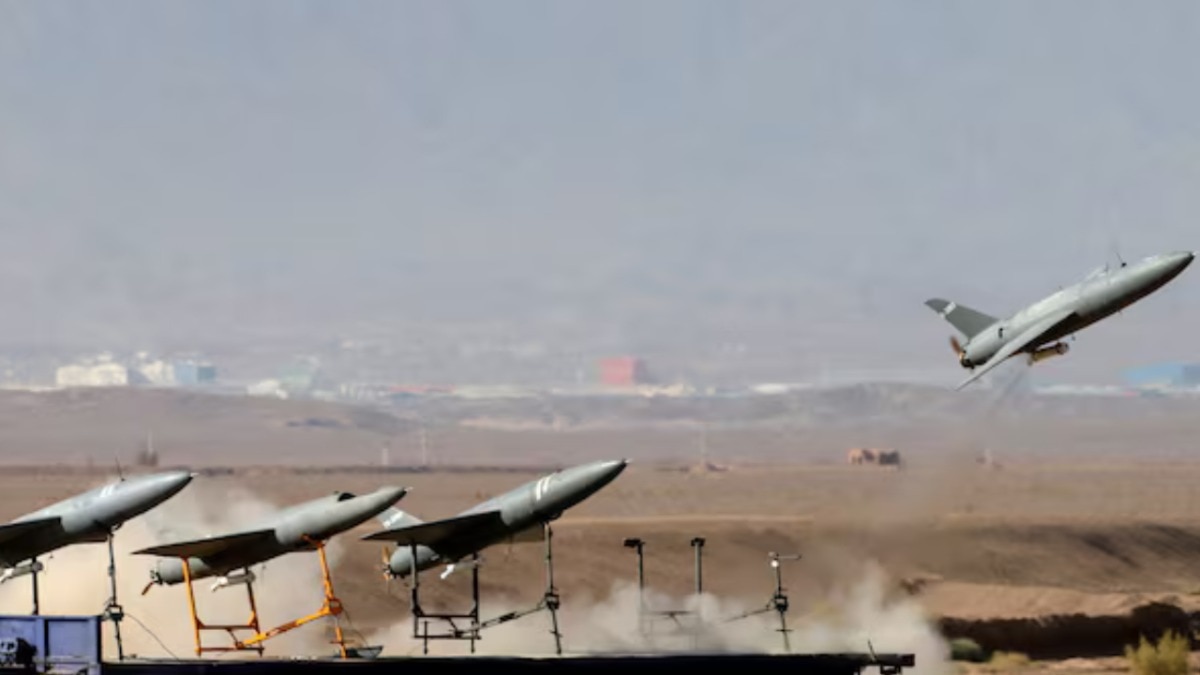
A civilian industrial facility in Bahrain caught fire on Saturday following an Iranian attack, marking an escalation in regional friction that threatens energy infrastructure, maritime corridors, and fragile diplomatic channels across the Persian Gulf. The strike on the island kingdom occurred against a backdrop of conflicting claims regarding military aircraft activity, renewed assaults on commercial shipping tankers, and fast-moving diplomatic maneuvering among regional and international powers. While the full extent of the structural damage and casualty figures remains unclear, the targeting of commercial infrastructure within Bahrain represents a serious expansion of hostilities in one of the world's most vital economic chokepoints.
Key facts
What happened
According to reporting by India Today, an attack carried out by Iran struck a civilian industrial installation in Bahrain on Saturday, igniting a significant blaze on the premises. Emergency services were mobilized to contain the flames, while civil and defense authorities assessed the structural integrity of the impacted facility.
Details surrounding the exact vector of the strike remain limited in official accounts. The incident occurred during a rapid series of security developments across the waterway, characterized by unverified claims regarding military aircraft movements and armed assaults against maritime tankers operating in surrounding waters. As smoke rose from the industrial zone, commercial shipping operators and defense commands in the Gulf entered a heightened posture of readiness.
Simultaneously, international envoys and regional foreign ministries initiated emergency diplomatic contacts in an effort to prevent an uncontrolled military response. The strike marks one of the few direct physical impacts on Bahraini soil linked to external Iranian actions in recent memory, moving the confrontation from maritime harassment and proxy engagements directly to land-based commercial targets.
Why it matters
Direct physical strikes on sovereign civilian infrastructure in the Gulf represent a qualitative shift in regional risk calculations. For global energy markets, Bahrain's geographical position places it adjacent to the primary maritime artery for global crude exports. The Persian Gulf handles roughly one-fifth of global petroleum liquids consumption, which must transit the Strait of Hormuz. When industrial assets or commercial vessels in this theater come under direct fire, marine insurers typically respond by sharply raising war-risk premiums for merchant vessels, increasing freight rates, and prompting refiners to seek alternative supplies.
For Bahrain itself, the economic stakes are acute. The kingdom has spent decades diversifying its economy away from upstream oil extraction, establishing prominent downstream refining complexes, aluminum smelting operations through companies such as Aluminium Bahrain (Alba), and logistics hubs serving the broader Gulf Cooperation Council (GCC). An assault that exposes vulnerability in civilian manufacturing or petrochemical facilities threatens foreign direct investment and municipal operations in a relatively compact, highly populated island state.
Strategically, the attack challenges the security umbrella that has long sheltered the Gulf monarchies. Bahrain maintains a formal defense partnership with the United States and has served as the permanent base for the U.S. Naval Forces Central Command and the U.S. Fifth Fleet for decades. A direct strike on Bahraini territory tests the credibility of deterrence architectures established by Washington and its regional partners, raising the question of whether deterrence can be maintained without triggering direct retaliatory strikes that could spiral into a wider regional conflict.
The background
Relations between Bahrain and Iran have been fraught for decades, shaped by profound geopolitical, religious, and territorial disputes. Following the 1979 Islamic Revolution in Tehran, Iranian leaders periodically laid historical claims to the archipelago, viewing the Sunni-led Al Khalifa monarchy through an adversarial lens given Bahrain's majority Shia population. In 1981, Bahraini authorities foiled a coup attempt attributed to the Islamic Front for the Liberation of Bahrain, an organization trained and backed by elements in Tehran. Subsequent unrest in the 1990s and during the 2011 Arab Spring further chilled diplomatic ties, with Manama repeatedly accusing the Islamic Revolutionary Guard Corps (IRGC) of smuggling weapons, explosives, and financial backing to domestic militant cells—allegations that Iranian authorities routinely denied.
In January 2016, Bahrain severed diplomatic relations with Tehran in solidarity with Saudi Arabia, after protesters ransacked the Saudi embassy in Tehran following the execution of a prominent Shia cleric in Riyadh. Although regional diplomacy saw a tentative thaw in 2023 when Saudi Arabia and Iran restored ties through a Beijing-brokered accord, Bahrain's normalization remained slower and more complicated. Manama's accession to the 2020 Abraham Accords, which established formal diplomatic relations with Israel, added another layer of acute friction with Tehran, which vehemently opposes any Israeli political or intelligence presence along its southern maritime perimeter.
The broader maritime context in the Persian Gulf has long been prone to volatility. During the Iran-Iraq War of the 1980s, the so-called "Tanker War" saw over 400 commercial merchant vessels targeted by mines, anti-ship missiles, and gunboats, eventually forcing the United States to launch Operation Earnest Will in 1987 to reflag and escort Kuwaiti tankers. In recent years, from 2019 onward, the region has witnessed recurrent shadow conflicts involving limpet mine detonations on oil tankers off the coast of the United Arab Emirates, drone seizures of commercial vessels transiting international waters, and sophisticated missile and drone strikes against Saudi energy infrastructure, most notably the September 2019 attacks on the Abqaiq and Khurais processing plants. Throughout these cycles, Iran has employed asymmetrical tactics to demonstrate that if its own energy exports or security are squeezed, no neighboring state's infrastructure can remain entirely insulated.
Reaction
In the immediate wake of the reported incident, formal diplomatic responses began coalescing around international institutions and regional security bodies. While specific official communiqués detailing immediate countermeasures had not been published at the time of reporting, standard protocol within the Gulf Cooperation Council typically involves calling emergency consultative meetings among member states—Bahrain, Saudi Arabia, the United Arab Emirates, Kuwait, Qatar, and Oman—to coordinate unified political and defense postures.
Western defense officials, particularly within the headquarters of the U.S. Fifth Fleet in Manama and the broader United States Central Command (CENTCOM), are expected to review intelligence tracking data regarding the origin of the munitions, radar trajectories, and surveillance logs from maritime patrol aircraft. In international forums such as the United Nations Security Council, affected states routinely register formal protests, citing violations of sovereign airspace and threats to commercial freedom of navigation.
Iranian state-aligned media outlets and defense officials have historically met allegations of regional infrastructure attacks with either categorical denials, assertions that such reports are fabricated by adversaries to justify Western military deployments, or declarations that any actions taken were defensive responses to prior provocations. Diplomatic mediators, including officials from regional states that maintain open diplomatic communication lines with both Tehran and the GCC capitals, such as Oman and Qatar, typically initiate backchannel contacts to urge de-escalation before military responses become irreversible.
What we don't know yet
Critical pieces of operational and technical information remain unverified in the public domain. First, available reporting does not specify the precise name, geographic location, or industrial output of the civilian facility that caught fire. It is unclear whether the site is an energy terminal, an electrical generation plant, a petrochemical facility, or a light manufacturing compound, which dramatically impacts assessments of long-term economic disruption.
Second, the specific weapons system utilized in the attack has not been verified. Analysts have yet to receive confirmation whether the damage was caused by a one-way loitering attack drone, a cruise missile, a ballistic munition, or falling debris intercepted by regional air defense batteries such as the MIM-104 Patriot systems deployed across the Gulf.
Third, there is no public accounting of casualties, injuries, or the operational status of workers at the facility during the strike. Finally, the exact sequence linking the facility fire to the concurrent reports of downed or contested military aircraft and commercial tanker assaults remains fragmented, leaving open the question of whether this was a coordinated multi-theater operation or an erratic, fast-breaking tactical exchange.
What to watch
Over the coming days, several clear indicators will signal whether this incident triggers a wider military escalation or recedes into diplomatic containment:
This account is based on original reporting published by the India Today World Desk.
How this story was produced
This report was written by The Global Wire newsroom from reporting first published by India Today World Desk. We verify the core facts against the original report, write our own account, and add the background and consequences a short wire item leaves out. Drafting is AI-assisted inside an editor-supervised pipeline, and every story is checked for accuracy of attribution, structure and duplication before it appears — full detail in our AI and funding disclosure.
Spotted an error? Tell us at corrections@horizonglobalnews.com and read our corrections policy or editorial standards.






Reader comments
Loading comments…