

Indian Regulators Expand Packaged Water Scrutiny After Bisleri Sample Fails Safety Tests
Food safety inspectors detect excessive bromate in a sample of India's leading bottled water brand, prompting nationwide testing across all commercial drinking water producers.
By The Global Wire Newsroom · Reported from Aditya Kalra
Link preview · horizonglobalnews.com
Indian Regulators Expand Packaged Water Scrutiny After Bisleri Sample Fails Safety Tests
Food safety inspectors detect excessive bromate in a sample of India's leading bottled water brand, prompting nationwide testing across all commercial drinking water producers.
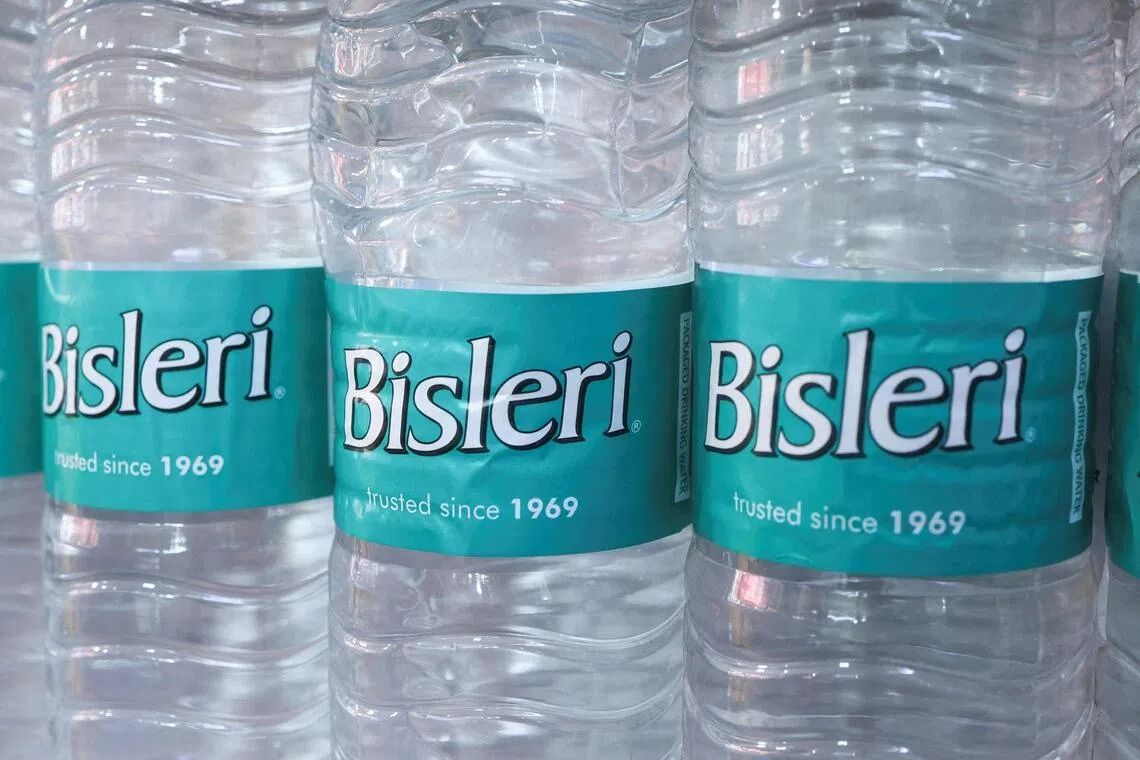
NEW DELHI — Food safety authorities in India have initiated an expanded inspection campaign targeting commercial bottled water manufacturers across the country after laboratory testing identified unsafe chemical concentrations in a sample produced by market leader Bisleri, according to reporting by Aditya Kalra. The testing revealed levels of bromate exceeding statutory safety thresholds, as well as the presence of a second, unspecified chemical group, prompting regulators to widen surveillance from individual manufacturing facilities to the broader packaged water sector. The intervention marks the latest escalation in an intensified, multi-sector push by Indian regulatory agencies to enforce quality standards across the domestic food and beverage supply chain.
Key facts
What happened
Routine and targeted quality surveillance by Indian food safety authorities resulted in the collection and formal laboratory analysis of packaged drinking water marketed under the Bisleri brand name. Subsequent chemical evaluations carried out by government-accredited testing facilities confirmed that the examined sample violated national drinking water standards, reporting by Aditya Kalra revealed.
Specifically, the laboratory assays measured elevated concentrations of bromate, an inorganic compound that is strictly regulated in commercial drinking water supplies. The levels detected in the sampled unit were found to exceed the maximum concentration limit sanctioned by statutory codes. Beyond the elevated bromate readings, the analytical results also documented the detection of a second chemical group that breached acceptable regulatory baselines.
Following the laboratory confirmation, regulatory authorities moved to widen the scope of their inquiry. Rather than treating the incident as an isolated batch failure limited to a single production line, enforcement officials initiated an expanded screening effort designed to assess packaged water products across all brands competing in the Indian domestic market. The directive instructs inspectors to systematically draw samples from retail shelves, distribution depots, and bottling plants to verify compliance with national chemical and microbiological thresholds.
Why it matters
Packaged drinking water is one of the most critical consumer goods categories in India, serving as an indispensable daily utility for hundreds of millions of urban residents, commuters, and commercial establishments navigating municipal tap water systems that frequently fail to meet potable standards. For decades, consumer trust in commercial bottled water has rested on the presumption that industrial multi-stage purification processes—including reverse osmosis, ozonation, and micron filtration—render factory-sealed bottles categorically safer than municipal or ground sources. When the nation's preeminent brand, which commands an iconic status so pervasive that its brand name is widely used as a generic synonym for bottled water, fails basic chemical safety tests, that consumer presumption is directly undermined.
From a public health perspective, the presence of bromate above statutory safety limits warrants immediate regulatory vigilance. In industrial water purification, bromate is typically generated as an unintended disinfection byproduct. It forms when ozone gas, introduced to sanitize water and neutralize microbial pathogens, oxidizes naturally occurring bromide ions present in untreated source water. Health authorities and toxicological agencies worldwide, including the International Agency for Research on Cancer, classify bromate as a potential human carcinogen based on animal studies showing nephrotoxicity and tumor development following chronic exposure. International benchmarks, including guidelines set by the World Health Organization, cap bromate concentrations in finished drinking water at 10 micrograms per liter (equivalent to 10 parts per billion), a standard widely mirrored in domestic regulations.
For the commercial beverage market, widening regulatory scrutiny across all competing brands creates immediate operational and compliance liabilities. India's commercial water sector encompasses both organized multinational corporations and a vast network of thousands of small, licensed and unlicensed regional bottling franchises. Comprehensive testing sweeps have historically revealed that smaller contract bottlers often lack the precise monitoring equipment and skilled technicians required to modulate ozone dosing relative to variable source-water chemistry. If expanded testing uncovers systemic bromate contamination across multiple commercial labels, the industry could face widespread product recalls, batch cancellations, and significant upward cost pressures associated with installing advanced remediation systems, such as catalytic destruction filters or granular activated carbon beds.
The background
India's commercial drinking water sector is governed under a joint regulatory framework primarily administered by the Food Safety and Standards Authority of India (FSSAI) under the Food Safety and Standards Act, 2006, along with mandatory product certification overseen by the Bureau of Indian Standards (BIS). Under Indian law, packaged drinking water cannot be legally manufactured, packed, or sold without displaying both an FSSAI operating license and the standard certification mark issued by the BIS under standards such as IS 14543 (governing packaged drinking water) and IS 13428 (governing packaged natural mineral water). These technical standards enumerate strict maximum permissible limits for physical properties, heavy metals, toxic minerals, pesticide residues, microbial pathogens, and chemical disinfection byproducts including bromate and chlorate.
Bisleri International, originally founded as an Italian mineral water company acquired by the Chauhan family's Parle group in 1969, has spent more than five decades establishing the largest distribution network in the country's beverage sector. The company operates dozens of owned and franchised bottling plants spread across virtually every Indian state, maintaining an estimated market share exceeding 30 percent in the organized packaged water trade. Bisleri competes directly against global beverage conglomerates, including The Coca-Cola Company's Kinley and PepsiCo's Aquafina, as well as domestic competitors like Tata Consumer Products' Himalayan and Copper Plus lines.
This regulatory intervention does not occur in an institutional vacuum. Over the past two years, Indian regulatory authorities have operated under mounting domestic and international pressure to demonstrate aggressive oversight of basic consumables. High-profile international regulatory actions—such as import curbs and recalls initiated by food safety authorities in Hong Kong, Singapore, the European Union, and the United States regarding ethylene oxide residues in spice mixtures exported by prominent Indian brands—thrust domestic regulatory diligence into sharp global focus. Concurrently, Indian agencies have stepped up domestic scrutiny of packaged baby formulas, processed dairy products, and high-sugar nutritional supplements. Expanding inspections to drinking water signals an effort by government authorities to reassure the public that enforcement agencies are proactively policing foundational consumer staples.
Reaction
Neither Indian central food safety authorities nor Bisleri International had issued public statements elaborating on the specific manufacturing batch, plant location, or precise remediation protocols at the time the initial testing outcome was reported by Aditya Kalra.
Industry analysts and consumer advocacy organizations, however, are anticipated to call for rapid transparency regarding the geographic distribution of the affected batch. Consumer rights federations in India routinely press the government to publish serial batch numbers and plant locations whenever safety non-compliance is formally established, enabling households and commercial establishments to isolate inventory. On the corporate side, beverage manufacturers faced with disinfection byproduct violations typically review ozone exposure times, raw source-water bromide testing schedules, and the maintenance logs of filtration systems across both company-owned facilities and third-party contract bottlers.
What we don't know yet
The initial findings reported by Aditya Kalra leave several critical technical and operational questions unanswered. Most notably, the reporting does not disclose the precise concentration of bromate detected in the non-compliant sample, nor how far that figure sat above the permissible statutory ceiling. Furthermore, the reporting identifies a second "chemical group" found beyond allowed thresholds but does not specify the chemical family, its concentration, or the specific health hazards associated with it.
It also remains unconfirmed whether the tainted sample originated from an owned manufacturing plant or one of hundreds of independent third-party co-packers and franchise facilities that bottle water under licensing agreements. The geographic location where the sample was seized, the batch production volume, the date of manufacture, and whether regulatory authorities have initiated a mandatory commercial recall of parallel inventory from retail shelves remain undisclosed. Without these details, consumers and wholesale distributors cannot definitively identify which specific production runs may be affected.
What to watch
In the coming days and weeks, the primary development to monitor will be formal circulars or enforcement notifications issued by central and state food safety departments detailing the parameters of the nationwide testing drive. Observers will be looking to see whether regulators establish specific deadlines for sampling campaigns and whether state laboratories publish comprehensive testing outcomes covering rival brands such as Kinley, Aquafina, and regional private labels.
Attention will also focus on Bisleri's formal corporate response, including whether the company challenges the analytical methodology of the testing laboratory through statutory counter-testing provisions. Under Indian food safety statutes, manufacturers possess the legal right to request secondary analysis of accredited reference samples at referral laboratories. Finally, markets will watch whether authorities impose administrative penalties, suspend operating licenses at the specific bottling facility responsible for the non-compliant batch, or order a nationwide market withdrawal of the implicated production run.
This article incorporates reporting originally published by Aditya Kalra.
How this story was produced
This report was written by The Global Wire newsroom from reporting first published by Aditya Kalra. We verify the core facts against the original report, write our own account, and add the background and consequences a short wire item leaves out. Drafting is AI-assisted inside an editor-supervised pipeline, and every story is checked for accuracy of attribution, structure and duplication before it appears — full detail in our AI and funding disclosure.
Spotted an error? Tell us at corrections@horizonglobalnews.com and read our corrections policy or editorial standards.






Reader comments
Loading comments…