

Incat Pushes Electric Ferry Boundaries With 55 MWh Systems for Danish Fleet
Rapid gains in battery energy density will cut 300 tonnes of weight from three Danish catamarans, allowing them to reach 40 knots.
By The Global Wire Newsroom · Reported from Omar Kardoudi
Link preview · horizonglobalnews.com
Incat Pushes Electric Ferry Boundaries With 55 MWh Systems for Danish Fleet
Rapid gains in battery energy density will cut 300 tonnes of weight from three Danish catamarans, allowing them to reach 40 knots.
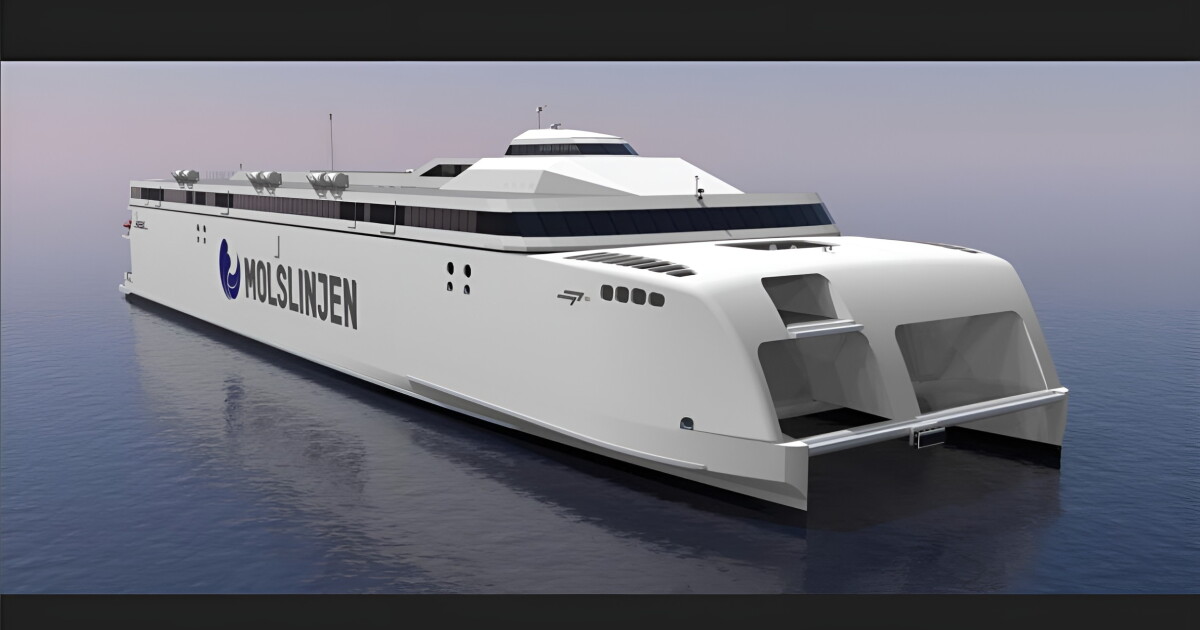
A fast-moving technological transition in commercial maritime shipping has accelerated as Tasmanian shipbuilder Incat begins development on three high-speed electric catamarans for Danish ferry operator Molslinjen, with each vessel scheduled to integrate a 55 megawatt-hour energy storage installation. The order comes barely a month after the world's current electric vessel capacity benchmark was established by the China Zorrilla, a 130-metre battery-electric catamaran built at the same Hobart shipyard for the Argentine-Uruguayan operator Buquebús. Advances in commercial cell chemistry and system architecture will allow the new Danish vessels to shed roughly 300 metric tonnes of battery mass compared to older technical configurations, enabling the 55 MWh catamarans to sustain operating speeds of up to 40 knots on short-sea routes across Scandinavian waters.
Key facts
What happened
The maritime electrification sector witnessed a rapid resetting of technical limits with the announcement that Incat Tasmania has commenced work on three all-electric catamarans for Danish transport company Molslinjen. According to reporting by Omar Kardoudi, the vessels will incorporate massive 55 MWh battery assemblies while shaving nearly 300 tonnes off earlier battery weight projections to hit sustained service speeds of 40 knots.
The development marks a swift succession at the peak of maritime battery sizing. In October, the catamaran China Zorrilla entered commercial passenger service between Buenos Aires and ports in Uruguay, claiming the title of the largest zero-emission vessel in operation. Built by Incat for South American operator Buquebús, the 130-metre craft served as an industrial proof of concept, demonstrating that heavy aluminum Ro-Pax vessels—carrying both vehicles and passengers—could abandon liquefied natural gas or diesel propulsion in favor of high-capacity lithium iron phosphate or high-nickel chemistry storage systems.
Yet the operational record set by the China Zorrilla was destined to be short-lived. The design specifications established for Molslinjen demand significantly higher energy capacity to navigate the open-water corridors connecting the Danish mainland of Jutland with the island of Zealand, as well as routes servicing the island of Bornholm. To maintain tight commercial timetables, these Scandinavian ferry routes require speeds in the vicinity of 35 to 40 knots. By pairing next-generation battery cells with refined structural naval architecture, marine engineers were able to compress the volumetric and gravimetric footprint of the 55 MWh installation, cutting approximately 300 metric tonnes from the projected displacement and bringing high-speed battery flight within operational reality.
Why it matters
The naval architecture of high-speed passenger and vehicle transport has historically been bounded by a brutal physics trade-off: speed requires power, power demands energy storage, and energy storage historically carried prohibitive weight. Diesel fuel holds an energy density roughly 30 to 40 times higher than modern commercial battery cells on a per-kilogram basis. When shipbuilders attempted to power large catamarans purely on electrochemical power, the deadweight penalty of the battery pack routinely degraded vessel buoyancy, increased hydrodynamic drag, and severely capped transit speeds.
Eliminating 300 tonnes of deadweight from a 55 MWh system represents a pivotal technological leap for short-sea shipping corridors worldwide. For regional ferry operators, speed is not merely a passenger amenity; it determines fleet utilization, crew shift scheduling, and harbor slot efficiency. If an electric vessel is forced to drop to 20 knots to preserve battery life, operators must procure additional hulls to run identical daily departure frequencies. Achieving 40 knots while carrying commercial vehicle payloads allows Molslinjen to replicate the service frequency of conventional, fossil-fueled fast craft while eliminating direct stack emissions.
Furthermore, scaling single-vessel battery packs to 55 MWh pushes shoreside infrastructure into a new operational realm. Recharging these vessels during rapid harbor turnaround intervals—frequently lasting only 15 to 30 minutes—requires megawatt-class charging solutions delivering continuous loads equivalent to powering tens of thousands of homes. The success of this fleet will set technical standards for port electrical grids and dynamic shore-to-ship connection systems throughout Europe and North America.
The background
International shipping accounts for roughly 3 percent of global greenhouse gas emissions, prompting regulatory bodies to enforce increasingly stringent regional and global limits. The International Maritime Organization (IMO) has set targets to achieve net-zero greenhouse gas emissions from international maritime transport by or around 2050, with indicative checkpoints for 2030 and 2040. In Europe, shipping lines operate under even tighter strictures: the European Union Emissions Trading System (EU ETS) began phasing in maritime emissions compliance in 2024, obliging vessel operators to purchase carbon allowances for voyages between and within European ports. Concurrently, the FuelEU Maritime regulation, entering into force in 2025, mandates progressive reductions in the greenhouse gas intensity of energy used on board ships.
Within this regulatory environment, short-sea Ro-Pax lines represent the lowest-hanging fruit for full decarbonization. Unlike deep-sea container vessels or tankers crossing oceans—which remain constrained toward green methanol, e-ammonia, or wind assistance—ferry routes feature fixed, predictable voyages between dedicated terminals where high-voltage shore charging can be installed.
Incat Tasmania, based in Derwent Park near Hobart, has been at the forefront of high-speed catamaran production for four decades. Under the leadership of founder Robert Clifford, the shipyard pioneered wave-piercing aluminum multihulls that came to dominate global fast-ferry networks and military logistics testing. The yard's pivot to electric propulsion materialized fully with Hull 096, the vessel completed for Buquebús. Originally commissioned to run on dual-fuel LNG engines, the ship was redesigned mid-construction into a fully electric craft after advances in energy storage demonstrated that battery propulsion had become commercially feasible. The lessons learned during the build and delivery of the China Zorrilla provided the structural and electrical blueprints now being expanded for Molslinjen's fleet renewal.
Reaction
While neither Incat nor Molslinjen immediately issued new regulatory filings following the technical weight-reduction milestones, industry analysts and marine engineering groups have monitored the procurement program closely. Port authorities throughout Scandinavia, notably at Aarhus and Rønne, are engaged in preliminary engineering assessments to determine how local electrical networks will absorb the massive power spikes required to cycle multiple 55 MWh systems concurrently.
European maritime trade associations and clean transport lobbies are expected to scrutinize the vessel's sea trials closely as an indicator of whether short-distance aviation routes could be challenged by high-speed maritime connections. Conversely, trade union bodies representing shoreside electrical workers and port logistics teams are awaiting detailed guidelines regarding the automated physical couplers and safety cordons that must accompany ultra-fast multi-megawatt charging operations, where high thermal loads and volatile lithium chemistries require rigorous containment protocols.
What we don't know yet
Significant technical and commercial details surrounding the Molslinjen program remain unverified. The reporting has not revealed the specific battery cell chemistry selected for the 55 MWh installation, leaving open the question of whether the weight savings stem from transitioning to higher-density nickel-manganese-cobalt (NMC) chemistries or from novel cell-to-pack structural integration methods using advanced lithium iron phosphate (LFP) variants. The safety profiles, thermal runaway mitigation strategies, and cycle-life degradation rates differ dramatically between these chemical configurations, particularly under repeated rapid-charging conditions.
Additionally, the precise capital expenditures for the vessel builds and the associated shoreside charging architecture have not been publicly disclosed. It is unclear whether Danish national decarbonization subsidies or EU Innovation Fund allocations have been leveraged to underwrite the substantial upfront port grid upgrades. Finally, the exact delivery timetable for the three hulls and the sea-trial dates that will empirically verify the 40-knot operating threshold under full commercial displacement remain unspecified.
What to watch
The most decisive metric to watch in the coming quarters will be the technical announcements regarding the chosen battery suppliers and system integrators. Marine battery manufacturers such as Corvus Energy, EST-Floattech, and Leclanché, alongside engineering giants like ABB and Wärtsilä, frequently vie for integration rights on high-capacity electric projects, and their technical datasheets will clarify how the 300-tonne mass reduction is achieved.
Another critical milestone will be the construction permits and grid-connection agreements filed by Danish coastal municipalities and local utility providers. Observers should track capital investment commitments at Molslinjen's primary passenger terminals, where automated robotic charging arms and onshore battery energy storage systems (BESS) must be constructed to buffer grid stress during ship dockings. Finally, commercial sea trials conducted in Tasmanian coastal waters will deliver the definitive verdict on whether a 55 MWh aluminum catamaran can reliably sustain its 40-knot operational envelope under diverse sea states and realistic payload configurations.
This article includes reporting originally published by Omar Kardoudi.
How this story was produced
This report was written by The Global Wire newsroom from reporting first published by Omar Kardoudi. We verify the core facts against the original report, write our own account, and add the background and consequences a short wire item leaves out. Drafting is AI-assisted inside an editor-supervised pipeline, and every story is checked for accuracy of attribution, structure and duplication before it appears — full detail in our AI and funding disclosure.
Spotted an error? Tell us at corrections@horizonglobalnews.com and read our corrections policy or editorial standards.





Reader comments
Loading comments…