

Hungary Seizes $30 Million in Buried Cash Amid Widening Bribery Investigation
Hungarian authorities uncovered tens of millions in physical currency, some concealed in forest soil, during a major anti-graft operation under the country's new government.
By The Global Wire Newsroom · Reported from Gergely Szakacs
Link preview · horizonglobalnews.com
Hungary Seizes $30 Million in Buried Cash Amid Widening Bribery Investigation
Hungarian authorities uncovered tens of millions in physical currency, some concealed in forest soil, during a major anti-graft operation under the country's new government.
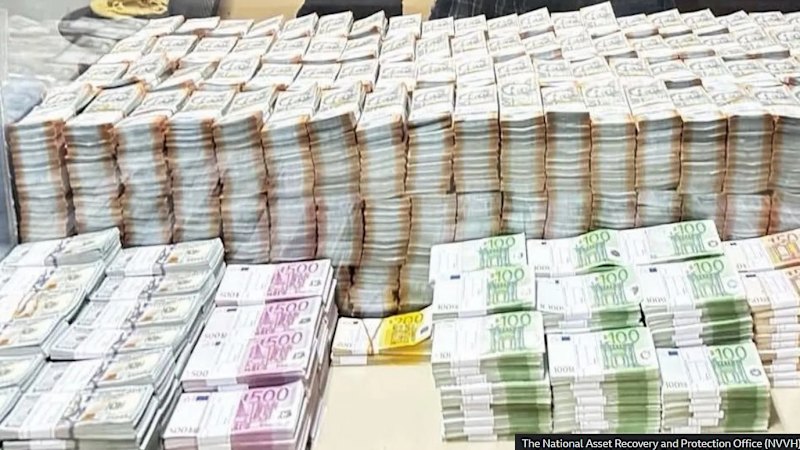
Hungarian law enforcement authorities have seized approximately $30 million in physical currency, discovering illicit stashes that included banknotes buried in forested areas, as part of an expanding anti-corruption investigation directed under the country's newly installed government. The operation, which required officials to spend eight continuous hours verifying and counting the banknotes, marks one of the most substantial cash recoveries in Central Europe's recent history of financial crime enforcement.
Key facts
What happened
According to reporting by Gergely Szakacs, the multi-million-dollar cash recovery unfolded as Hungarian investigators executed coordinated search warrants connected to an ongoing bribery probe. Law enforcement teams targeted multiple locations, following financial intelligence that pointed away from conventional banking repositories and toward rural, off-grid hiding spots.
Among the sites searched were wooded tracts where suspects had concealed bundles of cash underground in an apparent effort to evade standard asset-tracing mechanisms, currency reporting thresholds, and electronic surveillance. Digging teams and forensic search personnel recovered the containers from the forest floor, transporting the secured assets under armed guard to processing centers.
The volume of paper currency recovered was so extensive that officials spent eight uninterrupted hours counting and categorizing the notes, according to the reporting by Gergely Szakacs. Standard law enforcement protocols in large-scale cash seizures require multi-custody tallying, serial-number logging, counterfeit checks, and forensic dusting for fingerprints and genetic material before funds can be deposited into secure state escrow accounts.
While authorities have established that the operation forms part of a broader anti-graft campaign launched under Hungary’s new political leadership, investigative bodies have kept operational specifics tightly held. The specific state bodies that executed the field operations—typically involving the National Bureau of Investigation (Nemzeti Nyomozó Iroda), the Central Chief Prosecution Office of Investigation (Központi Nyomozó Főügyészség), or the National Tax and Customs Administration (NAV)—have not publicly identified the individuals or commercial enterprises whose properties and transit routes were raided.
Why it matters
A seizure of $30 million in physical cash represents an extraordinary development in modern financial intelligence, where high-level bribery schemes typically rely on offshore shell companies, layered real estate purchases, or complex digital transactions. The reversion to buried currency indicates both the sheer scale of illicit value extraction and an acute fear among perpetrators that conventional banking channels and electronic money flows were vulnerable to heightened regulatory scrutiny.
For Hungary, the broader implications reach into national economic governance and European geopolitics. Over the past decade, systemic corruption concerns have stood at the center of institutional disputes between Budapest and Brussels. The European Union has repeatedly flagged public procurement irregularities, political favoritism in state contract awards, and the perceived insulation of high-ranking officials from judicial prosecution.
A demonstrative, high-yield crackdown on graft carries direct financial consequences for the Hungarian state treasury. Billions of euros in European cohesion funds and post-pandemic Recovery and Resilience Facility allocations have previously been suspended or subjected to strict rule-of-law conditionalities. Visible, depoliticized enforcement actions that yield tangible evidence of financial crime can serve as pivotal leverage points in negotiations with European institutions, reinforcing arguments that state investigative mechanisms are operating with autonomy and vigor.
Moreover, the discovery of buried cash reserves of this magnitude disrupts ongoing patronage networks. An asset loss of $30 million strips significant liquidity from corrupt syndicates, hampering their ability to fund legal defenses, settle existing kickback agreements, or relocate remaining capital abroad.
The background
The backdrop to this enforcement operation is defined by years of domestic and international friction over governance standards in Hungary. During the 2010s and early 2020s, international transparency watchdogs, including Transparency International, regularly ranked Hungary among the lowest-performing European Union member states on their annual Corruption Perceptions Index, pointing to entrenched conflicts of interest in state tenders and public procurement.
The institutional dispute escalated formally in April 2022, when the European Commission triggered its general conditionality mechanism against Hungary for the first time in EU history. The procedure was created to protect the bloc's budget against breaches of the principles of the rule of law, focusing specifically on systemic deficiencies in public procurement, limitations in audit oversight, and weaknesses in judicial accountability for public fraud. In response to mounting fiscal pressure, Hungary enacted a series of remedial statutes, which included the establishment of an independent Integrity Authority tasked with monitoring state tenders and investigating conflicts of interest.
Historically, physical cash hoards in European corruption cases have surfaced when cross-border financial surveillance tightened. After the European Anti-Fraud Office (OLAF) and European public prosecutors increased their focus on tracking wire transfers and digital payment networks, individuals handling illicit kickbacks frequently turned to physical currency to avoid automatic alerts triggered by the European Union's Anti-Money Laundering Directives.
Under Hungarian criminal law, the storage and concealment of funds derived from criminal offenses falls under statutory prohibitions against money laundering and accepting unlawful advantages. Standard evidentiary practice requires prosecutors not only to prove unlawful possession of undeclared cash, but to establish the underlying predicate offense—such as bid-rigging, extortion, or the payment of illicit administrative kickbacks—to secure final forfeiture and prison sentences.
Reaction
The disclosure of the raid has initiated intense scrutiny within Hungary’s legal, political, and financial sectors. Government monitors and judicial watchdogs are awaiting formal press conferences from state prosecutors and justice ministry officials to clarify the procedural framework of the raids and whether detention orders have been issued.
Civil society groups and anti-corruption organizations have emphasized the necessity of procedural transparency, noting that while dramatic cash seizures generate substantial public interest, their long-term credibility rests on the impartiality of the indictments that follow. Watchdogs are watching closely to see whether prosecutions reach into high-level contracting authorities or remain confined to lower-level intermediaries.
European Union officials and regional financial intelligence units have not yet issued formal statements, as is standard practice while operational fieldwork and evidence classification remain active. However, diplomats in Brussels and regional monitors tracking Hungary's anti-corruption commitments are expected to evaluate the judicial follow-through as part of their regular assessments of the country's institutional integrity.
What we don't know yet
Despite the magnitude of the cash discovery, critical operational details remain undisclosed in the reporting by Gergely Szakacs. The specific identities, institutional affiliations, and professional roles of the suspects under investigation have not been made public, leaving it unclear whether the inquiry targets current or former civil servants, state enterprise executives, private defense contractors, or international commercial brokers.
Similarly, authorities have not revealed the precise public contracts, municipal projects, or corporate sectors from which the alleged bribery proceeds originated. The specific geographic regions where the forest caches were located also remain unstated, as do the technical methods—such as ground-penetrating radar, wiretaps, or cooperating witness testimony—used to locate the buried containers.
Finally, the exact currency breakdown of the $30 million total has not been confirmed. It remains unknown whether the cache consisted primarily of Hungarian forints, euros, U.S. dollars, or Swiss francs, an operational detail that typically sheds light on whether the funds were intended for domestic circulation or prepared for cross-border transit.
What to watch
The immediate next phase of the investigation will be determined by whether the Central Chief Prosecution Office of Investigation files formal motions for pre-trial detention before the competent municipal courts. Under Hungarian criminal procedure, suspects taken into custody must appear before an investigative judge within 72 hours of arrest if prosecutors seek continued detention.
In the coming weeks, attention will turn to whether authorities initiate related asset freezes, corporate audits, or international mutual legal assistance requests through Europol or Eurojust, which would indicate cross-border financial links. Observers will also track whether Hungary's Integrity Authority or the European Anti-Fraud Office becomes formally integrated into the evidentiary review.
Politically and diplomatically, the critical milestone will arrive when European monitoring bodies publish their subsequent compliance updates regarding Hungary’s anti-corruption framework, assessing whether cases like this reflect a permanent, structural enhancement in judicial autonomy.
This report is based on original news reporting published by Gergely Szakacs.
How this story was produced
This report was written by The Global Wire newsroom from reporting first published by Gergely Szakacs. We verify the core facts against the original report, write our own account, and add the background and consequences a short wire item leaves out. Drafting is AI-assisted inside an editor-supervised pipeline, and every story is checked for accuracy of attribution, structure and duplication before it appears — full detail in our AI and funding disclosure.
Spotted an error? Tell us at corrections@horizonglobalnews.com and read our corrections policy or editorial standards.






Reader comments
Loading comments…