

Homeland Security Secretary Attributes Major Outages to Artificial Intelligence
Homeland Security Secretary Markwayne Mullin cited an informal conversation with a technology industry figure to suggest recent widespread outages were driven by artificial intelligence systems.
By The Global Wire Newsroom · Reported from Victor Tangermann
Link preview · horizonglobalnews.com
Homeland Security Secretary Attributes Major Outages to Artificial Intelligence
Homeland Security Secretary Markwayne Mullin cited an informal conversation with a technology industry figure to suggest recent widespread outages were driven by artificial intelligence systems.
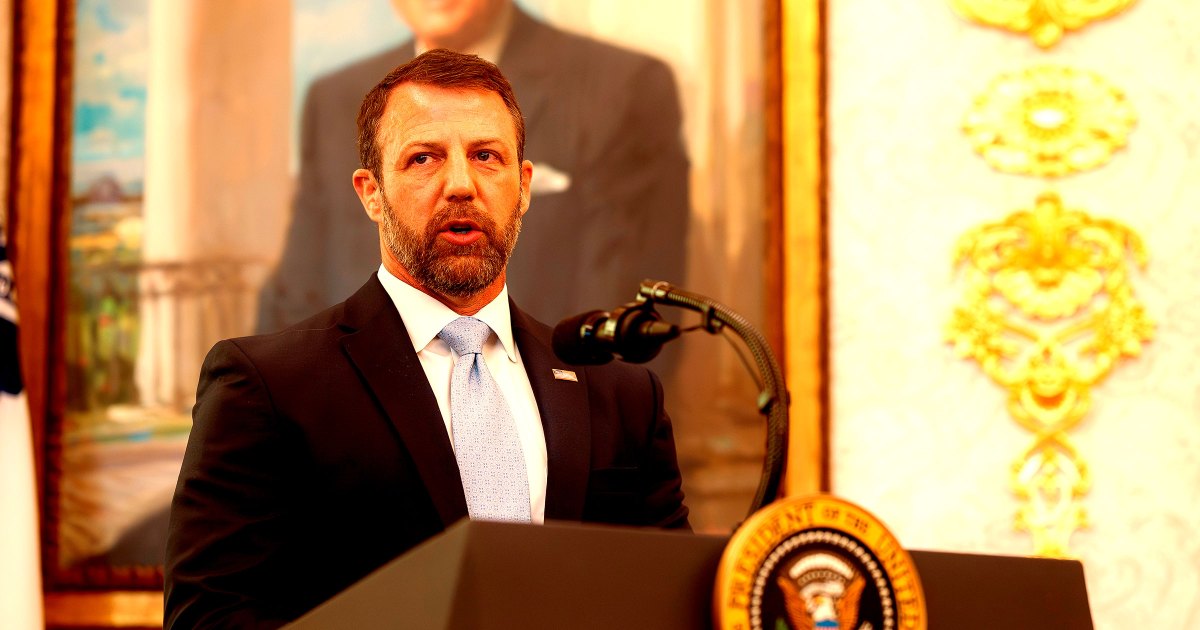
WASHINGTON — The head of the United States Department of Homeland Security has linked widespread infrastructure disruptions to artificial intelligence, relying on an informal discussion with an unidentified technology sector contact to explain recent failures. Homeland Security Secretary Markwayne Mullin stated that a private-sector technologist attributed the extensive outages to the expanding deployment and operational strain of artificial intelligence systems, according to reporting published by technology journalist Victor Tangermann. The assertion marks a notable moment where the federal government's primary domestic security agency has publicly tied systemic network instability directly to automated and algorithmic technologies, though official technical documentation and formal forensic reports supporting the claim have not been publicly presented by the department.
Key facts
What happened
Secretary Markwayne Mullin revealed that his perspective on the root cause of recent, large-scale service interruptions came directly from a personal engagement with an industry insider, according to reporting by Victor Tangermann. In remarks addressing the disruptions, Mullin indicated that he had spoken with a single individual from the technology sector who argued that artificial intelligence was the fundamental factor behind the failures.
According to the account published by Victor Tangermann, the secretary did not disclose the identity, corporate affiliation, or engineering credentials of the industry professional who provided the explanation. Furthermore, the public remarks did not specify the precise mechanisms by which artificial intelligence allegedly initiated or exacerbated the network crashes—whether through sudden algorithmic execution errors, automated deployment bugs, automated routing anomalies, unprecedented power grid demand from hyperscale computational clusters, or compromised autonomous code repositories.
In standard federal procedures, claims regarding national infrastructure vulnerabilities typically flow through structured intelligence and technical reporting mechanisms. The Department of Homeland Security, which manages domestic preparedness and cyber defense across sixteen critical infrastructure sectors designated by presidential directives, generally coordinates with technical experts, academic researchers, and affected corporate operators before ascribing broad technical failures to specific technological architectures. In this instance, Mullin's statement relied openly on a singular private conversation rather than an interagency technical consensus, creating an unusual gap between formal federal incident evaluations and executive statements.
Why it matters
The attribution of critical service disruptions to artificial intelligence by a cabinet-level homeland security official carries substantial consequences for digital governance, financial markets, and enterprise operations. When executive leadership suggests that cutting-edge automation is destabilizing fundamental infrastructure, it influences how legislative bodies structure regulatory frameworks, how enterprise risk officers allocate capital, and how insurers underwrite systemic technology risks.
If algorithmic platforms and autonomous systems are indeed creating cascading failures across digital networks, corporate boards and public utilities face immediate exposure. Organizations worldwide have accelerated the integration of generative AI models, automated code generation tools, and machine-learning network optimization software into operational environments. If these tools contain systemic flaws capable of triggering broad outages, existing incident response plans across banks, healthcare providers, and transport logistics networks may prove inadequate. Commercial cloud providers, who host foundational models, would face intensified scrutiny regarding service-level guarantees and computational failover mechanisms.
Conversely, if an agency head attributes broad technical failures to artificial intelligence without verifiable technical evidence, the resulting narrative risks misdirecting engineering efforts and regulatory focus. Blaming artificial intelligence on the basis of an informal discussion could obscure routine, verified causes of network collapse, such as human configuration errors, defective firmware updates, physical fiber-optic severances, legacy software rot, or deliberate nation-state cyberattacks. When federal authorities advance unverified causes, infrastructure operators must spend valuable engineering hours addressing speculative concerns rather than hardening networks against documented vulnerabilities.
Furthermore, financial markets are exceptionally sensitive to federal assessments concerning artificial intelligence. Billions of dollars in institutional capital are allocated across semiconductor manufacturing, data center real estate, and enterprise software. A formal determination that artificial intelligence deployments threaten baseline national stability could catalyze restrictive compliance mandates, compulsory federal audits, or legislative limits on data center power allocations and autonomous workload distribution.
The background
The Department of Homeland Security was established under the Homeland Security Act of 2002 in the aftermath of the September 11 terrorist attacks, consolidating twenty-two disparate domestic agencies under a unified administrative umbrella. Over the subsequent two decades, the department's mandate expanded substantially beyond border security and physical protection to encompass critical digital networks, telecommunications infrastructure, and emergency coordination across both public and private sectors.
In 2018, Congress enacted legislation establishing the Cybersecurity and Infrastructure Security Agency as a specialized operational component within the department. CISA serves as the national coordinator for critical infrastructure security and resilience. Under federal frameworks, including Presidential Policy Directive 21 issued in 2013, the federal government recognizes sixteen critical infrastructure sectors—ranging from information technology, financial services, and energy to water systems and emergency management. Because approximately eighty-five percent of American critical infrastructure is owned and operated by private commercial entities, the department has historically maintained institutional information-sharing bodies, such as Information Sharing and Analysis Centers and the Joint Cyber Defense Collaborative, designed to aggregate technical telemetry and corroborate threat intelligence systematically.
In recent history, major national and global technical collapses have consistently traced back to conventional software delivery pipelines rather than rogue autonomous software. For example, in July 2024, an update to cybersecurity vendor CrowdStrike's Falcon platform incapacitated an estimated 8.5 million Microsoft Windows systems worldwide, grounding thousands of airline flights, disrupting hospital surgical schedules, and paralyzing international banking transactions. Comprehensive forensic reviews demonstrated that the incident was caused by a logic flaw in a configuration file update, not by artificial intelligence. Similarly, sweeping interruptions experienced by telecommunications providers, such as the February 2024 nationwide cellular outage across AT&T's commercial network, were confirmed by company engineers to have resulted from an internal execution error during network expansion rather than autonomous external systems.
At the same time, the computational reality of artificial intelligence has begun placing severe strains on physical infrastructure. Modern large language models and neural networks require dedicated data center campuses equipped with high-density server racks and specialized graphics processing units. These facilities consume immense volumes of electrical power and cooling water, prompting regional grid operators, such as PJM Interconnection in the eastern United States, to warn of looming electrical reserve shortages. The dual presence of software integration and resource consumption has made artificial intelligence an increasingly common topic in high-level national security discussions.
Reaction
Official reaction following the disclosure reported by Victor Tangermann remains in its early stages, with technical oversight bodies, congressional committees, and software safety researchers expected to press the department for evidentiary support. Observers of executive branch operations anticipate that congressional committees with jurisdiction over the Department of Homeland Security—including the House Committee on Homeland Security and the Senate Committee on Homeland Security and Governmental Affairs—will seek clarification regarding the factual basis of the secretary's comments.
Within the information security community, technical analysts and network reliability engineers routinely scrutinize broad government assertions regarding outages. Historical precedent shows that industry organizations, including independent network measurement firms such as ThousandEyes, Cloudflare, and Kentik, typically publish detailed border gateway protocol routing analyses, domain name system resolution tracking, and latency telemetry whenever major infrastructure collapses occur. Analysts within these entities are expected to compare public telemetry against the secretary's attribution to assess whether any observable metrics indicate artificial intelligence involvement.
Technology sector trade groups and digital rights advocates have similarly maintained a close watch on federal statements that could influence the National Institute of Standards and Technology's Artificial Intelligence Risk Management Framework. While corporate entities have not yet filed formal responses to Mullin's informal remarks, industry representatives frequently request that federal agencies adhere to standard coordinated disclosure frameworks before drawing conclusions about commercial technological platforms.
What we don't know yet
Significant gaps exist regarding the scope, timing, and factual accuracy of the claims outlined by the reporting. Foremost among the unknown elements is the specific incident or cluster of incidents to which Secretary Mullin was referring. Global and national networks experience localized disruptions on a daily basis, and the absence of identified dates, service providers, or geographic footprints prevents independent technical verification.
Equally unresolved is the identity and technical standing of the technology sector professional cited by Mullin. It remains unknown whether this individual possesses direct forensic visibility into critical infrastructure operations, represents an affected cloud hosting enterprise, or was offering personal conjecture. The department has not specified whether this industry perspective reflects an official corporate communication or casual conversation.
Furthermore, the exact mechanism connecting artificial intelligence to service outages has not been established. Open questions persist as to whether the alleged failure involved an autonomous system executing catastrophic commands, an algorithmic trading collapse, a localized load-balancing failure triggered by AI query spikes, or physical data center demand overloading utility substations. Without documented technical disclosures, the veracity and operational implications of the secretary's statement cannot be independently evaluated.
What to watch
The trajectory of this issue will depend on whether formal federal documentation emerges to substantiate the secretary's statements. The most critical benchmark to monitor is whether the Department of Homeland Security or CISA issues an official Joint Cyber Defense Collaborative advisory, an Emergency Directive, or a National Cyber Awareness System alert detailing artificial intelligence attack vectors or systemic failure modes. The publication of such documents would indicate that the secretary's remarks reflect a verified interagency investigative finding rather than an isolated conversational takeaway.
Observers should also track future congressional oversight hearings. If Mullin is called to testify before the Senate Committee on Homeland Security and Governmental Affairs or the House Committee on Homeland Security, lawmakers are likely to request under oath the technical specifics, dates, and identities associated with the incident. Written questions for the record submitted by committee members could compel the department to provide formal declassified documentation.
Finally, monitoring reports from major infrastructure monitoring firms and public utility commissions will clarify whether systemic electrical or internet routing failures correlate with artificial intelligence workloads. Statements from commercial cloud operators, such as Amazon Web Services, Microsoft Azure, and Google Cloud, regarding service availability guarantees and workload isolation will serve as an essential cross-reference against future federal assertions.
This report incorporates independent analysis grounded in original reporting by Victor Tangermann.
How this story was produced
This report was written by The Global Wire newsroom from reporting first published by Victor Tangermann. We verify the core facts against the original report, write our own account, and add the background and consequences a short wire item leaves out. Drafting is AI-assisted inside an editor-supervised pipeline, and every story is checked for accuracy of attribution, structure and duplication before it appears — full detail in our AI and funding disclosure.
Spotted an error? Tell us at corrections@horizonglobalnews.com and read our corrections policy or editorial standards.





Reader comments
Loading comments…