

Formula E GEN4 Race Car to Push 800bhp Tech and Accelerate Consumer EV Innovation
The upcoming 800bhp Formula E GEN4 platform will test advanced motors, inverters, and control software under extreme racing conditions to accelerate technology for passenger electric vehicles.
By The Global Wire Newsroom · Reported from Matt Kollat
Link preview · horizonglobalnews.com
Formula E GEN4 Race Car to Push 800bhp Tech and Accelerate Consumer EV Innovation
The upcoming 800bhp Formula E GEN4 platform will test advanced motors, inverters, and control software under extreme racing conditions to accelerate technology for passenger electric vehicles.
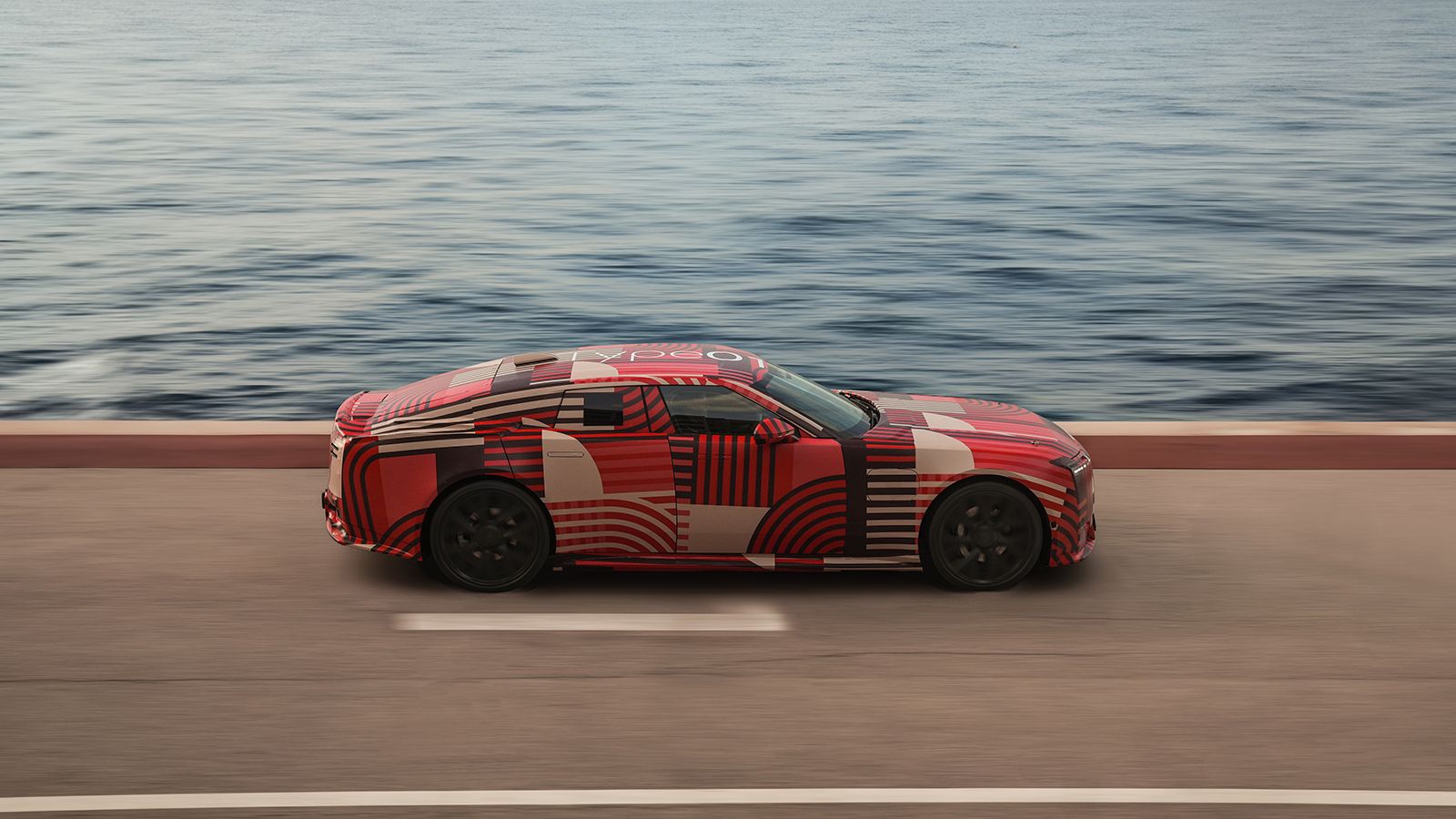
The development of the ABB FIA Formula E World Championship’s fourth-generation (GEN4) racing platform is set to push electric vehicle powertrain engineering to unprecedented performance levels, serving as a high-stress proving ground for consumer automotive technology, according to reporting by Matt Kollat. Featuring an anticipated peak power output of 800 brake horsepower (approximately 600 kilowatts), the GEN4 race car will subject electric traction motors, silicon carbide power inverters, and control software to thermal, electrical, and mechanical demands far exceeding standard road conditions. Automakers participating in the electric single-seater series rely on the extreme racing environment to refine power density, software management algorithms, and energy recovery systems, accelerating the transfer of high-efficiency components to next-generation commercial passenger vehicles.
Key facts
What happened
The introduction of the GEN4 platform marks a significant technical evolution for electric motorsport, designed to challenge engineers in key areas of electrical engineering, software optimization, and thermal management. As reported by Matt Kollat, the platform's 800-brake-horsepower capability forces electric traction motors to operate at elevated rotational speeds and current densities, generating extreme thermal loads within the motor windings and rotor assemblies.
To manage this elevated energy flow, power inverters—the critical electronic assemblies responsible for converting direct current (DC) supplied by the battery pack into alternating current (AC) required by the traction motor—must process significantly higher voltages and electrical currents while maintaining maximum efficiency. Modern Formula E inverters utilize wide-bandgap semiconductors, primarily silicon carbide (SiC), which enable faster switching frequencies and lower electrical losses than traditional silicon components. Subjecting these inverters to 800-horsepower loads under aggressive track conditions exposes hardware and control firmware to rapid thermal cycling, high voltage stress, and electromagnetic interference that standard passenger-car testing programs rarely replicate.
Crucially, performance gains in contemporary electric racing are driven as much by software calibration as by mechanical design. Vehicle control units run sophisticated algorithms governing torque vectoring, traction limits, battery state-of-charge tracking, and regenerative braking dynamics. During a race, control software must dynamically balance maximum acceleration output against strict thermal limits to prevent inverter or cell overheating, all while recovering kinetic energy during deceleration. Front-axle energy recovery working alongside rear powertrain regeneration enables vehicles to capture hundreds of kilowatts of kinetic energy within milliseconds during braking events. The severe operational envelope of GEN4 forces software engineers to write exceptionally robust code, creating software logic directly applicable to consumer vehicle platforms.
Why it matters
The rapid advancement of consumer electric vehicles depends heavily on addressing key engineering barriers: driving range, vehicle weight, battery thermal stability, and overall manufacturing cost. Innovations tested and proven in motorsport under the GEN4 specification have direct consequences for mass-market automotive engineering and industrial supply chains.
In commercial electric cars, battery packs represent the single heaviest and most expensive physical component. Increasing a passenger car's driving range traditionally requires installing larger battery packs, which adds weight, reduces overall vehicle efficiency, and increases sticker prices. However, improving powertrain efficiency—specifically through lower-loss inverters, optimized motor windings, and refined software algorithms—allows passenger cars to extract greater driving distance from smaller, lighter battery packs. A gain of just two to three percent in inverter efficiency across standard operating cycles can yield significant extra driving range without requiring heavier battery hardware.
Furthermore, control algorithms developed for high-stress energy recovery directly enhance regenerative braking systems in road cars. Efficient kinetic energy recovery improves vehicle deceleration control, reduces wear on physical friction braking systems, and extends brake component longevity. Thermal management strategies engineered to keep 800-horsepower race components within safe temperature windows also assist in optimizing rapid direct-current (DC) fast-charging for consumer vehicles. Preventing thermal throttling during high-rate charging enables faster battery top-ups at public charging stations, addressing a core concern for prospective EV buyers.
The background
The ABB FIA Formula E Championship was inaugurated in 2014 by founder Alejandro Agag and the Fédération Internationale de l'Automobile (FIA) as the world's first fully electric international single-seater racing championship. Established to accelerate public interest in sustainable mobility and serve as a mobile laboratory for electric vehicle development, the series has systematically evolved through distinct technical generations.
During Season 1 (2014–2015), drivers competed in Gen1 vehicles limited to a maximum power output of 200 kilowatts (268 horsepower). Energy storage limitations of that era required drivers to perform a mandatory mid-race car swap in the pit lane to complete the race distance. The Gen2 platform, introduced in Season 5 (2018–2019), eliminated car swaps due to an upgraded 54 kWh battery pack developed by McLaren Applied Technologies, while elevating maximum power output to 250 kilowatts (335 horsepower).
Season 9 (2022–2023) saw the debut of the Gen3 car, which increased power output to 350 kilowatts (470 horsepower) and introduced a front-mounted standard powertrain dedicated solely to kinetic energy recovery. Gen3 vehicles achieved up to 600 kilowatts of total regenerative capability across both axles, enabling over 40 percent of the total energy used during a race to be generated through braking recovery.
Throughout these generational transitions, FIA technical rules have maintained strict cost-control measures by standardizing the carbon-fiber chassis, structural crash elements, and battery pack casing, while opening up the powertrain for proprietary manufacturer development. Major global automakers—including Porsche, Jaguar, Nissan, Mahindra, Audi, BMW, and DS Automobiles—have used this open powertrain environment to build custom electric motors, inverter hardware, gearboxes, and control software. This regulatory framework keeps team operational costs manageable while directing research expenditure directly into electrical propulsion systems with immediate relevance to consumer road cars.
Reaction
Automotive manufacturers competing in Formula E have consistently emphasized technology transfer as the primary commercial justification for their racing budgets. Engineering directors across participating teams maintain that the intense pressure of professional motorsport compresses development timelines compared to standard laboratory testing routines.
While manufacturers keep specific details of future commercial implementation proprietary, engineering leads highlight that lessons learned in high-voltage thermal management and software calibration are routinely integrated into road-car engineering pipelines. Technical teams note that testing control algorithms under severe vibration, sudden thermal spikes, and peak power draw provides empirical data that computer simulations cannot fully duplicate.
Industry analysts and transportation policy experts observe that upcoming regulatory mandates worldwide—such as the European Union's goal for zero-emission new vehicle sales by 2035 and similar zero-emission vehicle (ZEV) regulations in North America and Asia—are driving intense competition among automakers to improve EV powertrain efficiency. In this environment, manufacturers regard Formula E's role as a rapid technology testbed as a cost-effective vehicle for maintaining technological competitiveness in inverter design and energy management software.
What we don't know yet
Despite clear technical projections for the GEN4 architecture, several key details remain subject to ongoing FIA regulatory finalization. The exact battery cell chemistry, total usable energy capacity, and final weight limits for the standardized GEN4 battery system have not been fully disclosed, leaving open questions regarding the final power-to-weight balance of the race car.
Additionally, the extent to which individual vehicle manufacturers will transfer 800-horsepower inverter hardware directly to high-volume production cars versus limited-run luxury hypercars remains uncertain. While software logic and thermal management routines translate readily across all production scales, hardware components built with premium wide-bandgap semiconductors such as silicon carbide or gallium nitride may initially remain restricted to high-end vehicle lines due to manufacturing costs. Furthermore, future financial regulations governing team spending limits will dictate how aggressively manufacturers can split funding between track performance and road-car tech transfer.
What to watch
Several key developments will determine the precise speed and scope of technology transfer from the GEN4 platform to production vehicles:
This report is based on original reporting published by Matt Kollat on August 23, 2026, detailing the technical specifications of Formula E's GEN4 race car and its implications for consumer electric vehicle engineering.
How this story was produced
This report was written by The Global Wire newsroom from reporting first published by Matt Kollat. We verify the core facts against the original report, write our own account, and add the background and consequences a short wire item leaves out. Drafting is AI-assisted inside an editor-supervised pipeline, and every story is checked for accuracy of attribution, structure and duplication before it appears — full detail in our AI and funding disclosure.
Spotted an error? Tell us at corrections@horizonglobalnews.com and read our corrections policy or editorial standards.





Reader comments
Loading comments…