

Fed Poised to Defy White House Demands as Inflation Rebound Threatens Rate Path
Stronger consumer price data has derailed expectations of monetary easing, setting up a clash between the Federal Reserve and executive pressure for lower borrowing costs.
By The Global Wire Newsroom · Reported from Stephen Bartholomeusz
Link preview · horizonglobalnews.com
Fed Poised to Defy White House Demands as Inflation Rebound Threatens Rate Path
Stronger consumer price data has derailed expectations of monetary easing, setting up a clash between the Federal Reserve and executive pressure for lower borrowing costs.
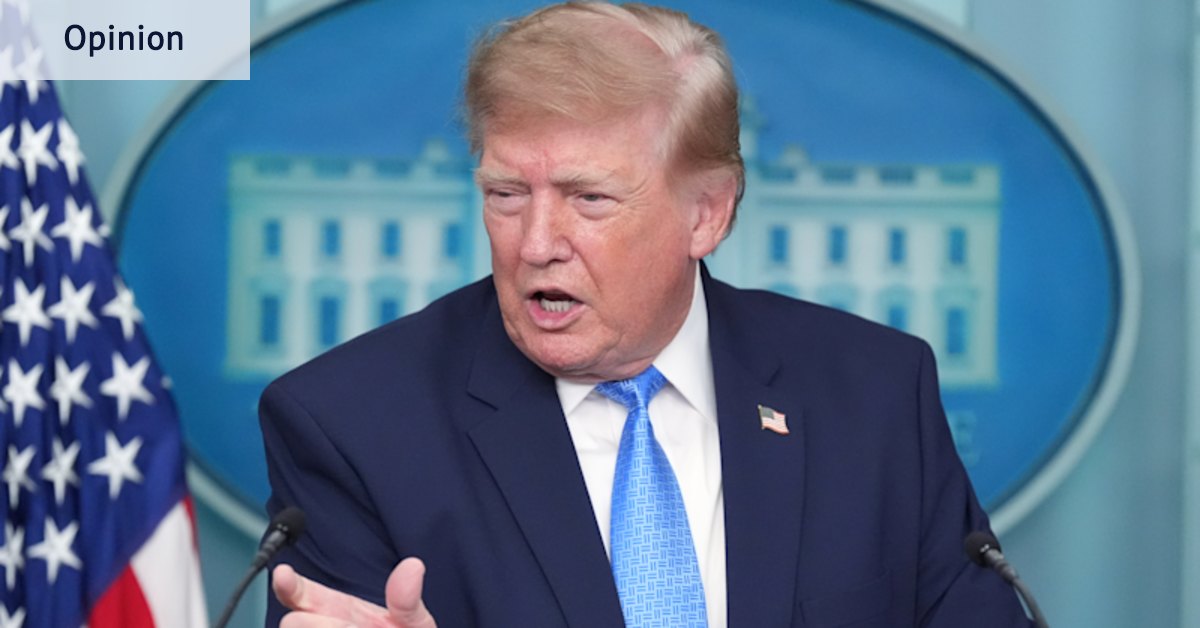
WASHINGTON — The Federal Reserve is preparing to hold firm against executive branch pressure for swift interest rate cuts after a stronger-than-expected monthly inflation report disrupted expectations for near-term monetary easing, according to an analysis by financial commentator Stephen Bartholomeusz. With consumer price growth accelerating beyond central bank projections, policymakers on the Federal Open Market Committee face renewed pressure to keep the benchmark federal funds rate elevated, or potentially consider further tightening, directly countering public calls from the White House for lower borrowing costs.
Key facts
What happened
Expectations of an uninterrupted cycle of interest rate reductions have run into a sharp macroeconomic roadblock. According to reporting by Stephen Bartholomeusz, a sharper-than-projected uptick in monthly inflation has altered the policy calculus for the United States central bank, leaving policymakers unable to deliver the borrowing relief sought by the presidency. Rather than proceeding with anticipated reductions to the benchmark interest rate, central bank officials are confronted with data indicating that price pressures within the domestic economy remain resilient.
Over recent months, political rhetoric from the White House had intensified, demanding that monetary authorities lower official lending benchmarks to stimulate business investment, lower federal debt servicing costs, and provide relief to consumers facing elevated financing charges. The political expectation was that the central bank would accommodate economic expansion through a sequence of rate cuts.
However, the latest reading on consumer prices revealed an unexpected reacceleration across key economic categories. In monetary policymaking, an unexpected rise in inflation disrupts easing trajectories because lowering rates while demand or price pressures remain robust risks embedding inflation expectations more deeply into wages and business contracts. Consequently, the Federal Reserve is poised to discount political preferences entirely during its upcoming rate-setting deliberations, freezing planned reductions and opening the door to discussions regarding whether monetary policy remains sufficiently restrictive.
Why it matters
The pivot away from monetary easing carries immediate consequences across global financial markets, sovereign debt administration, and consumer credit. For corporate borrowers and households, the postponement or reversal of rate reductions ensures that borrowing benchmarks—ranging from 30-year fixed residential mortgages to variable-rate commercial loans and revolving consumer debt—will remain significantly higher for longer than financial models had incorporated.
At the sovereign level, sustained elevated rates present severe budgetary implications. The United States Department of the Treasury faces an expanding debt portfolio, where trillions of dollars in maturing short-term and medium-term obligations must be refinanced at prevailing market yields rather than the historic lows observed in previous decades. When official rates remain elevated, net interest outlays consume an increasing share of federal receipts, constraining discretionary fiscal spending and intensifying legislative battles over the national debt ceiling and annual appropriations.
Beyond domestic borders, a divergent monetary trajectory where the United States maintains restrictive settings while other central banks loosen policy typically drives capital into dollar-denominated assets. This dynamic strengthens the United States dollar against major trading currencies, compounding debt servicing difficulties for emerging market sovereigns borrowing in greenbacks and complicating global export dynamics. For international equity markets, the repricing of the risk-free rate dampens equity valuations, particularly across growth and technology sectors whose projected future earnings are discounted more aggressively when bond yields climb.
The background
The tension between the executive branch and the Federal Reserve reflects a structural divide built into the United States economic framework. Congress created the Federal Reserve System via the Federal Reserve Act of 1913, explicitly shielding the central bank from direct partisan control to avoid the inflationary cycles that historically occurred when governments printed currency or lowered rates to engineer short-term electoral booms.
In 1977, Congress formally established the central bank's "dual mandate" under an amendment to the Federal Reserve Act, directing the Board of Governors and the Federal Open Market Committee to pursue maximum sustainable employment alongside stable prices. To maintain credibility, the central bank operates with operational independence: governors serve staggered 14-year terms, the chair is appointed for a four-year tenure that does not coincide strictly with presidential elections, and the institution finances its operations through its own portfolio returns rather than congressional appropriations.
Historical precedents illustrate the risks of political intrusion into rate decisions. In the early 1970s, sustained White House pressure on then-Federal Reserve Chair Arthur Burns to keep monetary policy loose ahead of the 1972 presidential election is widely viewed by economic historians as a primary catalyst for the stagflation that crippled the American economy throughout that decade. It required the aggressive intervention of Chair Paul Volcker, who took office in 1979 and raised the federal funds rate above 20 percent by 1981, inducing two recessions to break entrenched inflation expectations.
During his first term from 2017 to 2021, Donald Trump routinely broke modern political norms by publicly criticizing Federal Reserve Chair Jerome Powell, describing central bank rate hikes in 2018 as an impediment to economic growth and labeling policymakers as adversaries. While modern presidents since the 1990s had adhered to a convention of avoiding public commentary on monetary decisions to protect institutional credibility, the renewed friction highlights an enduring political reality: sitting administrations consistently favor cheaper credit to sustain economic output, whereas central banks are legally bound to enforce restraint when price stability is jeopardized.
Reaction
While formal responses from executive officials and central bank governors will follow the official policy meeting, market participants have reacted swiftly to the shifting inflationary narrative. Financial markets experienced an immediate reassessment of the federal funds futures curve, with traders rapidly paring back wagers on near-term rate cuts and adjusting bond portfolios to account for extended policy restriction.
Macroeconomic analysts and fixed-income strategists have noted that the central bank's institutional credibility is directly tied to its willingness to disregard political commentary when economic data conflicts with White House objectives. Institutional economists broadly anticipate that Federal Reserve leadership will use upcoming public appearances, including post-meeting press conferences and congressional testimony, to reiterate their commitment to the statutory dual mandate, emphasizing data dependence over political alignment.
Within Congress, the prospect of prolonged high borrowing costs is expected to generate divided responses. Lawmakers focused on fiscal discipline will likely point to stubborn inflation as evidence that excessive government spending must be curtailed, while committee members sympathetic to executive policies are anticipated to step up oversight hearings, questioning whether the central bank's restrictive posture risks triggering an unnecessary labor market contraction.
What we don't know yet
Crucial components of the broader economic picture remain unverified. The initial reporting highlights the unexpected strength of the inflation print, but detailed component-level drivers—such as the exact division between persistent services inflation, volatile energy prices, and housing and shelter calculations—have yet to be fully parsed across subsequent statistical revisions.
It is also unclear how the Federal Open Market Committee's internal consensus will split between voting members who favor an extended pause and those advocating for active tightening. Whether the inflation reading represents an isolated monthly aberration or the resumption of a persistent structural upward trend cannot be determined without subsequent datasets. Furthermore, the exact policy mechanisms the White House might attempt to deploy to influence the central bank—beyond public messaging and political commentary—remain unstated, leaving open the question of how aggressive the institutional confrontation might become.
What to watch
The trajectory of United States monetary policy will hinge on several key indicators and scheduled institutional checkpoints over the coming weeks:
This analysis incorporates reporting and commentary published by Stephen Bartholomeusz regarding the Federal Reserve's policy dilemma and its resistance to executive demands in the wake of unexpected inflation data.
How this story was produced
This report was written by The Global Wire newsroom from reporting first published by Stephen Bartholomeusz. We verify the core facts against the original report, write our own account, and add the background and consequences a short wire item leaves out. Drafting is AI-assisted inside an editor-supervised pipeline, and every story is checked for accuracy of attribution, structure and duplication before it appears — full detail in our AI and funding disclosure.
Spotted an error? Tell us at corrections@horizonglobalnews.com and read our corrections policy or editorial standards.






Reader comments
Loading comments…