

Elementl Power Adopts Google Cloud to Accelerate Nuclear Siting and Permitting
Advanced cloud computing tools aim to reduce years of pre-construction planning for new atomic energy projects to several weeks amid surging grid demand.
By The Global Wire Newsroom · Reported from Aman Tripathi
Link preview · horizonglobalnews.com
Elementl Power Adopts Google Cloud to Accelerate Nuclear Siting and Permitting
Advanced cloud computing tools aim to reduce years of pre-construction planning for new atomic energy projects to several weeks amid surging grid demand.
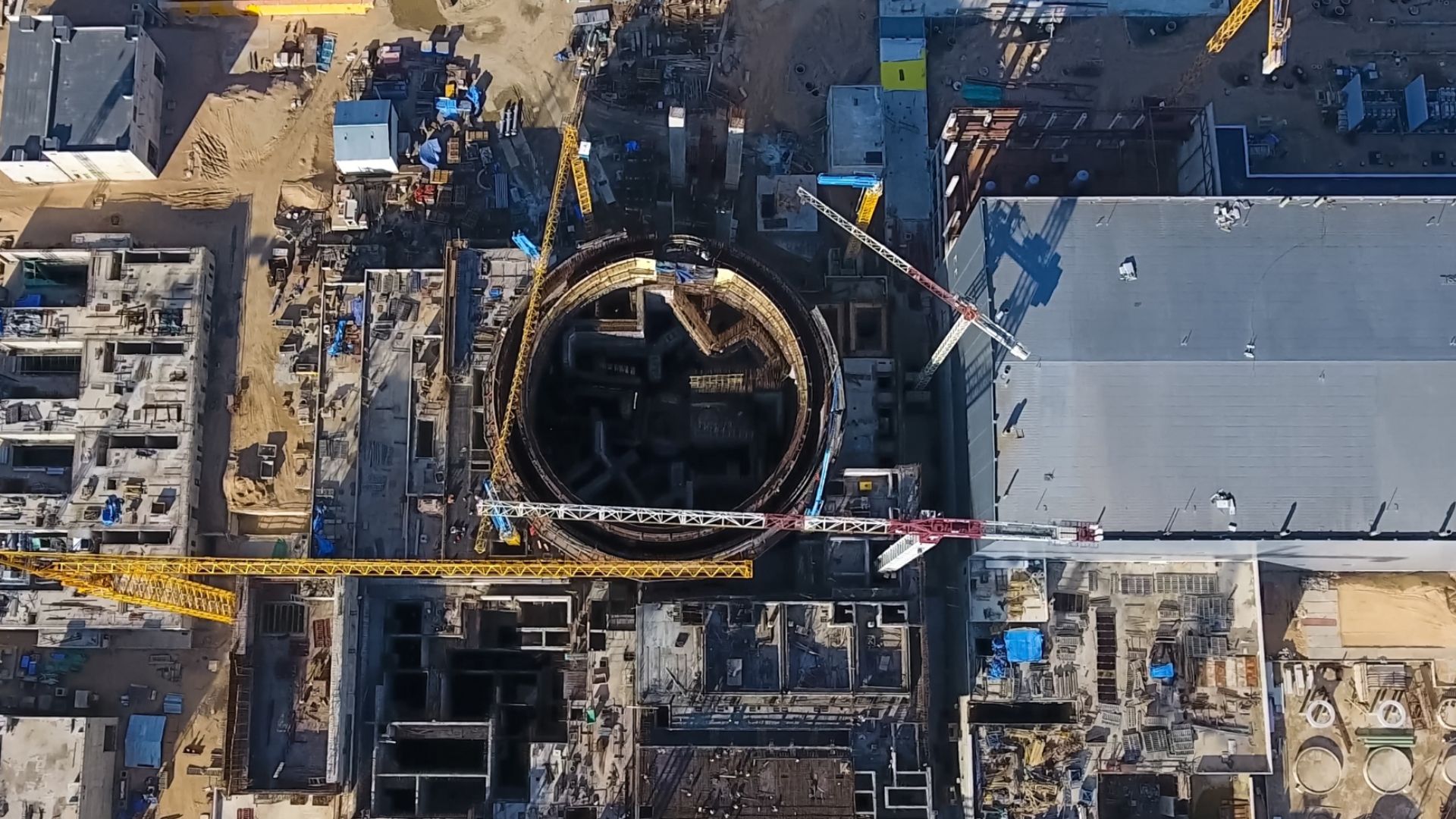
Elementl Power has begun deploying Google Cloud infrastructure to overhaul the complex, time-intensive procedures required to evaluate prospective locations and prepare regulatory documentation for new nuclear reactors in the United States. The initiative, reported by industry correspondent Aman Tripathi in mid-November 2026, aims to compress siting assessments and preliminary compliance workflows—phases that have historically absorbed months or even years of manual engineering and environmental review—into timelines measured in days or weeks. The integration reflects a growing push across the energy sector to harness modern data architectures and automated spatial analytics to remove administrative friction from civil nuclear development.
Key facts
What happened
Elementl Power has integrated Google Cloud capabilities into its early-stage nuclear infrastructure pipeline to automate the evaluation of geographical, geological, and regulatory parameters, according to reporting by Aman Tripathi. Developing a commercial nuclear generation asset requires evaluating millions of disparate data points before developers can submit an Early Site Permit or combined license application to federal authorities. These reviews encompass seismic hazard histories, regional hydrology, meteorological extremes, proximity to population centers, protected wildlife habitats, and interconnection feasibility with existing high-voltage transmission grids.
Historically, compiling these feasibility packages has been a fragmented, manual endeavor managed by engineering consultants using disconnected geographic information systems, demographic databases, and engineering models. By moving these workflows onto Google Cloud's computational platform, Elementl Power seeks to ingest, synthesize, and query massive geospatial and environmental datasets simultaneously. The system models physical terrain constraints, evacuation pathway planning, and proximity thresholds against statutory federal criteria, producing comprehensive feasibility profiles in a fraction of the time required by traditional consultancies.
While detailed architectural specifications of the proprietary software stack have not been publicly disclosed, the platform focuses squarely on the front-end planning bottlenecks that precede physical construction. By standardizing and accelerating these pre-filing assessments, developers aim to eliminate early exploratory blind spots that frequently lead to costly engineering revisions or regulatory re-filings later in the development lifecycle.
Why it matters
Nuclear power projects in the United States have long been plagued by multi-year planning horizons that introduce immense capital risk. Before ground is broken, developers frequently expend tens of millions of dollars over three to five years merely characterizing candidate sites and preparing regulatory documentation. In a market where the cost of capital dictates project viability, shortening the front-end planning runway directly alters the economic calculation for potential investors, utility off-takers, and industrial consumers.
The timing coincides with an unprecedented resurgence in electricity demand across American power markets. Regional grid operators, including PJM Interconnection and the Electric Reliability Council of Texas, have substantially revised their long-term load forecasts upward, driven primarily by the construction of high-density artificial intelligence data centers, advanced manufacturing facilities, and the electrification of industrial heating and transport. Variable renewable energy sources, such as utility-scale solar and onshore wind, have supplied the majority of recent capacity additions, but system operators face growing challenges in maintaining grid stability without firm, round-the-clock power.
Nuclear energy offers zero-emission baseload generation, yet its deployment speed has lagged far behind the operational timelines demanded by technology companies, which operate on planning cycles of 18 to 36 months. If digital siting platforms can compress environmental screening, demographic buffer calculations, and infrastructure proximity assessments into reliable multi-day outputs, nuclear developers can match the site-selection velocity of competing generation assets. This acceleration could unlock private capital for next-generation small modular reactors and standard commercial units that would otherwise stall in early feasibility loops.
The background
Commercial nuclear power in the United States operates under one of the world's most rigorous safety and environmental oversight regimes. Primary regulatory authority rests with the U.S. Nuclear Regulatory Commission, an independent agency established under the Energy Reorganization Act of 1974. Under federal statutes—principally the Atomic Energy Act of 1954 and the National Environmental Policy Act of 1969—developers must prove that a proposed reactor site presents no undue risk to public health, environmental safety, or national security.
Historically, the NRC provided two primary licensing pathways: a two-step process under Title 10 of the Code of Federal Regulations Part 50, involving separate construction permits and operating licenses, and a streamlined one-step pathway under 10 CFR Part 52, which combines construction and conditional operation permits alongside Early Site Permits. Despite reforms intended to standardize plant designs and pre-certify sites, execution in the field has encountered persistent friction. The only commercial nuclear units constructed from the ground up in the United States over the past three decades—Vogtle Units 3 and 4 in Waynesboro, Georgia—experienced more than seven years of construction delays and cost overruns exceeding $15 billion before entering commercial service in 2023 and 2024.
Simultaneously, the commercial landscape for firm clean energy shifted dramatically. In 2024, major technology companies signed landmark commercial agreements to support dedicated nuclear capacity: Microsoft partnered with Constellation Energy to restart Unit 1 of the Three Mile Island clean energy center under the Crane Clean Energy Center nameplate; Amazon Web Services signed an agreement to co-locate data infrastructure adjacent to Talen Energy's Susquehanna nuclear station; and Google completed a corporate framework agreement with Kairos Power to purchase electricity from a planned fleet of advanced fluoride salt-cooled high-temperature reactors. These commercial commitments created powerful incentives for developers to modernize every layer of the nuclear delivery chain, from software planning to advanced manufacturing.
Reaction
The broader clean energy and computing sectors have responded to digitization initiatives in atomic energy with keen interest, though official stakeholders await demonstrable outcomes. Digital infrastructure providers have increasingly championed the application of advanced cloud tools and machine learning to bureaucratic workflows, framing software automation as an essential enabler of the clean energy transition. Analysts covering power and utilities have noted that while software cannot substitute for concrete-pouring or physical supply chains, removing friction from preliminary siting avoids capital misallocation on flawed parcels.
Federal regulators have emphasized procedural integrity above speed. While the NRC has initiated internal modernization campaigns to accommodate advanced reactor designs—most notably through ongoing rulemaking surrounding 10 CFR Part 53—the agency remains legally bound to conduct thorough, independent audits of any environmental impact statement or safety evaluation report submitted by an applicant. Regulatory observers and independent nuclear safety watchdogs expect that any computational models used to accelerate license applications must be fully auditable, verifiable, and transparent, warning that errors in automated seismic or hydrological screening could lead to immediate legal challenges under the Administrative Procedure Act.
What we don't know yet
Significant operational details regarding Elementl Power's platform and its commercial scope remain undisclosed in initial reporting. It is not yet clear whether the Google Cloud-based tools are proprietary software developed exclusively for Elementl's internal pipeline or if the technology will be licensed to third-party developers, utilities, or engineering procurement and construction contractors. Furthermore, the reporting does not identify the specific reactor technologies or geographic regions where the software has been deployed to date.
A central open question is how the NRC and other federal bodies, such as the U.S. Army Corps of Engineers, will treat documentation synthesized through automated cloud platforms. While digital tools can quickly generate maps, spatial overlays, and preliminary risk reports, regulatory acceptance requires rigorous site characterization based on physical geotechnical boreholes, local groundwater monitoring, and empirical field studies. Whether the tool merely identifies promising candidate sites or actively drafts regulatory-grade safety documentation that passes federal staff review remains unverified.
What to watch
Key indicators over the coming months will demonstrate whether cloud-based planning tools yield tangible real-world results for nuclear deployment. Observers should track formal dockets at the NRC for any Early Site Permit or Construction Permit applications submitted by Elementl Power or affiliated entities. Such filings will provide the first public benchmark to measure whether automated planning tools produce documentation capable of withstanding the agency's rigorous acceptance review without generating protracted Requests for Additional Information.
Attention should also be directed toward state-level regulatory bodies and regional grid operators. As utilities submit biennial Integrated Resource Plans to state public service commissions, observers can monitor whether developers cite accelerated siting methodologies to propose advanced nuclear additions within earlier operational windows. Legislative efforts on Capitol Hill surrounding federal permitting reform—particularly potential adjustments to the National Environmental Policy Act's judicial review timelines—will also serve as a crucial barometer for whether software-driven planning gains can translate into faster physical construction.
This account is based on original reporting published by industry correspondent Aman Tripathi.
How this story was produced
This report was written by The Global Wire newsroom from reporting first published by Aman Tripathi. We verify the core facts against the original report, write our own account, and add the background and consequences a short wire item leaves out. Drafting is AI-assisted inside an editor-supervised pipeline, and every story is checked for accuracy of attribution, structure and duplication before it appears — full detail in our AI and funding disclosure.
Spotted an error? Tell us at corrections@horizonglobalnews.com and read our corrections policy or editorial standards.




Reader comments
Loading comments…