

Delta Equipment Failure Delays Over 1,600 Flights as Holiday Travel Surges
A widespread equipment outage at Delta Air Lines disrupted more than 1,600 flights nationwide, intensifying scrutiny of aviation infrastructure ahead of Thanksgiving.
By The Global Wire Newsroom · Reported from Alexander Willis
Link preview · horizonglobalnews.com
Delta Equipment Failure Delays Over 1,600 Flights as Holiday Travel Surges
A widespread equipment outage at Delta Air Lines disrupted more than 1,600 flights nationwide, intensifying scrutiny of aviation infrastructure ahead of Thanksgiving.
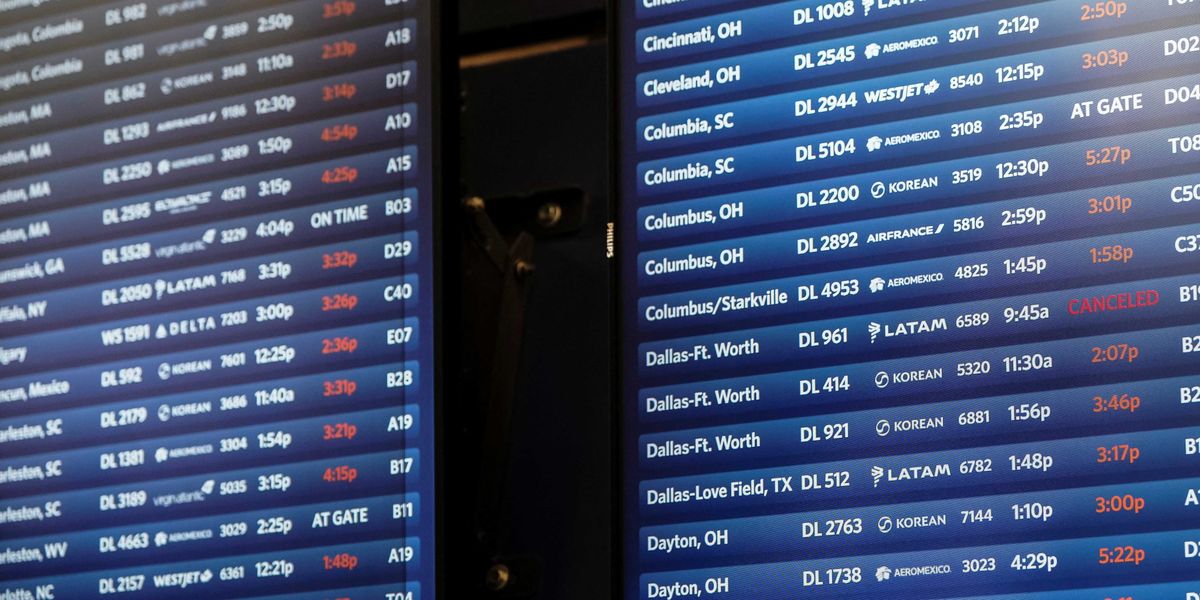
A widespread equipment malfunction disrupted commercial aviation across the United States on Sunday, delaying more than 1,600 Delta Air Lines flights nationwide as holiday travel volume began to accelerate ahead of Thanksgiving. The technical failure, which impaired normal flight schedules throughout the carrier's domestic network, arrived during one of the most heavily trafficked transit weeks of the year. The disruption represents the latest in a sequence of operational vulnerabilities affecting domestic air corridors, coming less than two weeks after the Federal Aviation Administration ordered a rare ground stop and following an array of recent technology breakdowns across the broader air transportation sector.
Key facts
What happened
According to reporting by Alexander Willis, the breakdown originated as an equipment malfunction within Delta's operational framework on Sunday, initiating cascading schedule disruptions that rapidly accumulated across the carrier's flight network. Within hours, flight tracking data and operational reports confirmed that the number of delayed domestic services exceeded 1,600 flights, stranding passengers in terminals and forcing ground crews to manage widespread queue backlogs.
The timing of the failure coincided with the initial surge of the annual Thanksgiving travel window, an operational corridor where airlines operate at near-maximum fleet capacity and with minimal slack in cabin inventory. While aircraft remained physically capable of flight, the underlying technological equipment necessary to coordinate, clear, and sequence departures experienced significant impairment. The resulting gridlock rippled through major hubs and regional feeder airports alike, as arriving aircraft were held at departure gates or forced to wait for gate availability, in turn delaying subsequent flight legs assigned to the same airframes and flight crews.
The Sunday disruption compound existing strain within the National Airspace System. Less than a fortnight earlier, the Federal Aviation Administration had taken the extraordinary measure of issuing a ground stop, an operational intervention generally reserved for severe weather crises or systemic technological failures within federal air traffic management centers. With commercial airlines still recovering from that prior interruption and navigating subsequent technical instabilities, Delta's single-day outage left thousands of ticketed travelers confronting extended airport waits, missed connections, and fragmented schedules.
Why it matters
Modern commercial aviation functions as a tightly coupled, interdependent logistical system where minor technical failures rapidly escalate into nationwide operational crises. When an airline operating at the scale of Delta suffers an equipment outage that delays more than 1,600 flights, the economic and practical repercussions extend far beyond the immediate inconvenience experienced by travelers waiting at boarding gates.
During peak travel periods such as the Thanksgiving holiday corridor, commercial carriers routinely report load factors exceeding 85 to 90 percent. Under these conditions, available open seats on subsequent flights are virtually nonexistent, meaning that a passenger whose flight is delayed past a connecting window or subsequently cancelled cannot easily be rebooked on the next scheduled departure. The immediate result is multi-day passenger displacement, widespread terminal crowding, and severe pressure on airport ground operations, baggage handling systems, and customer service teams.
Financially, large-scale operational meltdowns impose steep direct and indirect costs on airlines. Carriers face substantial expenses under federal consumer protection rules, including obligations to provide passenger accommodations, meal vouchers, and automatic refunds when delays or cancellations lead to unused transportation. Operationally, when flight crews encounter unanticipated ground delays, they rapidly approach maximum duty limits established by safety regulators, effectively taking pilots and flight attendants out of legal rotation and stranding aircraft even after technical systems are restored. For the broader economy, disruptions to commercial aviation undermine supply chains, impair corporate productivity, and erode public confidence in critical transport infrastructure.
The background
Technological fragility has emerged as a persistent vulnerability across the global airline industry over the past decade. Commercial air carriers and regulatory agencies rely on complex webs of legacy software, distributed databases, telecommunications networks, and cloud architecture to manage passenger reservations, flight dispatching, crew scheduling, and weight-and-balance calculations. While these systems are designed with layered redundancies, failures within core servers, data centers, or external vendor integrations have repeatedly triggered severe operational collapses.
The domestic aviation sector has experienced multiple high-profile technological failures in recent years. In August 2016, a power outage at Delta's operational headquarters in Atlanta disabled the carrier's computer systems, grounding flights worldwide and leading to roughly 2,000 cancellations over three days. In December 2022, an intense winter storm overwhelmed Southwest Airlines' internal crew reassignment software, precipitating a catastrophic operational meltdown that resulted in the cancellation of more than 16,700 flights and prompted extensive congressional hearings and a record $140 million civil penalty from the U.S. Department of Transportation. More recently, in July 2024, a flawed software update distributed by cybersecurity firm CrowdStrike crashed Microsoft Windows systems globally, hitting Delta particularly hard and resulting in more than 5,000 cancelled flights over a five-day span.
Concurrently, federal aviation oversight has faced heightened examination. The Federal Aviation Administration operates the Air Traffic Control System Command Center in Warrenton, Virginia, which monitors traffic flow across the United States. In January 2023, the FAA experienced an outage of its Notice to Air Missions system, forcing the agency to order its first nationwide ground stop since September 11, 2001. The recurrence of both airline-specific equipment failures and federal ground stops underscores the acute strain facing aging technical infrastructure across the civilian aviation network.
Reaction
The Sunday disruption prompted immediate public frustration and renewed political criticism. Stranded passengers turned to digital platforms to share accounts of gate gridlock, uncommunicative customer service channels, and mounting travel anxiety ahead of family holiday commitments. Online commentary swiftly linked the operational failure to broader questions of regulatory competence and government oversight, reflecting growing passenger weariness with recurring commercial flight disruptions.
Political figures and industry critics also seized upon the incident. As reported by Alexander Willis, the breakdown drew sharp public mockery and political barbs directed at federal leadership and executive administration officials, with critics contrasting the travel chaos experienced by working-class travelers with senior political figures spending the weekend playing golf. In past disruptions of similar scale, members of the U.S. Senate Committee on Commerce, Science, and Transportation and the House Committee on Transportation and Infrastructure have issued formal inquiries demanding detailed accounting of technical root causes, customer compensation compliance, and disaster recovery investments.
What we don't know yet
Several fundamental operational details regarding the Sunday breakdown remain unconfirmed. The primary reporting identified the root problem as an equipment outage, but Delta has not yet published an exhaustive technical post-mortem detailing whether the failure involved physical hardware, proprietary flight dispatch software, or a third-party vendor telecommunications network. It is also not yet clear whether the breakdown was linked to cyber incident activity or routine maintenance failure.
Additionally, the total cumulative impact on flight operations remains incomplete. While more than 1,600 flights experienced delays on Sunday, the reporting did not specify the total number of outright cancellations resulting from crew timeout constraints or aircraft positioning imbalances. The full geographic scope of terminal bottlenecks, the volume of lost or delayed passenger baggage, and the precise financial liabilities incurred by the carrier under consumer refund regulations also remain to be quantified in subsequent regulatory disclosures.
What to watch
The trajectory of the recovery will depend on several critical milestones over the coming days. The primary indicator will be Delta's operational performance through the peak departure days immediately preceding Thanksgiving, specifically Tuesday and Wednesday, when passenger volumes typically reach annual record highs. Aviation analysts will closely monitor cancellation and on-time arrival metrics published by flight tracking services to determine whether crew rotations and aircraft positioning have stabilized.
On the regulatory front, observers will watch for formal statements or preliminary inquiries from the Department of Transportation's Office of Aviation Consumer Protection. Under recently enacted federal regulations, carriers face strict mandates regarding rapid cash refunds and clear communication during carrier-caused disruptions. Finally, congressional oversight committees may demand technical briefings from both Delta executives and the Federal Aviation Administration regarding the sequence of technical failures that preceded this latest holiday disruption.
This report is based on original reporting by Alexander Willis.
How this story was produced
This report was written by The Global Wire newsroom from reporting first published by Alexander Willis. We verify the core facts against the original report, write our own account, and add the background and consequences a short wire item leaves out. Drafting is AI-assisted inside an editor-supervised pipeline, and every story is checked for accuracy of attribution, structure and duplication before it appears — full detail in our AI and funding disclosure.
Spotted an error? Tell us at corrections@horizonglobalnews.com and read our corrections policy or editorial standards.






Reader comments
Loading comments…