

COP31 Negotiations in Turkey Push Into Final Hours Amid Deep Divides Over Energy and Finance
Diplomats in Antalya struggle to bridge rifts over fossil fuel phase-down timelines, carbon capture technologies, and financial transfers to vulnerable economies.
By The Global Wire Newsroom · Reported from thestar.com.my
Link preview · horizonglobalnews.com
COP31 Negotiations in Turkey Push Into Final Hours Amid Deep Divides Over Energy and Finance
Diplomats in Antalya struggle to bridge rifts over fossil fuel phase-down timelines, carbon capture technologies, and financial transfers to vulnerable economies.
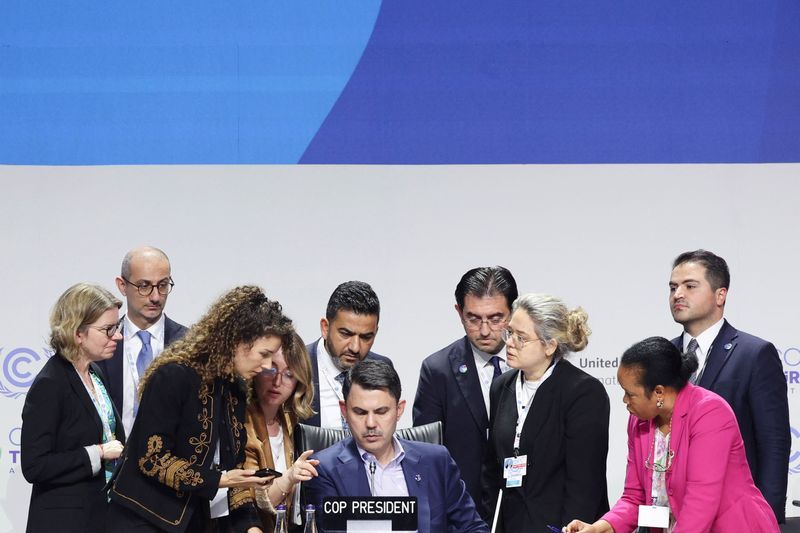
ANTALYA, Turkey — International climate negotiations at the 31st Conference of the Parties pushed toward a tense conclusion on Sunday in Antalya, Turkey, with national delegations remaining sharply divided over the operational terms of a final global agreement. According to reporting by Reuters, the closing phase of the summit was marked by protracted disputes across three core pillars: the speed of the transition away from fossil energy, the permissible scope of carbon capture technologies in national decarbonization accounting, and the scale of international public finance directed to developing economies. With the formal timetable expiring, ministerial delegations faced the prospect of round-the-clock plenary sessions or an unresolved stalemate, underscoring persistent systemic frictions between major fossil fuel producers, industrialized donors, and developing nations confronting escalating climate impacts.
Key facts
What happened
Negotiators gathered in Antalya reached what was intended to be the final scheduled day of talks without consensus on draft texts governing energy systems, emissions abatement technologies, and multilateral financial mechanisms. According to Reuters, discussions grew increasingly fractious as drafting groups attempted to reconcile competing proposals into a single cover decision and associated operational annexes.
The principal cleavage centered on energy transition language. A coalition of vulnerable states, supported by developed countries committed to rapid mitigation trajectories, pushed for concrete schedules, quantitative checkpoints, and verifiable phase-down metrics for conventional hydrocarbons. Opposing delegations, primarily from major oil-, gas-, and coal-exporting economies, resisted binding timelines, arguing that energy security, grid reliability, and individual national economic development rights must dictate national decarbonization roadmaps.
A secondary point of contention focused on the role of industrial carbon management, specifically carbon capture, utilization, and storage (CCUS). While fossil-producing states and heavy industrial powers advocated for broad recognition of CCUS as an equivalent substitute for direct emissions reductions, other delegations maintained that excessive reliance on unproven or costly abatement mechanisms risks prolonging fossil fuel extraction at the expense of renewable energy deployment.
Simultaneously, ministerial drafting tracks on finance stalled over the mechanisms, sources, and accounting criteria for multilateral funding delivered to developing countries. Negotiators from the Global South maintained that heightened mitigation ambition cannot be mandated without predictable, grant-based fiscal transfers and concessional lending packages. Developed nations resisted open-ended public budget commitments, seeking expanded reliance on private investment mobilization and broader contributor bases that include emerging economies.
Why it matters
COP decisions serve as the normative benchmark and operational blueprint for global climate governance, setting expectations for multinational capital allocation, regulatory alignment, and domestic legislative programs across 198 parties to the UNFCCC. When ministerial negotiations stall over core structural topics such as energy roadmaps and climate finance, the resulting legal ambiguity reverberates directly into international energy markets, national treasury planning, and corporate investment horizons.
For institutional investors and energy infrastructure developers, the lack of definitive consensus introduces significant regulatory uncertainty. Capital-intensive investments in offshore wind, green hydrogen, solar manufacturing, and high-voltage transmission grids require predictable long-term policy signals from global governing bodies. Conversely, sustained ambiguity around carbon capture rules complicates valuation models for conventional energy assets, leaving lenders unable to reliably price long-term carbon risk or establish whether investments in abatement equipment will meet forthcoming international compliance standards.
For developing and climate-vulnerable states, the finance deadlock carries direct sovereign and humanitarian consequences. Many lower-income countries carry high debt-service burdens that severely restrict their fiscal capacity to finance grid modernization, coastal sea walls, and climate-resilient agricultural systems. If multilateral negotiations fail to produce concrete, high-volume public finance obligations, these governments face a stark trade-off between servicing external debt or funding baseline adaptation initiatives, increasing the vulnerability of coastal and drought-prone populations to acute climate shocks.
The background
The tensions in Antalya reflect structural debates that have defined United Nations climate diplomacy since the adoption of the Paris Agreement at COP21 in December 2015. Under that treaty, nearly 200 nations pledged to hold the increase in the global average temperature to well below 2.0 degrees Celsius above pre-industrial levels, while pursuing efforts to limit the increase to 1.5 degrees Celsius.
Crucially, the Paris Agreement operates on a bottom-up structure of Nationally Determined Contributions (NDCs), where sovereign governments set their own domestic targets and policies. Because individual commitments are voluntary in ambition though mandatory in reporting, UN summits rely on consensus cover decisions to establish collective momentum and ratify technical guidelines. Achieving unanimous agreement among 198 parties—ranging from low-lying Pacific island states facing existential sea-level rise to wealthy industrialized donors and state-backed petrochemical economies—regularly produces gridlock.
At COP28 in Dubai in December 2023, parties agreed for the first time to language calling for "transitioning away from fossil fuels in energy systems, in a just, orderly and equitable manner," while also acknowledging transitional fuels and technological abatement solutions such as carbon capture and storage. That compromise, intended to bridge the divide between consumer states and hydrocarbon exporters, left unresolved the precise technical criteria, financial backing, and implementation schedules required to execute the transition.
Subsequent negotiations, including COP29 in Baku, concentrated heavily on the New Collective Quantified Goal (NCQG) for climate finance, intended to replace the expired goal of $100 billion per year originally established in 2009. Disagreements over which countries should contribute, how funds should be tracked, and what proportion should consist of non-debt grants have consistently hampered implementation. Hosting COP31 in Turkey placed the negotiations in an economy that sits geopolitically and commercially between traditional European regulatory frameworks and energy-producing transit routes, sharpening the confrontation between conflicting regional priorities.
Reaction
While the primary reporting by Reuters did not record direct public quotes from delegation heads during the closed-door plenary negotiations, the public stances of major negotiating blocs at the UNFCCC are established through formal plenary interventions and joint ministerial positions.
The High Ambition Coalition, historically comprising European member states, low-lying island nations represented by the Alliance of Small Island States (AOSIS), and progressive Latin American economies, consistently pushes for explicit language accelerating renewable energy capacity additions while constraining unmitigated fossil fuel expansion. These delegations view carbon capture not as a blanket justification for continued exploration, but as a limited niche solution reserved exclusively for hard-to-abate industrial sectors such as cement and steel manufacturing.
In contrast, delegations representing the Like-Minded Developing Countries (LMDC) and the Arab Group have traditionally emphasized the Paris Agreement’s core doctrine of "common but differentiated responsibilities and respective capabilities." These blocs argue that developed nations, having generated the overwhelming majority of historical cumulative emissions since the Industrial Revolution, bear an unconditional legal and moral duty to provide public climate finance before demanding aggressive mitigation targets from industrializing economies.
Civil society observers and environmental advocacy organizations monitoring the negotiations typically hold daily briefings outside the plenary halls to protest delays, calling out fossil fuel trade associations and resisting technical exemptions that dilute mitigation pledges. Industry associations, conversely, maintain that practical transition policies must integrate existing pipeline and refining infrastructure through commercialized carbon capture to preserve energy affordability and grid security.
What we don't know yet
Key details of the operational drafts circulating behind closed doors in Antalya remain undisclosed. It is currently unknown whether the Turkish COP presidency has deployed an unbracketed compromise cover text, or whether negotiating groups are still disputing heavily bracketed drafts that contain mutually exclusive policy options.
Furthermore, the precise numerical figures and timeline milestones under debate in the finance working group have not been made public. Critical open questions include whether potential funding commitments will be expressed as pure public grant finance, or whether they will incorporate concessional multilateral development bank loans, sovereign export guarantees, and private capital mobilizations. Additionally, the specific regulatory language governing CCUS remains unverified—specifically, whether draft texts propose strict technical capture-rate floors, such as 90 percent efficiency standards, or whether they rely on open-ended definitions that allow broader technological latitude.
What to watch
The trajectory of COP31 will be decided in the coming hours as the formal conference clock expires. Observers should track whether the Turkish presidency extends the summit into overtime, a routine occurrence at UNFCCC conferences where final compromise packages are frequently settled during overnight sessions.
The immediate benchmark to evaluate is the release of the final draft cover decision. Key elements to monitor include the specific verbs associated with fossil fuel phase-down, whether carbon capture provisions contain binding guardrails limiting their application to non-power industrial sectors, and whether industrialized nations commit to quantified public finance transfer targets. Following the conclusion of the Antalya plenary, attention will turn to national capitals, where governments must integrate any newly agreed provisions into their updated NDCs submitted to the United Nations secretariat.
*Reporting by Reuters informed the developments described in this account.*
How this story was produced
This report was written by The Global Wire newsroom from reporting first published by thestar.com.my. We verify the core facts against the original report, write our own account, and add the background and consequences a short wire item leaves out. Drafting is AI-assisted inside an editor-supervised pipeline, and every story is checked for accuracy of attribution, structure and duplication before it appears — full detail in our AI and funding disclosure.
Spotted an error? Tell us at corrections@horizonglobalnews.com and read our corrections policy or editorial standards.






Reader comments
Loading comments…