

China Reveals AI-Powered Robotic Wolf Built for Heavy Loads and Steep Terrain
The artificial intelligence-enabled machine can navigate rocky environments, following the recent appearance of an armed variant during military exercises near Mongolia.
By The Global Wire Newsroom · Reported from Efosa Udinmwen
Link preview · horizonglobalnews.com
China Reveals AI-Powered Robotic Wolf Built for Heavy Loads and Steep Terrain
The artificial intelligence-enabled machine can navigate rocky environments, following the recent appearance of an armed variant during military exercises near Mongolia.
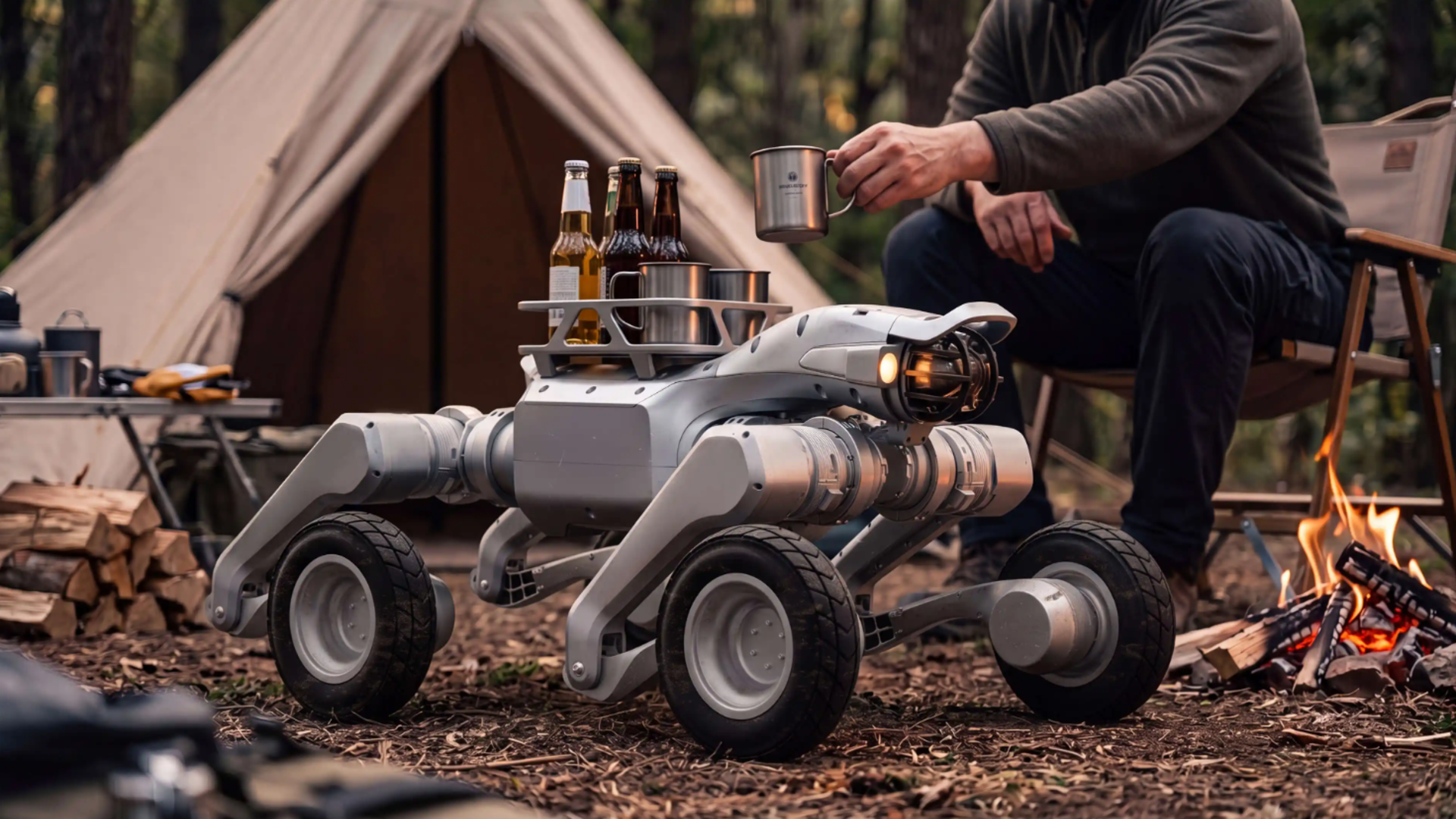
BEIJING — Chinese technology developers have unveiled a futuristic robotic wolf equipped with artificial intelligence, capable of navigating challenging natural terrain and carrying heavy payloads. The public introduction follows the appearance of an armed variant of the machine during recent military maneuvers conducted near the border with Mongolia, highlighting accelerated efforts to deploy autonomous quadrupedal systems for defense and tactical logistics.
Unveiling the Autonomous Quadruped
According to reporting by Efosa Udinmwen, the newly disclosed robotic platform features artificial intelligence designed to assist in complex navigation tasks, including scaling rocky surfaces and handling heavy cargo loads. The system represents the latest entry in China's rapidly growing field of quadrupedal robotics, which seeks to replicate the physical agility of four-legged mammals to overcome geographic obstacles that frequently stall traditional wheeled or tracked military platforms.
By pairing advanced machine learning algorithms with multi-legged movement mechanisms, the robotic wolf is designed to evaluate terrain features in real time, adjust its stride, and maintain stability across dynamic environments. The capacity to move heavy loads over irregular ground suggests potential utility in both combat support roles and frontline logistical resupply missions, where moving ammunition, field equipment, and provisions across rough terrain poses persistent challenges for ground personnel.
Deployment in Border Military Exercises
The debut of the AI-integrated model comes shortly after an armed configuration of the robotic wolf was spotted participating in military exercises near the Mongolian border. As reported by Efosa Udinmwen, the armed variant was showcased during field maneuvers weeks prior to the revelation of the terrain-climbing model.
The appearance of weaponized quadruped units during exercises near Mongolia demonstrates a practical transition from laboratory concept to operational testing. Military drills conducted in desert, steppe, and mountain environments near the border provide crucial baseline testing grounds for evaluating how autonomous land systems perform under realistic weather and topographical conditions. Integrating remote weapon stations or specialized armament onto four-legged chassis allows armed forces to deploy firepower into high-risk zones without directly exposing human operators to defensive fire.
Advances in Quadrupedal Robotics and AI
The development of quadrupedal robots—often categorized as unmanned ground vehicles or robotic canines—has accelerated globally over the past decade. Traditional robotic systems rely heavily on wheels or continuous tracks, which offer high speed on paved surfaces but encounter severe limitations when traversing boulders, steep gradients, or collapsed infrastructure. Four-legged designs address these mobility limitations by using articulated legs that can step over obstacles, maintain balance on loose scree, and adapt to steep incline variations.
The integration of artificial intelligence plays a crucial role in managing these physical capabilities. Rather than relying entirely on direct remote control from a human operator, modern AI architecture allows the robot to perform autonomous path planning, obstacle avoidance, and weight distribution adjustments. The system relies on array sensors—such as optical cameras, radar, and lidar—to construct three-dimensional maps of its immediate surroundings, allowing the machine to identify secure footholds on rocky surfaces and automatically adjust leg torque to prevent slipping when carrying substantial weight.
Tactical and Logistical Implications
In modern military operations, logistical support in rugged or contested environments remains a primary challenge. Ground units operating in mountainous, forested, or urban terrain are frequently constrained by the sheer weight of personal protective gear, communications equipment, and ammunition. By deploying autonomous quadrupedal systems capable of carrying heavy loads across uneven terrain, armed forces aim to reduce physical fatigue among personnel while accelerating the transport of critical supplies.
Furthermore, the dual-use potential of such platforms enables them to serve both non-lethal logistics functions and active security roles. When equipped with sensory instruments, these machines can act as mobile reconnaissance nodes, gathering intelligence and relaying real-time video or sensor data back to command units. When configured with weapon systems, as demonstrated during the drills near Mongolia, they offer forward defense, point security, and perimeter patrol capabilities, fundamentally altering how ground forces engage in close-quarters and high-risk environments.
The Strategic Context of Unmanned Ground Warfare
The development and public display of the robot wolf reflect a broader strategic shift toward unmanned ground warfare across major defense organizations. As defense establishments place increasing emphasis on minimizing human casualties and expanding technical capabilities, autonomous platforms are becoming central to military modernization programs. China, in particular, has devoted significant resources to expanding its defense technology sector, focusing heavily on robotics, artificial intelligence, swarm technology, and automated ground systems.
The rapid evolution from basic quadruped prototypes to combat-ready and load-bearing configurations signals a maturing domestic defense industrial base. The testing of these systems in regional drills near international frontiers, such as the Mongolian border, serves a dual purpose: gathering critical field data to refine hardware and algorithms, and demonstrating operational capabilities to regional observers.
Future Operational Prospects
As artificial intelligence architectures mature, military analysts anticipate further integration of autonomous quadrupeds into combined-arms tactics. Future deployments may see fleets of robotic units working in tandem with aerial drones and human combat teams, creating networked tactical frameworks capable of coordinated reconnaissance and logistics.
The introduction of China's newest robotic wolf highlights the growing role of AI-driven robotics in addressing persistent military challenges related to mobility, payload transport, and operational safety on uneven battlefields. Continued developments in power efficiency, payload capacity, and autonomous software will likely dictate how rapidly these systems transition from exercise demonstrations to permanent operational roles within military formations.
This article was based on original reporting by Efosa Udinmwen.
How this story was produced
This report was written by The Global Wire newsroom from reporting first published by Efosa Udinmwen. We verify the core facts against the original report, write our own account, and add the background and consequences a short wire item leaves out. Drafting is AI-assisted inside an editor-supervised pipeline, and every story is checked for accuracy of attribution, structure and duplication before it appears — full detail in our AI and funding disclosure.
Spotted an error? Tell us at corrections@horizonglobalnews.com and read our corrections policy or editorial standards.





Reader comments
Loading comments…