

Astrophysicists Link Early Universe 'Little Red Dots' to Origins of Elusive Black Holes
New findings from Johns Hopkins University suggest enigmatic compact objects observed in deep space could resolve longstanding questions surrounding the emergence of primordial black holes.
By The Global Wire Newsroom · Reported from Johns Hopkins University
Link preview · horizonglobalnews.com
Astrophysicists Link Early Universe 'Little Red Dots' to Origins of Elusive Black Holes
New findings from Johns Hopkins University suggest enigmatic compact objects observed in deep space could resolve longstanding questions surrounding the emergence of primordial black holes.
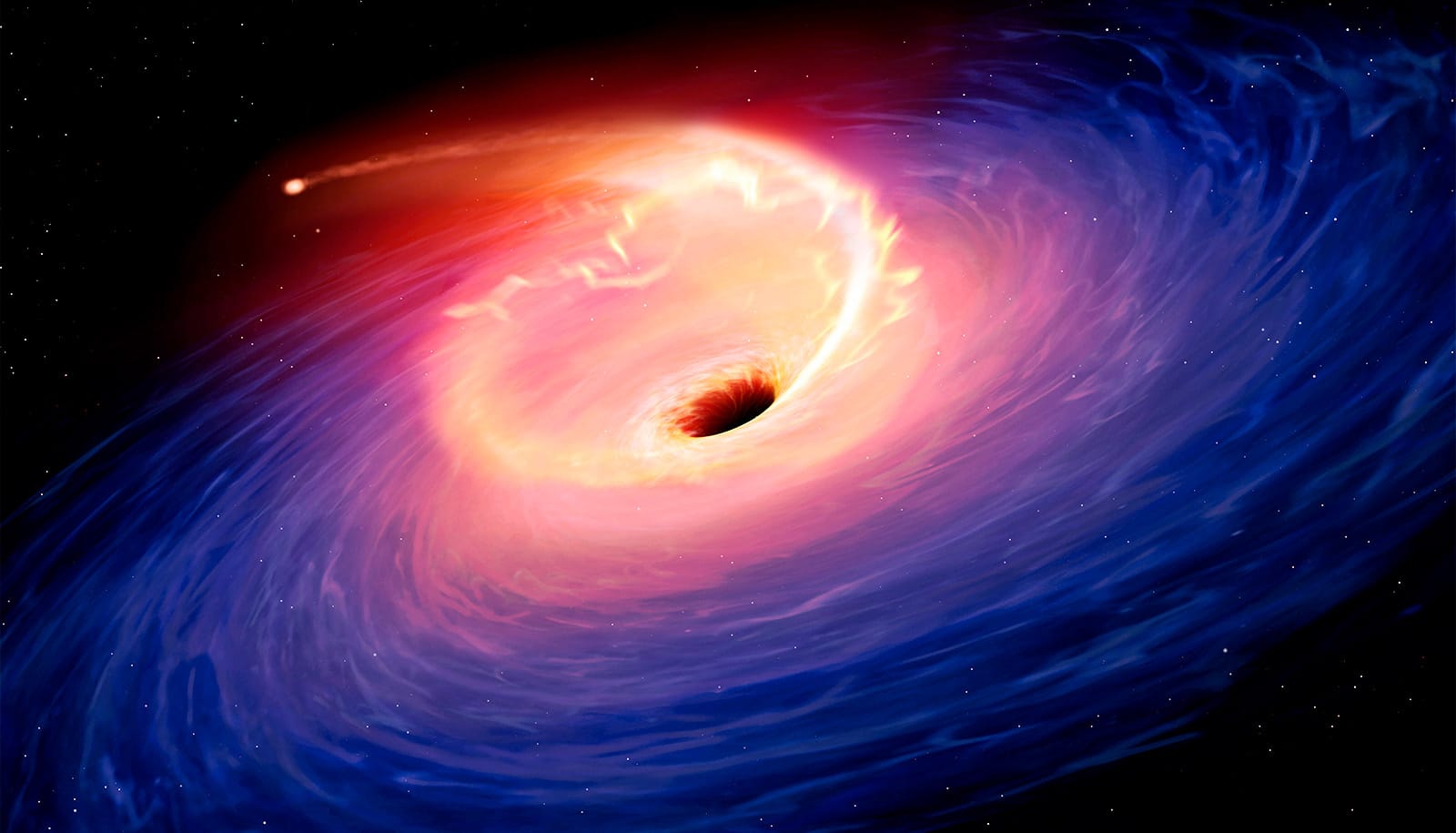
BALTIMORE — Enigmatic astronomical structures detected in the early universe, colloquially termed "little red dots," may provide a critical mechanism explaining the formation and evolution of primordial black holes, according to new research conducted by astrophysicists at Johns Hopkins University. The study offers a theoretical framework connecting these exceptionally dense, reddish astronomical bodies—first identified in high-resolution infrared surveys—to hypothetical black holes thought to have emerged during the earliest epochs of cosmic history. For decades, researchers have searched without success for conclusive empirical evidence of primordial black holes; the newly published analysis proposes that these puzzling deep-space features may finally reveal the physical pathways through which such extreme gravitational objects could materialize.
Key facts
What happened
Researchers at Johns Hopkins University examined the observational signatures of "little red dots"—extremely compact, dust-enshrouded or highly concentrated objects situated at significant cosmological redshifts—to investigate one of astrophysics' most enduring paradoxes: how the universe generated massive black holes so rapidly after its formation. The findings, reported by Johns Hopkins University, model the physical conditions inside these small, intensely luminous systems, evaluating whether they represent environments where early black holes originated or clustered.
Historically, standard astrophysical models dictate that black holes form through stellar death, when stars containing tens or hundreds of solar masses exhaust their thermonuclear fuel and undergo gravitational collapse. However, recent surveys capturing light emitted when the universe was between 500 million and one billion years old have uncovered mature supermassive black holes possessing masses equivalent to millions or billions of suns. The rate of normal accretion—constrained by radiation pressure, commonly referred to as the Eddington limit—suggests that stellar-remnant black holes would not have had sufficient time to consume enough surrounding matter to reach such immense sizes so early in cosmic time.
The Johns Hopkins investigation shifts attention to primordial black holes, theoretical objects that would not rely on stellar evolution. Instead, primordial black holes are hypothesized to have formed fractions of a second after the Big Bang due to direct gravitational collapse of hyper-dense localized patches of plasma. The new research explores how the physical properties observed in little red dots—including their compact physical radii, spectral energy distributions, and red-shifted light signatures—can serve as an observational window into these early gravitational collapse mechanisms, presenting an alternative explanation for the origin and proliferation of primordial gravitational seeds.
Why it matters
Unraveling the mechanics behind early black hole formation addresses fundamental questions regarding the timeline and physical laws governing the universe. For decades, the non-detection of primordial black holes has constrained models of inflation, early cosmic thermodynamics, and dark matter candidates. If little red dots are directly connected to primordial black hole seeds, astrophysicists will need to revise prevailing timelines of structural evolution in the infant universe.
Furthermore, this theoretical development bears directly on the unsolved nature of dark matter. Non-baryonic dark matter constitutes roughly 27 percent of the total mass-energy content of the universe and approximately 85 percent of all cosmic matter, yet its physical identity remains undetermined. One longstanding hypothesis posits that a significant portion—or even the entirety—of dark matter consists of a cosmic distribution of primordial black holes ranging from sub-gram microscopic entities to macroscopic bodies. Validating that early cosmic environments enabled primordial formation pathways would establish critical boundary conditions for particle physicists searching for hypothetical dark matter particles, such as weakly interacting massive particles or axions.
For observational astronomers and instrument teams, the research redefines the scientific priorities of ongoing space telescope operations. Deciphering whether these red-hued objects are small host galaxies harboring supermassive black holes, heavily obscured starburst clusters, or primordial gravitational phenomena will direct where observatories allocate competitive observation time, shaping international research grants, survey strategies, and numerical modeling efforts for the coming decade.
The background
The theoretical foundation of primordial black holes originated in the work of Soviet physicists Yakov Zel'dovich and Igor Novikov in 1966, followed by comprehensive mathematical frameworks developed by British physicists Stephen Hawking and Bernard Carr in the early 1970s. Hawking demonstrated that small density perturbations in the primordial fluid following the Big Bang could undergo spontaneous gravitational collapse if overdensities exceeded critical thresholds. Unlike stellar-origin black holes, which cannot form with masses below the Tolman-Oppenheimer-Volkoff limit (approximately 2.2 to 3 solar masses), primordial black holes were theorized to span a vast mass spectrum, potentially ranging from Planck-scale artifacts to structures millions of times more massive than the sun.
Despite decades of intensive searches—using gravitational microlensing surveys, analyses of the cosmic microwave background, and gamma-ray burst monitoring—astronomers have failed to verify any physical object as a confirmed primordial black hole. Most mass windows for primordial black holes as the sole constituent of dark matter have been progressively constrained or ruled out by astronomical surveys.
Interest in exotic early formation scenarios accelerated dramatically following the deployment of the James Webb Space Telescope, which was launched on December 25, 2021, and began scientific operations in July 2022 from its halo orbit around the second Sun-Earth Lagrange point (L2), approximately 1.5 million kilometers from Earth. Equipped with high-sensitivity infrared instruments including the Near-Infrared Camera (NIRCam) and the Near-Infrared Spectrograph (NIRSpec), the observatory breached prior observational limits, peering back to redshifts exceeding z = 10, corresponding to eras fewer than 400 million years after the Big Bang.
Among the observatory's most unanticipated findings was the discovery of high numbers of compact, faint, reddened objects across deep survey fields like the JADES and CEERS initiatives. Dubbed "little red dots" by the astronomical community, these bodies exhibited contradictory characteristics: small physical sizes spanning only dozens to hundreds of light-years, alongside spectroscopic signatures showing broad emission lines typically associated with rapid gas rotation around active supermassive black holes. The extreme spatial density and sheer quantity of these objects challenged existing theories of galaxy growth, sparking intense theoretical debate regarding their nature.
Reaction
The research arrives amid broad scientific scrutiny regarding the interpretation of high-redshift astronomical data. The broader astrophysical community has responded to little red dot findings with active debate, divided between conventional explanations involving heavy obscuration by cosmic dust and unconventional frameworks requiring revised physics or non-standard accretion rates.
Astrophysicists specializing in galaxy evolution are expected to assess the Johns Hopkins study against spectroscopic data gathered from large-scale astronomical consortia. While researchers investigating cosmological black hole seeds have welcomed new theoretical approaches that reconcile the timing mismatch between the Big Bang and massive black holes, observational teams generally maintain that theoretical models must yield testable, differentiated spectroscopic predictions before any claim regarding primordial mechanisms can be settled. Discussions are slated to continue across peer-reviewed astrophysics publications and working groups convened by the Space Telescope Science Institute and international astronomical societies.
What we don't know yet
Significant uncertainties persist regarding the interior composition and energy sources of little red dots. Existing data leaves an unresolved ambiguity: it remains unproven whether the red spectral colors observed in these objects stem from dense clouds of interstellar dust absorbing ultraviolet light, or whether they reflect older, concentrated stellar populations combined with atypical accretion dynamics.
Crucially, direct empirical evidence for primordial black holes remains absent. The Johns Hopkins research offers a plausible mechanism for how such objects could form or reveal themselves within early cosmic structures, but theoretical compatibility does not equate to physical verification. Astronomers currently lack unambiguous spectral or gravitational criteria to definitively separate an early black hole created through primordial collapse from one generated through "direct collapse" of massive pristine gas clouds (Population III clouds) or through rapid, super-Eddington accretion onto standard stellar seeds. Without definitive spatial resolution or gravitational wave detection from these high redshifts, verifying the primordial hypothesis remains an unfulfilled benchmark.
What to watch
The immediate path forward relies on higher-resolution spectroscopic campaigns and multi-wavelength observations targeting known little red dots. Researchers will look to deep spectroscopic data from NIRSpec and high-resolution mid-infrared imaging from the Mid-Infrared Instrument (MIRI) to detect signature emission lines, determine gas kinematics, and measure dust temperatures within these systems.
Parallel developments in gravitational wave astronomy will also play an instrumental role. Next-generation ground observatories—such as the planned Cosmic Explorer in the United States and the Einstein Telescope in Europe—along with the space-based Laser Interferometer Space Antenna (LISA), scheduled for launch in the mid-2030s by the European Space Agency in partnership with NASA, will possess the sensitivity required to detect gravitational mergers of intermediate and primordial mass black holes across cosmic dawn. If little red dots host unique black hole merger populations, gravitational wave signatures may ultimately deliver the empirical test that electromagnetic telescopes cannot.
This article includes information originally reported by Johns Hopkins University.
How this story was produced
This report was written by The Global Wire newsroom from reporting first published by Johns Hopkins University. We verify the core facts against the original report, write our own account, and add the background and consequences a short wire item leaves out. Drafting is AI-assisted inside an editor-supervised pipeline, and every story is checked for accuracy of attribution, structure and duplication before it appears — full detail in our AI and funding disclosure.
Spotted an error? Tell us at corrections@horizonglobalnews.com and read our corrections policy or editorial standards.





Reader comments
Loading comments…