

ASEAN Will Not Soften Stance on Myanmar Junta Ahead of Manila Summit, Envoy Says
The Southeast Asian bloc rejects calls to lift its five-year exclusion of Myanmar's military leadership as leaders prepare to convene in the Philippines.
By The Global Wire Newsroom · Reported from CNA
Link preview · horizonglobalnews.com
ASEAN Will Not Soften Stance on Myanmar Junta Ahead of Manila Summit, Envoy Says
The Southeast Asian bloc rejects calls to lift its five-year exclusion of Myanmar's military leadership as leaders prepare to convene in the Philippines.
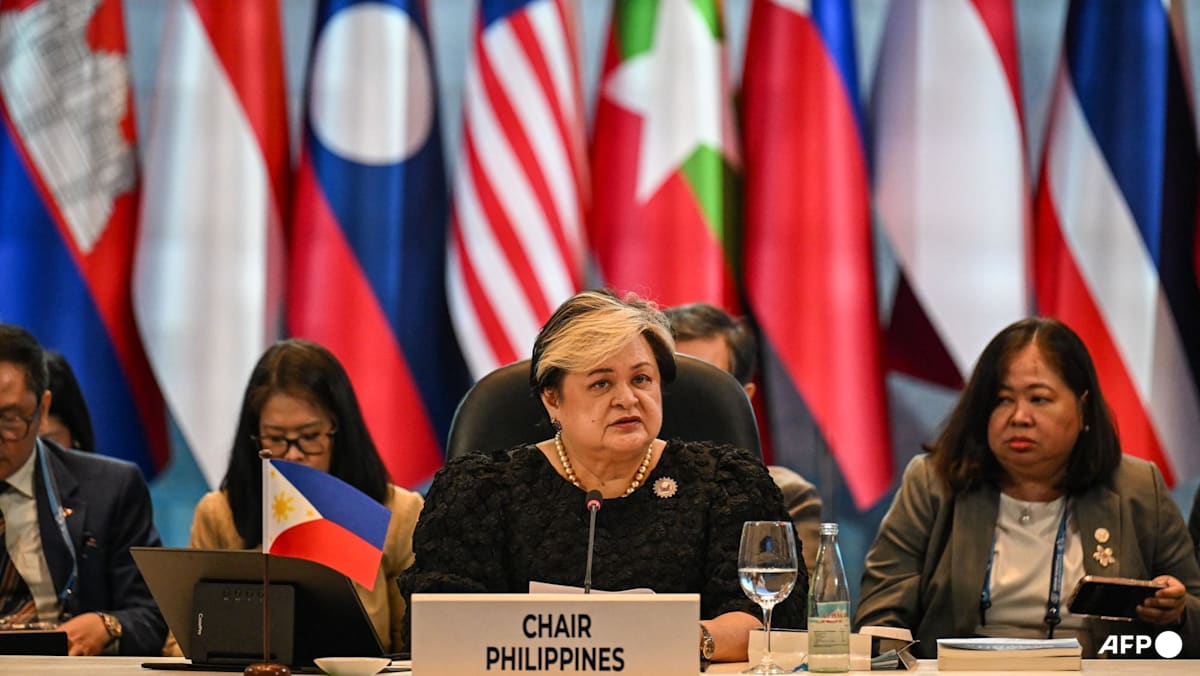
The Association of Southeast Asian Nations will maintain its firm diplomatic posture toward Myanmar and will not ease restrictions barring the country's military leadership from high-level meetings, the regional grouping's special envoy confirmed ahead of an upcoming leaders' gathering in Manila. The announcement precedes an ASEAN leaders' summit scheduled to begin in the Philippine capital on Sunday, Nov. 15, where heads of state face mounting diplomatic friction over how to manage the prolonged political and humanitarian crisis triggered by the 2021 military takeover in Naypyidaw.
Key facts
What happened
Speaking ahead of the formal opening of the ASEAN summit in Manila, the regional bloc's special envoy dismissed suggestions that member states were preparing to relax their diplomatic isolation of Myanmar's military leadership, according to reporting by CNA. The remarks directly addressed growing external and internal lobbying aimed at rolling back the protocol that bars top junta officials from occupying Myanmar's seat at high-profile regional summits.
For five years, ASEAN has restricted Myanmar to sending only "non-political" delegates to its semiannual summits and foreign ministers' gatherings. The military government, operating as the State Administration Council, has repeatedly refused to send civil servants or bureaucratic representatives instead of cabinet ministers and head of state Senior Gen. Min Aung Hlaing, leaving the country's seat vacant at successive summits.
Ahead of the Manila summit, pressure had intensified from select member capitals and external dialogue partners seeking a reassessment of the stalemate. Advocates for engagement argued that five years of exclusion had failed to alter Naypyidaw's domestic behavior or halt armed clashes between junta forces and resistance coalitions across Myanmar. However, the special envoy reiterated that ASEAN's fundamental requirements remain unmet, closing the door on any immediate plan to normalize senior-level participation.
Why it matters
The confirmation that ASEAN will uphold the exclusion of Myanmar's military command carries profound implications for the regional architecture of Southeast Asia, which operates on consensus and non-interference. Maintaining the ban safeguards the bloc's institutional credibility with key Western trading partners, including the United States and the European Union, both of which have instituted targeted sanctions against Myanmar's military leadership and state-owned enterprises. Had ASEAN welcomed junta representatives to Manila, it would have risked retaliatory diplomatic boycotts and threatened critical bilateral dialogue partnerships.
Simultaneously, the steadfast policy underscores the limits of regional diplomacy. By maintaining the five-year freeze without introducing fresh enforcement mechanisms, ASEAN risks solidifying an enduring stalemate. Myanmar remains engulfed in a nationwide civil war involving ethnic armed organizations and the pro-democracy People's Defense Forces, an instability that has displaced more than three million people, crippled cross-border supply chains, and facilitated the rapid growth of transnational narcotics trafficking and cyber-scam operations along the Thai and Chinese frontiers. For neighboring populations, the continuation of the status quo signals that regional consensus-building has yet to establish an effective pathway to end the violence or address cross-border insecurity.
The background
ASEAN's current posture toward Myanmar was forged in the aftermath of the Feb. 1, 2021, coup d'état, in which the armed forces, known as the Tatmadaw, deposed the democratically elected government of the National League for Democracy led by Aung San Suu Kyi. The takeover prompted widespread civil disobedience, which the military met with lethal crackdowns, eventually giving rise to an armed nationwide insurgency directed by the shadow National Unity Government and allied ethnic armies.
In response to the domestic turmoil, ASEAN leaders convened an extraordinary summit in Jakarta in April 2021, attended in person by Min Aung Hlaing. That meeting produced the Five-Point Consensus, a framework requiring an immediate cessation of violence, constructive dialogue among all political factions, the appointment of an ASEAN special envoy to facilitate mediation, the unhindered delivery of humanitarian aid coordinated by the ASEAN Coordinating Centre for Humanitarian Assistance on disaster management (AHA Centre), and a formal delegation visit by the special envoy to meet all stakeholders in Myanmar.
Within months, it became evident that the military council was ignoring the commitments made in Jakarta. Violence against civilian populations escalated, and requests by successive envoys to meet detained leaders, including Suu Kyi, were flatly rejected. Facing mounting international criticism over its institutional passivity, ASEAN took the unprecedented step under Brunei's 2021 chairmanship of disinviting Min Aung Hlaing from the October leaders' summit, limiting Myanmar to non-political representation.
That punitive protocol remained intact through successive annual chairmanships held by Cambodia in 2022, Indonesia in 2023, Laos in 2024, and Malaysia in 2025. Institutional divisions, however, frequently threatened the consensus. Maritime members—including Indonesia, Malaysia, Singapore, and the Philippines—consistently advocated for strict compliance and direct engagement with anti-junta resistance groups. Conversely, mainland neighbors sharing direct borders with Myanmar, notably Thailand, periodically initiated informal, track-1.5 discussions aimed at re-engaging the military command to secure border trade and stem refugee flows.
The organizational strain also disrupted the bloc's rotational governance. Under normal alphabetical sequence, Myanmar was scheduled to hold the rotating ASEAN chairmanship. Recognizing that a junta-led presidency would paralyze ASEAN's external relations and provoke international boycotts, member states negotiated an arrangement under which the Philippines agreed to advance its rotation and assume the 2026 chair.
Reaction
While formal statements from the summit host will not be finalized until foreign ministers and heads of state conclude their introductory sessions in Manila, member states enter the talks with well-documented positions on the special envoy's reaffirmation.
The host nation, the Philippines, under President Ferdinand Marcos Jr., has historically aligned with the maritime bloc advocating for accountability and strict adherence to the Five-Point Consensus. Diplomatic delegations from Indonesia, Malaysia, and Singapore are similarly expected to welcome the envoy's clarification, viewing any premature concession to Naypyidaw as fatal to the organization's regional relevance.
Conversely, Myanmar's State Administration Council has consistently condemned its exclusion, describing ASEAN's ban as an unacceptable violation of the ASEAN Charter's core principles of national sovereignty and non-interference in internal affairs. The junta is expected to criticize the Manila proceedings as illegitimate, repeating its assertion that regional partners are acting under the influence of Western powers. Pro-democracy groups, including the National Unity Government and Myanmar civil society organizations, have historically lobbied ASEAN to go further by formally recognizing resistance bodies, transferring Myanmar's official seat to democratic representatives, and halting military aviation fuel imports.
What we don't know yet
Significant operational and diplomatic gaps remain unresolved as leaders arrive in Manila. Foremost is whether the Philippine chairmanship will pursue modifications to the enforcement mechanisms of the Five-Point Consensus, or whether the bloc will simply renew its existing language without introducing measurable benchmarks for progress.
It also remains unclear whether member states will preserve total consensus behind closed doors, or if mainland nations will continue to sponsor parallel bilateral initiatives with Naypyidaw outside formal ASEAN structures. Furthermore, the reporting by CNA did not disclose whether any non-political representatives from Myanmar's civil service were extended formal invitations to attend technical working groups in Manila, or whether the junta has opted once again for a complete boycott of all summit-related events. Finally, the extent to which external dialogue partners—most notably China, which maintains extensive economic and strategic infrastructure investments across Myanmar—are quietly encouraging ASEAN to resume engagement remains undisclosed.
What to watch
The immediate development to monitor is the release of the final Chairman's Statement and joint ministerial communiqués at the conclusion of the Manila summit. The exact wording regarding Myanmar will indicate whether the maritime bloc succeeded in strengthening the language around civilian protection, or whether compromises were made to satisfy members favoring reconciliation.
Observers should also track any bilateral meetings on the summit sidelines that touch on border management, illicit financial flows, and the coordination of the AHA Centre's aid delivery across conflict lines. Beyond the summit floor, developments inside Myanmar will directly test ASEAN's posture: ongoing ground offensives, shifts in territorial control between ethnic armies and military forces, and Naypyidaw's repeated proposals to stage controlled elections will dictate whether ASEAN's isolation strategy can endure without alternative diplomatic pathways.
This report incorporates news and developments first reported by CNA.
How this story was produced
This report was written by The Global Wire newsroom from reporting first published by CNA. We verify the core facts against the original report, write our own account, and add the background and consequences a short wire item leaves out. Drafting is AI-assisted inside an editor-supervised pipeline, and every story is checked for accuracy of attribution, structure and duplication before it appears — full detail in our AI and funding disclosure.
Spotted an error? Tell us at corrections@horizonglobalnews.com and read our corrections policy or editorial standards.






Reader comments
Loading comments…