

Anthropic Faces Governance Scrutiny as Public Market Pressures Threaten AI Ethics Mission
Analysis by technology journalist Victor Tangermann highlights the structural conflict between Anthropic's ethical charter and the legal obligations of public shareholder ownership.
By The Global Wire Newsroom · Reported from Victor Tangermann
Link preview · horizonglobalnews.com
Anthropic Faces Governance Scrutiny as Public Market Pressures Threaten AI Ethics Mission
Analysis by technology journalist Victor Tangermann highlights the structural conflict between Anthropic's ethical charter and the legal obligations of public shareholder ownership.
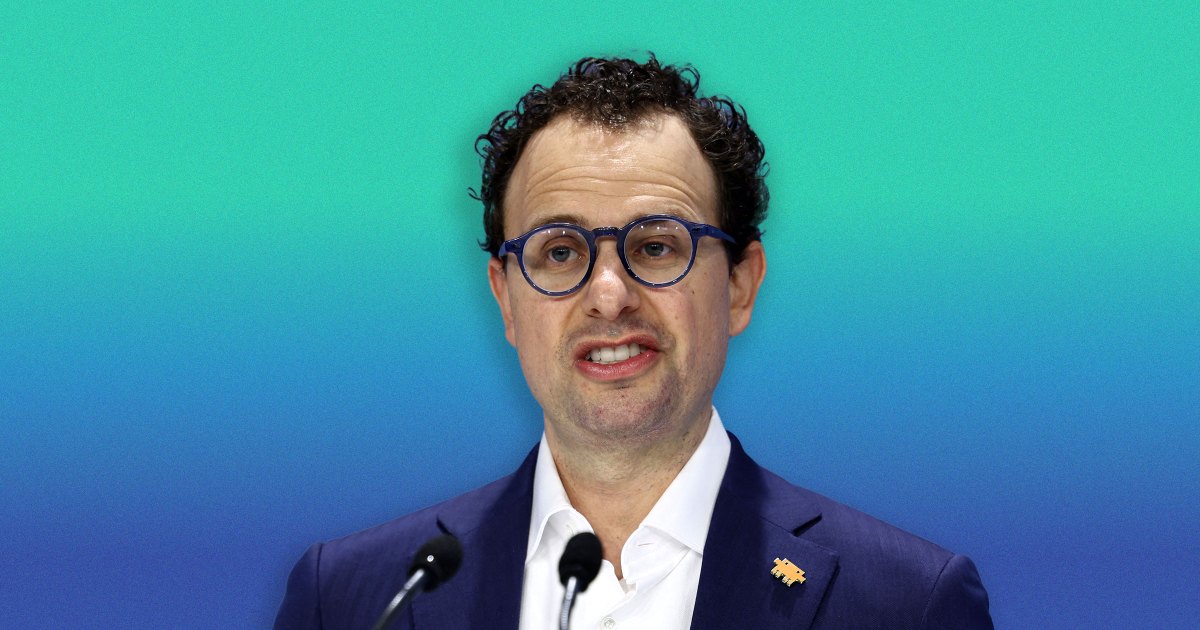
San Francisco-based artificial intelligence developer Anthropic is facing renewed scrutiny regarding its corporate architecture and long-term public benefit commitments, as questions mount over how an eventual transition to public equity markets would reshape the company's core mission. According to reporting and commentary by technology journalist Victor Tangermann published in November 2026, the prospect of Anthropic becoming a publicly traded entity introduces an institutional paradox: once listed on public exchanges, the enterprise would become legally beholden to its shareholders first and foremost. The analysis emphasizes that this conventional corporate fiduciary obligation directly challenges and potentially erodes the firm's carefully cultivated identity as a safety-oriented, ethical counterweight to unrestrained commercialization in the frontier artificial intelligence industry.
Key facts
What happened
In an analytical report examining the financial trajectory of the artificial intelligence sector, Victor Tangermann detailed the growing divergence between Anthropic's founding philosophy and the operational realities of corporate capitalization. The reporting focuses on the structural shifts that occur when a privately held research laboratory prepares for or contemplates an entry into public equity markets.
According to Tangermann, Anthropic has achieved commercial success and broad industry credibility by branding itself as the ethical conscience of the artificial intelligence sector. Established by safety-conscious researchers who departed other labs, the organization established distinct governance safeguards designed to prevent commercial incentives from overriding existential and societal safety concerns. However, Tangermann's analysis argues that this self-regulatory framework faces structural invalidation if the firm transitions to a publicly traded corporation.
Once an enterprise issues public stock, corporate governance in American equity markets requires executive leadership and board directors to maintain a fiduciary duty toward shareholders, whose principal expectation is capital appreciation and quarterly revenue expansion. Tangermann contends that subjecting Anthropic to this market discipline inevitably compels executive management to prioritize monetizable product releases, commercial scale, and competitive market share over methodological restraint. Under this dynamic, the reporting suggests, the public-facing image of a safety-first institution risks being reduced to marketing rhetoric subordinated to the financial imperatives of Wall Street.
Why it matters
The friction between shareholder primacy and responsible artificial intelligence development identified in Tangermann's reporting carries profound ramifications for financial markets, enterprise customers, and global technology policy. Frontier artificial intelligence systems require billions of dollars in computational infrastructure to train and deploy, creating a financial burden that few private balance sheets can sustain indefinitely without tapping broad public capital.
For institutional investors and market participants, the governance dilemma highlights the untested nature of hybrid corporate charters on major public stock exchanges. While public benefit corporation frameworks permit directors to weigh public welfare alongside pecuniary gain, institutional asset managers and activist funds historically exert aggressive pressure on management teams that sacrifice profit margins in pursuit of non-financial objectives. If Anthropic is forced to choose between defending its stock price and slowing model deployment for safety audits, the legal and economic mechanics of public markets favor financial performance.
For corporate customers and developers who integrate Anthropic’s Claude models into critical infrastructure, the potential dilution of safety priorities introduces commercial and compliance risks. Many enterprise clients select Anthropic precisely because its safety commitments offer insulation from regulatory sanctions, copyright disputes, and system hallucinations. A shift toward aggressive commercialization could alter the company's internal risk tolerances.
Furthermore, the issue carries systemic implications for technology regulators worldwide. Policymakers in the United States, the European Union, and the United Kingdom have frequently cited corporate self-governance, red-teaming protocols, and internal safety boards as valuable complements to formal statutory oversight. If public market pressures systematically dismantle these internal guardrails at the industry's most vocal safety advocate, regulatory bodies will likely conclude that voluntary corporate commitments are fundamentally inadequate, accelerating the implementation of mandatory, binding statutory controls.
The background
Anthropic was founded in 2021 by a cohort of former OpenAI senior personnel, including brother-and-sister executives Dario Amodei and Daniela Amodei. The founders departed OpenAI largely due to philosophical concerns over the pace of commercialization and the corporate governance changes that followed OpenAI’s multi-billion-dollar partnership with Microsoft Corporation. Dario Amodei had previously served as OpenAI’s Vice President of Research, overseeing the development of early large language models.
To prevent the commercial compromises they witnessed elsewhere, the founders established Anthropic as a Delaware Public Benefit Corporation. Under Delaware General Corporation Law, directors of a public benefit corporation are legally mandated to balance the pecuniary interests of stockholders with a specific public benefit—in Anthropic’s case, the responsible and safe development of artificial intelligence. To further insulate the firm from outside pressure, Anthropic instituted the Long-Term Benefit Trust, an independent body composed of five trustees with deep expertise in national security, technology ethics, and governance. The trust was granted the authority to appoint and dismiss certain board members over time, theoretically creating a governance mechanism that could overrule venture investors.
Despite these structural mechanisms, Anthropic’s capital requirements escalated rapidly following the launch of its Claude model family. Developing and training state-of-the-art models requires massive access to advanced semiconductor clusters and high-density data centers. To finance these operations, Anthropic raised substantial private funding rounds, including a multi-stage investment commitment of up to $4 billion from Amazon.com Inc. and over $2 billion from Alphabet Inc.’s Google. These transactions involved substantial commercial cloud-computing commitments alongside financial stakes.
This funding model mirrored broader industry dynamics, where frontier research labs increasingly relied on hyperscale technology conglomerates. The fragility of non-traditional AI governance was illustrated in November 2023, when OpenAI’s non-profit board briefly fired Chief Executive Officer Sam Altman over safety and communication disputes, only for commercial partners, venture investors, and the vast majority of employees to force the board's dissolution and Altman's reinstatement within days. That episode demonstrated that when structural governance conflicts with financial viability, capital-backing entities consistently prevail.
Reaction
Tangermann’s reporting reflects an intensifying sentiment among artificial intelligence researchers, legal scholars, and corporate watchdogs who argue that hyper-commercial foundation labs cannot reconcile massive equity valuations with voluntary self-restraint. Civil society organizations and digital rights groups have voiced growing concern that the term "ethical AI" has functioned primarily as a public relations narrative to attract top-tier academic talent and mitigate regulatory scrutiny while companies aggressively pursue enterprise contracts.
Anthropic’s leadership has consistently defended its organizational model. In past public statements, executive communications, and policy papers, Chief Executive Dario Amodei has maintained that the Delaware public benefit corporation structure and the Long-Term Benefit Trust were engineered specifically to endure external financial pressures, including those accompanying public ownership. Company executives have argued that maintaining rigorous safety standards is not a commercial impediment, but rather a long-term competitive advantage that ensures enterprise reliability and regulatory compliance.
Venture capital partners and financial analysts monitoring the sector view an eventual public listing as a necessary and inevitable milestone. Financial analysts note that early investors, sovereign wealth partners, and corporate backers require an exit mechanism to realize returns on multi-billion-dollar private capital commitments, with a public listing representing the traditional vehicle for liquidity.
What we don't know yet
Several critical elements concerning Anthropic’s capital trajectory remain undisclosed in the available reporting. Tangermann’s analysis focuses on the structural and ideological consequences of public ownership, but the report does not indicate whether Anthropic has initiated formal regulatory steps toward an initial public offering, such as confidentially submitting a draft registration statement on Form S-1 with the U.S. Securities and Exchange Commission (SEC).
Additionally, it remains unclear how the authority of the Long-Term Benefit Trust would function in coordination with listing standards enforced by major exchanges such as the New York Stock Exchange or Nasdaq. Standard exchange regulations impose strict rules regarding shareholder voting rights, independent audit committees, and board selection procedures. Whether exchange authorities would accommodate a trust capable of overriding public equity holders without triggering significant legal challenges under federal securities law is an unresolved question.
Furthermore, the precise ownership distribution, liquidation preferences, and contractual governance covenants negotiated between Anthropic, Amazon, and Google have not been made public. Gaps remain regarding whether these strategic corporate investors hold rights that could influence the timing, pricing, or governance structure of any public equity offering.
What to watch
Key markers will signal how Anthropic intends to navigate the tensions highlighted by Tangermann's reporting:
This account is based on original reporting and critical analysis published by Victor Tangermann examining the corporate trajectory and public market implications facing Anthropic.
How this story was produced
This report was written by The Global Wire newsroom from reporting first published by Victor Tangermann. We verify the core facts against the original report, write our own account, and add the background and consequences a short wire item leaves out. Drafting is AI-assisted inside an editor-supervised pipeline, and every story is checked for accuracy of attribution, structure and duplication before it appears — full detail in our AI and funding disclosure.
Spotted an error? Tell us at corrections@horizonglobalnews.com and read our corrections policy or editorial standards.





Reader comments
Loading comments…