

Antares Secures Long-Term TRISO Nuclear Fuel Agreement With Standard Nuclear Through 2035
Antares has contracted Standard Nuclear to supply tristructural-isotropic fuel through 2035 for microreactors built for space and defense applications.
By The Global Wire Newsroom · Reported from Neetika Walter
Link preview · horizonglobalnews.com
Antares Secures Long-Term TRISO Nuclear Fuel Agreement With Standard Nuclear Through 2035
Antares has contracted Standard Nuclear to supply tristructural-isotropic fuel through 2035 for microreactors built for space and defense applications.
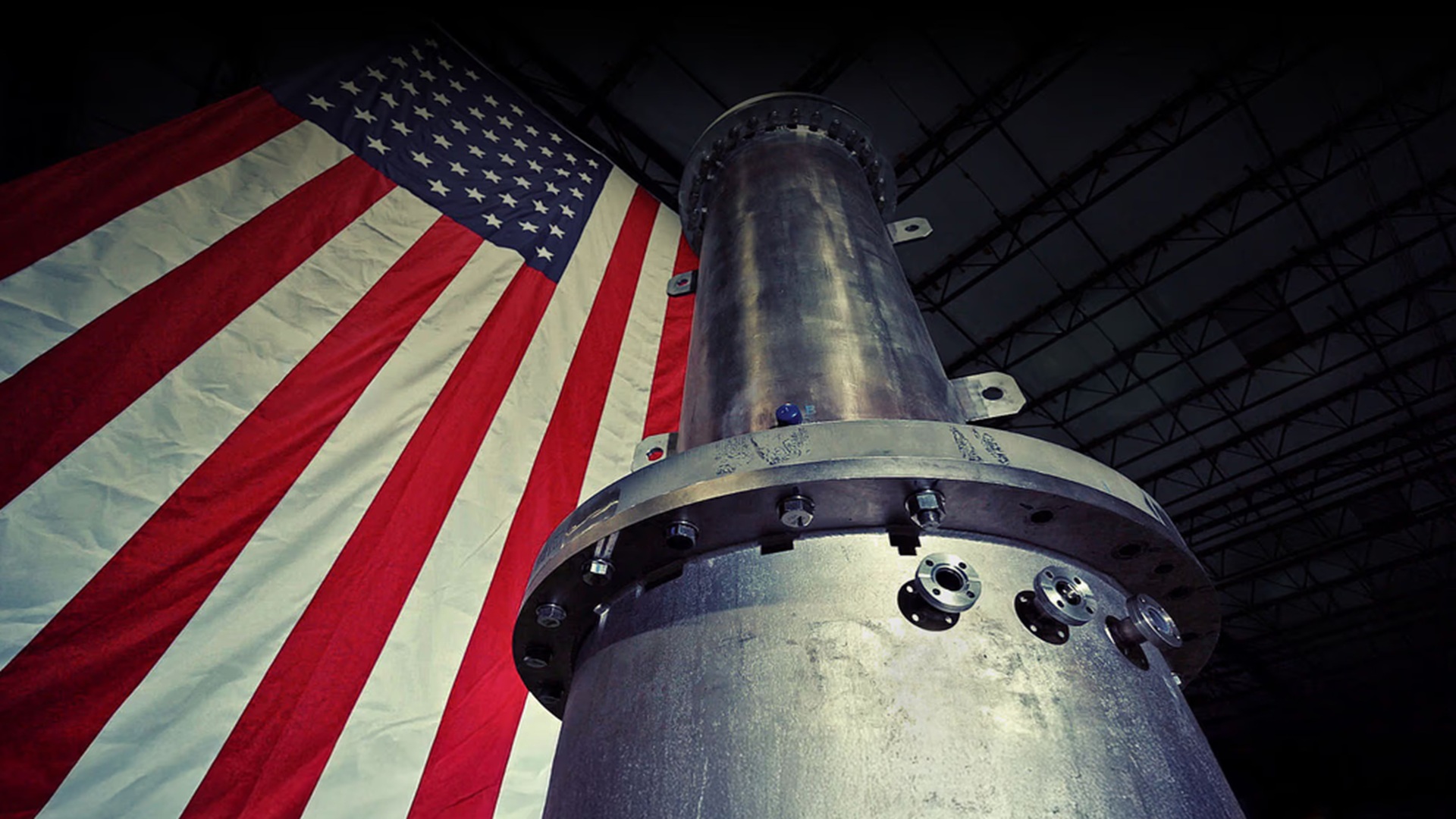
In a move aimed at establishing a secure supply chain for next-generation nuclear systems, space and defense technology developer Antares has entered into a long-term agreement with nuclear materials manufacturer Standard Nuclear to secure tristructural-isotropic (TRISO) fuel through 2035. The agreement, reported on August 27, 2026, by technology journalist Neetika Walter, positions Antares to push forward with its planned deployment of portable microreactors engineered for terrestrial defense installations and deep-space missions. By locking in a multi-year supply of the specialized particle-based fuel, the partnership addresses one of the primary bottlenecks facing the advanced nuclear sector: securing high-integrity fuel designed to withstand extreme thermal and operational environments without sacrificing safety or performance.
Key facts
What happened
According to reporting by Neetika Walter, Antares finalized a decade-long fuel procurement arrangement with Standard Nuclear to support its roadmap for microreactor development. Under the terms of the agreement, Standard Nuclear will supply Antares with TRISO fuel particles through the end of 2035.
The multi-year supply agreement provides Antares with a guaranteed pipeline of specialized nuclear fuel required to test, qualify, and eventually operationalize its microreactor designs. Microreactors represent a distinct class of small modular reactors, typically engineered to produce between 1 megawatt and 20 megawatts of thermal energy. Their small physical footprint allows them to be fabricated entirely in manufacturing facilities and transported via standardized freight containers, aircraft, or heavy transport vehicles to deployment sites.
By securing access to Standard Nuclear’s fuel manufacturing capacity, Antares seeks to de-risk its supply chain ahead of planned hardware demonstrations. Advanced nuclear ventures routinely face prolonged procurement lead times due to the specialized chemical and mechanical processes required to synthesize nuclear fuels. The ten-year duration of the commitment reflects the extended timelines associated with nuclear hardware prototyping, regulatory review, safety validation, and long-term operational deployment.
Why it matters
The procurement agreement between Antares and Standard Nuclear underscores a pivotal structural evolution in the modern nuclear energy and defense technology landscape. For decades, nuclear power was defined by massive, gigawatt-scale light-water reactors requiring decades of construction, localized cooling infrastructure, and extensive civil engineering. The emerging microreactor paradigm flips this architecture, emphasizing rapid deployability, modular maintenance, and intrinsic safety features that operate independently of external power or active human intervention.
For defense applications, reliable mobile power has become a critical strategic vulnerability. Modern military installations rely heavily on complex logistics networks to transport millions of gallons of diesel fuel to support command centers, radar networks, mobile hospitals, and forward operating bases. Disruption of these fuel lines presents a severe operational hazard during conflicts or natural disasters. Microreactors fueled by long-lasting TRISO particles offer an alternative capable of generating continuous electrical and thermal power for years without refueling, dramatically reducing the operational footprint and supply-line vulnerability of military forces.
In the space domain, power constraints represent a major physical barrier to long-duration exploration, lunar surface bases, and advanced space propulsion. Solar panels become progressively less effective beyond Earth orbit, during the two-week lunar night, or inside shadowed craters. Nuclear microreactors provide a compact, high-density energy source capable of powering life support systems, resource extraction equipment, and high-thrust nuclear thermal or nuclear electric propulsion systems.
From an industry standpoint, securing fuel supply early is essential. Advanced reactor designs often stall not because of engineering flaws in the reactor vessel itself, but due to shortages in enriched fuel feedstocks and specialized manufacturing infrastructure. By formalizing a contract through 2035, Antares aims to reassure regulatory bodies, government partners, and commercial customers that its systems will possess a reliable fuel source throughout their development lifecycle.
The background
To appreciate the significance of this agreement, it is necessary to examine the underlying mechanics of TRISO fuel technology and the geopolitical backdrop of advanced nuclear supply chains.
TRISO, short for tristructural-isotropic fuel, was originally conceptualized decades ago but has seen intensive modern refinement as the gold standard for high-temperature gas-cooled reactors and microreactors. Each TRISO particle is roughly the size of a poppy seed, featuring a central kernel of uranium oxide or uranium oxycarbide. This central core is encapsulated within three distinct concentric layers: a porous carbon buffer layer that absorbs fission product pressure and accommodates swelling, an inner pyrolytic carbon layer, a dense silicon carbide layer that acts as a miniature pressure vessel, and an outer pyrolytic carbon shell.
This multi-layered containment architecture ensures that radioactive fission products remain trapped within the particle even at temperatures exceeding 1,600 degrees Celsius (2,900 degrees Fahrenheit)—temperatures far beyond the operational limits of traditional nuclear fuel rods and well above the melting point of steel. Because the structural integrity of the fuel is maintained at extreme temperatures, reactors utilizing TRISO fuel are inherently safe against catastrophic core meltdowns. Even in the event of a total loss of coolant or complete system control failure, the fuel retains its integrity and prevents environmental contamination.
Historically, commercial nuclear fuel manufacturing focused on low-enriched uranium dioxide pellets encased in zirconium alloy tubes, optimized for large light-water reactors. TRISO manufacturing requires entirely different chemical vapor deposition techniques, specialized carbon and ceramic precursors, and high-precision quality control to ensure uniform layer thickness. Furthermore, most advanced microreactors using TRISO fuel are designed to run on High-Assay Low-Enriched Uranium (HALEU), which is enriched between 5 percent and 20 percent Uranium-235, compared to the 3 to 5 percent enrichment used in standard commercial reactors.
The global supply chain for HALEU and specialized fuels has faced severe bottlenecks in recent years. Historically, Russia was the primary commercial supplier of HALEU globally, creating acute strategic supply risks for Western developers following international sanctions and geopolitical realignments starting in 2022. Government bodies, including the U.S. Department of Energy and the Department of Defense, have since poured substantial funding into domestic HALEU enrichment and fuel fabrication initiatives to rebuild a sovereign nuclear supply architecture.
In parallel, initiatives such as the U.S. Department of Defense's Project Pele have aimed to demonstrate operational mobile microreactors, encouraging private sector defense contractors and aerospace startups to develop fieldable microreactor concepts. Similarly, space agencies including NASA and the U.S. Space Force have increasingly prioritized nuclear surface power and space-based power systems to support lunar infrastructure under programs like Artemis and future Mars exploration architectures.
Reaction
Following the report by Neetika Walter, industry observers noted that long-term fuel off-take agreements of this nature represent a crucial step toward commercial maturity for the advanced nuclear sector. Standard Nuclear's commitment through 2035 provides an explicit signal that commercial fuel suppliers are actively scaling specialized manufacturing lines to meet non-traditional nuclear demand.
While official statements detailing customer pricing or governmental regulatory filings were not included in the initial announcement, analysts expect both the Department of Defense and civil nuclear oversight authorities to closely review the supply chain structures backing these microreactor programs. Regulatory frameworks surrounding the transportation, handling, and storage of TRISO fuel and HALEU feedstocks remain strictly governed by national nuclear regulators, such as the U.S. Nuclear Regulatory Commission and international safeguards bodies. Environmental groups and security experts are also expected to monitor microreactor deployment plans to ensure that fuel security, physical proliferation risks, and end-of-life radioactive waste management strategies are comprehensively addressed.
What we don't know yet
Despite the announcement of the agreement, several critical details remain undisclosed or unresolved:
What to watch
In the coming months and years, stakeholders should monitor several tangible indicators that will determine the success of this agreement and the broader microreactor push:
This report is based on original news coverage by Neetika Walter published on August 27, 2026.
How this story was produced
This report was written by The Global Wire newsroom from reporting first published by Neetika Walter. We verify the core facts against the original report, write our own account, and add the background and consequences a short wire item leaves out. Drafting is AI-assisted inside an editor-supervised pipeline, and every story is checked for accuracy of attribution, structure and duplication before it appears — full detail in our AI and funding disclosure.
Spotted an error? Tell us at corrections@horizonglobalnews.com and read our corrections policy or editorial standards.





Reader comments
Loading comments…