

Alaska Conservation Accord Shields 47,000 Acres at Major Walrus Haul-Out
A permanent land protection agreement in northwest Alaska safeguards coastal habitat as diminishing Arctic sea ice forces more than 200,000 Pacific walruses onto land.
By The Global Wire Newsroom · Reported from TOI Science Desk
Link preview · horizonglobalnews.com
Alaska Conservation Accord Shields 47,000 Acres at Major Walrus Haul-Out
A permanent land protection agreement in northwest Alaska safeguards coastal habitat as diminishing Arctic sea ice forces more than 200,000 Pacific walruses onto land.
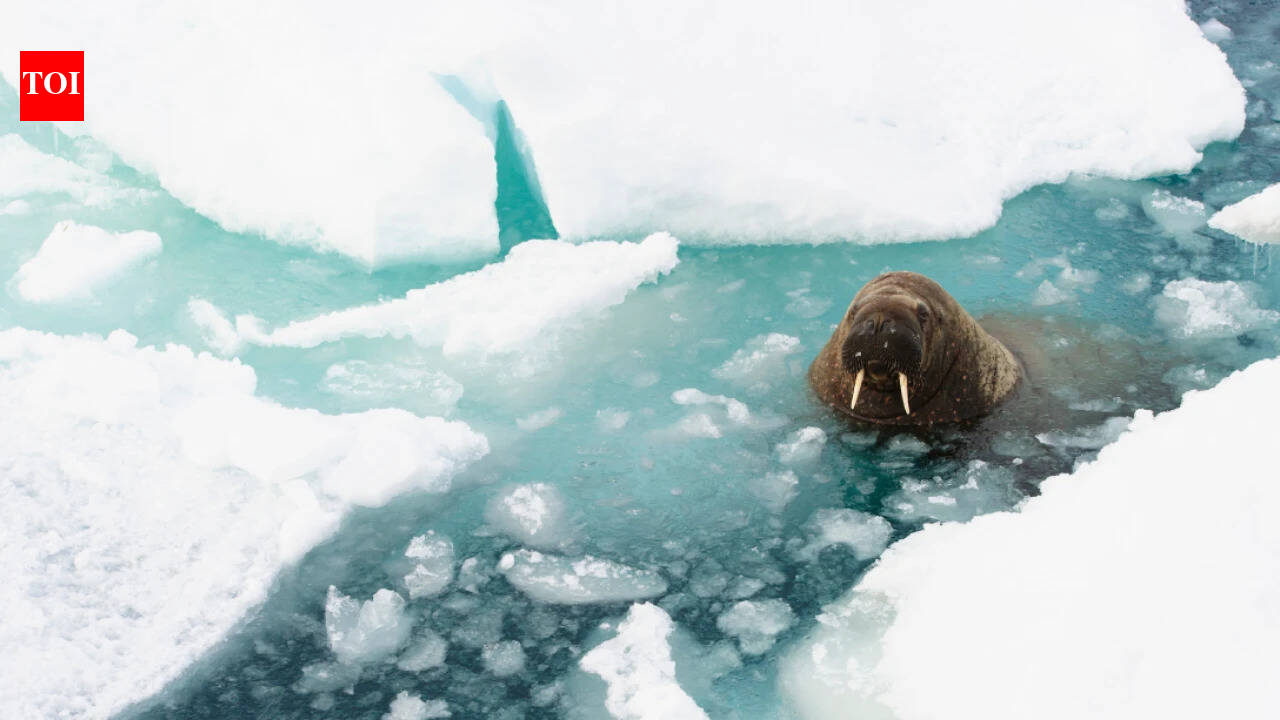
Conservation groups have finalized a permanent protection agreement encompassing 47,473 acres along the coast of northwest Alaska, safeguarding the continent's most significant terrestrial gathering grounds for the Pacific walrus. The transaction, reported by TOI Science Desk, establishes a permanent buffer around shoreline stretches where shrinking summer and autumn sea ice has forced more than 200,000 animals to haul out on dry land rather than resting on marine ice floes over their traditional offshore foraging grounds.
Key facts
What happened
According to reporting by TOI Science Desk, conservationists secured permanent protection over a vast tract measuring 47,473 acres along the remote northwest Alaskan coastline, surrounding the critical beaches where massive aggregations of Pacific walruses (*Odobenus rosmarus divergens*) gather each autumn. The parcels encompass sensitive coastal barrier environments, lagoon networks, and adjacent upland tundra that border the animals' primary terrestrial resting areas.
In recent autumn seasons, these narrow coastal beaches have accommodated continuous carpets of marine mammals pressed shoulder-to-shoulder across miles of sand and gravel. Aerial surveys and ground monitoring in the region have cataloged congregations numbering in the tens of thousands at single locations, forming part of a broader migratory response that involves more than 200,000 walruses navigating the eastern Chukchi Sea corridor.
The newly completed conservation initiative restricts future surface development, commercial infrastructure, and industrial leasing across the designated acreage. By shielding the immediate hinterland and coastal margins from disturbance, the agreement aims to insulate the densely clustered herds from human interference during critical weeks when the animals must alternate between open-ocean foraging and prolonged rest.
Why it matters
The formal protection of this acreage addresses one of the most visible ecological displacements triggered by climate shifts in the circumpolar North. Unlike seals, walruses cannot swim continuously without pause; their heavy bone density and metabolic requirements demand periodic resting intervals between deep dives to the sea floor. Historically, female walruses and their dependent calves spent late summer and autumn drifting over the shallow, highly productive waters of the Chukchi Sea continental shelf atop broken pack ice. These floating platforms functioned as natural mobile diving stations directly above dense beds of clams, snails, and marine worms.
When summer sea ice melts past the perimeter of the shallow shelf into the deep Arctic Basin—where water depths exceed several thousand feet—the sea floor falls beyond the physiological diving threshold of female walruses, which rarely feed at depths greater than 300 feet. Consequently, the animals are forced to abandon the ice entirely and swim south to Alaskan and Russian shorelines to rest.
Concentrating an entire regional demographic of females and young animals on narrow mainland strips fundamentally alters their energy balance. Walruses resting on coastal beaches must swim up to 100 miles round-trip to reach viable feeding grounds, expending significant caloric energy that would otherwise support lactation and calf development. Furthermore, terrestrial crowding introduces catastrophic density-dependent risks. When startled by unauthorized low-altitude aircraft, powerboats, or coastal hunters, panic ripples through herds weighing upwards of several thousand pounds per adult. The resulting stampedes into the surf regularly result in the crushing deaths of hundreds of calves and sub-adults in single events. Securing nearly 47,500 acres of adjoining landscape prevents industrial intrusions that could provoke such deadly mass panics.
The background
The Pacific walrus population, which ranges across the Bering and Chukchi seas between the United States and the Russian Federation, has undergone substantial behavioral and regulatory scrutiny over the past two decades. In the late 20th century, female walruses and their young rarely hauled out in significant numbers on North American mainland shores during the autumn months, as seasonal pack ice lingered reliably over the Chukchi shelf until winter freezing resumed.
Beginning in the late 2000s—notably around 2007 and 2009—scientists, federal wildlife managers, and Alaska Native hunters noted unprecedented, massive gatherings forming on barrier islands near remote coastal settlements such as Point Lay. By 2014, aerial photographs documenting an estimated 35,000 walruses crowded onto a single strip of beach near Point Lay gained global attention, illustrating the physical reality of Arctic ice loss. Similar terrestrial congregations have long occurred along the Russian coast at Cape Serdtse-Kamen, where over 100,000 individuals have gathered at times, but the regular appearance of massive aggregations on the Alaskan shore marked an enduring behavioral shift.
Under federal wildlife law, the Pacific walrus was evaluated for protective status under the U.S. Endangered Species Act. In 2011, the U.S. Fish and Wildlife Service determined that listing the species as threatened or endangered was warranted due to sea ice habitat loss, but the decision was precluded by higher-priority listings. In October 2017, the agency reversed course, concluding that despite documented sea ice loss, the species had demonstrated an ability to adapt by using land haul-outs, and that significant population declines could not be definitively projected. That determination faced extensive legal challenges from environmental organizations, leaving non-statutory land conservation and voluntary stewardship as primary mechanisms for coastal habitat security.
Land management in northern Alaska operates within a complex statutory mosaic established by the Alaska Native Claims Settlement Act of 1971 and the Alaska National Interest Lands Conservation Act of 1980. Regional and village Native corporations, federal agencies such as the Bureau of Land Management, and state bodies maintain intersecting property and subsurface rights across the North Slope. Preserving contiguous habitat blocks in this region requires detailed negotiations involving municipal authorities, Native landholding entities, and regional conservation trusts.
Reaction
While the reporting by TOI Science Desk did not publish formal statements from specific organizational representatives, transactions of this magnitude in rural Alaska typically involve consensus-building across conservation trusts, regional Alaska Native entities, and wildlife management bodies.
Indigenous communities along the northwest Arctic coast, particularly Iñupiat residents of coastal villages who rely on the marine environment for subsistence hunting, have historically shouldered the burden of managing and protecting coastal haul-out areas. Local tribal councils, in cooperation with the North Slope Borough and the Eskimo Walrus Commission, have previously established local guidelines to reduce herd disturbances, urging pilots to maintain altitude minimums and rerouting marine vessels away from nearshore aggregations.
Conservation biologists have consistently argued that protecting terrestrial haul-outs is an urgent, albeit stopgap, necessity. While protecting coastal acreage cannot halt the thermal dynamics melting offshore sea ice, environmental advocates maintain that eliminating shore-based disruptions gives walrus populations their highest statistical probability of surviving regional climate reorganization.
Federal wildlife oversight agencies, including the U.S. Fish and Wildlife Service, maintain standing monitoring operations across the Chukchi Sea coast and are expected to incorporate the newly preserved acreage into ongoing spatial monitoring programs during the autumn migration period.
What we don't know yet
Several substantive operational and legal details regarding the land agreement remain unaddressed in the available reporting. The source dispatch does not disclose the precise financial structure of the conservation transaction, including whether the 47,473 acres were acquired through direct fee-simple purchase, the conveyance of permanent conservation easements, or mineral and development right retirements.
Additionally, the reporting does not identify the specific philanthropic, state, or federal financing mechanisms that underwrote the accord, nor does it name the underlying landholding parties—such as regional Native corporations or private estates—that held prior title to the parcels. Crucially, the practical management framework remains unspecified: it is not yet clear whether daily oversight will fall to an Alaska Native tribal government, a regional borough, the U.S. Fish and Wildlife Service, or an independent land trust.
Finally, the geographic coordinates and continuity of the protected perimeter have not been published in detail. Whether the 47,473 acres form an unbroken buffer surrounding a single barrier spit or represent a network of non-contiguous tracts across multiple barrier islands and lagoon shorelines will significantly determine how effectively managers can enforce zoning restrictions against unauthorized access.
What to watch
The efficacy of the new reserve will be tested during upcoming seasonal migration cycles, beginning with the late-summer sea ice minimums. Observers will track several concrete developments:
*Based on original reporting by TOI Science Desk.*
How this story was produced
This report was written by The Global Wire newsroom from reporting first published by TOI Science Desk. We verify the core facts against the original report, write our own account, and add the background and consequences a short wire item leaves out. Drafting is AI-assisted inside an editor-supervised pipeline, and every story is checked for accuracy of attribution, structure and duplication before it appears — full detail in our AI and funding disclosure.
Spotted an error? Tell us at corrections@horizonglobalnews.com and read our corrections policy or editorial standards.





Reader comments
Loading comments…