

Airstrikes Near Sanaa Leave Dozens Dead as Yemeni Conflict Escalates
Airstrikes blamed on a Saudi-led military coalition killed at least 33 people in a village outside Yemen's capital, according to local health authorities.
By The Global Wire Newsroom · Reported from thestar.com.my
Link preview · horizonglobalnews.com
Airstrikes Near Sanaa Leave Dozens Dead as Yemeni Conflict Escalates
Airstrikes blamed on a Saudi-led military coalition killed at least 33 people in a village outside Yemen's capital, according to local health authorities.
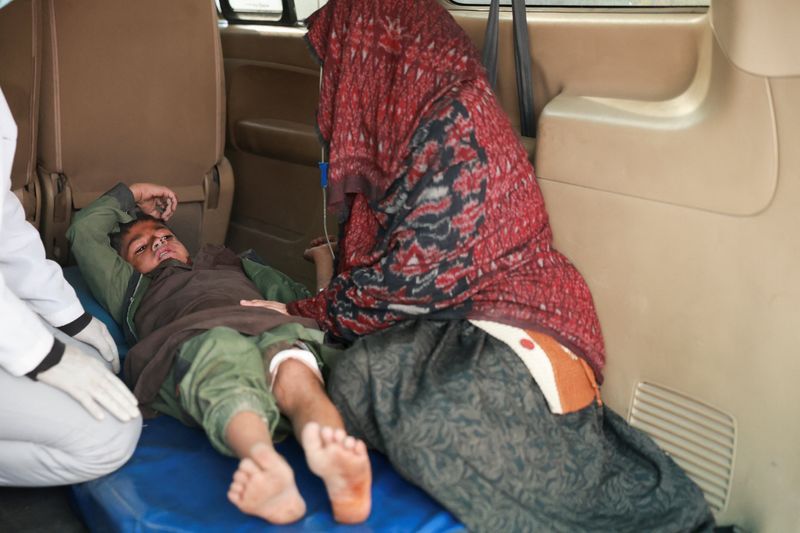
A barrage of airstrikes struck a village on the outskirts of Yemen's capital on Saturday, killing at least 33 people and wounding dozens more, according to local health officials and state media operated by the Houthi movement. The attack, attributed by the Houthi-run administration to a Saudi-led military coalition, marks one of the deadliest single incidents recorded in the country since direct hostilities reignited earlier this year. Rescue teams worked through rubble in the targeted settlement near Sanaa to retrieve victims, as local medical facilities scrambled to treat the influx of severe casualties.
Key facts
What happened
According to reporting by Reuters, the aerial bombardment struck a rural community located in close proximity to Sanaa during daylight hours on Saturday. Citing figures released by the Houthi-operated health ministry and detailed by the Sanaa-based Saba news agency, the blasts resulted in the immediate death of at least 33 residents and inflicted shrapnel wounds and trauma injuries on 39 others.
First responders and local volunteers mobilized to comb through collapsed residential structures and damaged masonry to locate survivors. Unofficial accounts from residents indicated that multiple munitions landed in rapid succession, collapsing homes and damaging adjacent infrastructure. Medical directors across Sanaa placed trauma centers on emergency alert, appealing for blood donations as surgical units received dozens of critical patients bearing blast injuries, amputations, and extensive burns.
The Houthi administration’s defense apparatus condemned the strikes as a deliberate attack on civilian dwellings, alleging that fighter aircraft operating under the command of the Saudi-led coalition delivered the ordnance. In the immediate aftermath of the event, the coalition command did not issue an operational statement detailing whether military targets, such as weapons caches or missile launching positions, had been designated in the vicinity, leaving official narratives sharply divided between the belligerent parties.
Why it matters
The lethal strikes near Sanaa threaten to shatter any remaining prospects for formalizing a durable peace agreement between Saudi Arabia and the Houthi movement, raising the risk of unrestricted regional escalation. For Yemen's civilian population, the incident underscores the precariousness of temporary lulls in fighting. When aerial campaigns intensify, the collateral destruction falls disproportionately on civilian communities already enduring what the United Nations has classified as one of the world's most severe humanitarian crises.
Politically, the renewed kinetic actions between Riyadh and the Houthis deal a profound setback to bilateral negotiations that had progressed intermittently under Omani mediation. Saudi Arabia has sought an orderly exit from its costly military intervention in Yemen to protect its domestic economic diversification initiatives, including Vision 2030 megaprojects along the Red Sea and Arabian Gulf. A resumption of high-casualty coalition airstrikes increases the probability of retaliatory Houthi drone and ballistic missile strikes directed at Saudi energy infrastructure, international airports, and military bases.
Economically, renewed fighting inflates war-risk insurance premiums across the southern Red Sea and the Gulf of Aden, maritime corridors through which approximately 12 percent of global seaborne trade passes. If the Houthis expand their operational targets beyond maritime shipping lanes to cross-border strikes within the Arabian Peninsula, regional supply chains, crude oil benchmarks, and shipping costs could experience severe volatility, directly affecting import-dependent economies worldwide.
The background
Yemen's civil conflict began in late 2014 when the Houthi movement, an armed Zaydi Shiite faction originating from the northern governorate of Saada, advanced south and seized control of Sanaa, ousting the internationally recognized government of President Abd-Rabbu Mansour Hadi. In March 2015, a military coalition led by Saudi Arabia and the United Arab Emirates launched Operation Decisive Storm, deploying advanced air power, naval blockades, and ground logistics in an effort to restore Hadi’s administration and roll back Iranian influence on the Arabian Peninsula.
Over the subsequent decade, the war devolved into a grinding stalemate. The Saudi-led coalition conducted tens of thousands of airstrikes, aiming to destroy Houthi command nodes, missile batteries, and ammunition storage. These operations frequently drew international condemnation from human rights organizations over civilian casualties resulting from strikes on markets, funeral gatherings, hospitals, and residential neighborhoods. Conversely, the Houthis built an extensive arsenal of uncrewed aerial vehicles and precision-guided ballistic missiles, supplied and enhanced with Iranian technological assistance, launching repeated cross-border barrages against Saudi oil installations, including major facilities operated by Saudi Aramco.
In April 2022, the United Nations brokered a landmark nationwide truce that halted major offensive air and ground operations. Although the formal truce expired in October 2022 after the parties failed to reach consensus on expanding public salary payments, an unwritten understanding preserved a prolonged reduction in violence. Riyadh engaged in direct, high-level diplomatic talks with Houthi delegations, seeking long-term security guarantees and a permanent buffer along the 1,400-kilometer Saudi-Yemeni border.
However, regional frictions, exacerbated by broader Middle Eastern conflicts and maritime interdictions in the Bab el-Mandeb strait, repeatedly strained these quiet talks. Friction points centered on revenue sharing from Yemeni hydrocarbons, payment mechanisms for civil servants under Houthi administration, and maritime access to the port of Hodeidah. When operational hostilities renewed earlier in the year, the fragile balance disintegrated, returning the northern highlands to active battlefield conditions.
Reaction
The strikes drew immediate condemnation from the Houthi-controlled authorities in Sanaa. Senior officials within the Supreme Political Council characterized the bombardment as a war crime, asserting that the targets were civilian homes with no military significance. The political bureau warned that such actions would not pass without military repercussions, suggesting that strategic targets within coalition member states could face retaliatory attacks by specialized rocket and drone units.
International humanitarian agencies active in northern Yemen prepared emergency logistical interventions, expressing profound alarm over the high casualty figures. Representatives from non-governmental organizations emphasizing international humanitarian law noted that the Geneva Conventions strictly require warring parties to distinguish between combatants and civilians, observe proportionality in the use of force, and take all feasible precautions to avoid loss of civilian life.
The Saudi government and the joint command of the coalition did not immediately publish a formal response to the casualty claims issued by the Houthi health ministry. When addressing past claims of civilian harm, the coalition has typically referred incidents to the Joint Incidents Assessment Team (JIAT), an internal investigative body based in Riyadh established to evaluate allegations of unlawful strikes, verify post-strike battle damage, and offer technical justifications or ex-gratia compensation recommendations.
Diplomatic observers anticipate that the United Nations Office of the Special Envoy of the Secretary-General for Yemen will issue an appeal for maximum restraint, reiterating that lasting stability cannot be achieved through battlefield dominance and urging both parties to re-engage with established de-escalation channels.
What we don't know yet
Several critical elements of the Saturday incident remain unverified. First, independent corroboration of the exact civilian-to-combatant ratio among the 33 reported dead has not been established. The Houthi authorities did not clarify whether military personnel, munitions depots, or command posts were situated in or near the targeted village, nor have independent journalists been able to inspect the strike craters and wreckage free of official escort.
Second, the specific operational rationale of the airstrikes remains unexplained from the coalition perspective. It is unclear whether the mission targeted a time-sensitive asset, such as a mobile missile launcher or an assembling senior cadre, or if the munitions struck unintended coordinates due to targeting errors, guidance system failure, or inaccurate intelligence.
Finally, the precise timeline and nature of any Houthi military response are unknown. Observers are watching whether the group will respond symmetrically with drone strikes against southern Saudi cities such as Jizan, Najran, or Abha, or if they will seek broader leverage through expanded operations against naval assets and commercial vessels navigating international shipping channels.
What to watch
The trajectory of the Yemeni crisis over the coming days will depend on several measurable factors:
This account is based on news reporting by Reuters and the Houthi-administered Saba news agency, along with regional security monitoring and verified institutional context.
How this story was produced
This report was written by The Global Wire newsroom from reporting first published by thestar.com.my. We verify the core facts against the original report, write our own account, and add the background and consequences a short wire item leaves out. Drafting is AI-assisted inside an editor-supervised pipeline, and every story is checked for accuracy of attribution, structure and duplication before it appears — full detail in our AI and funding disclosure.
Spotted an error? Tell us at corrections@horizonglobalnews.com and read our corrections policy or editorial standards.






Reader comments
Loading comments…