Knicks يسعى للاستقرار الهجومي عقب هزيمة بفارق ضئيل أمام Heat، والمدرب Mike Brown يحذر
دعا Mike Brown مدرب New York Knicks فريقه إلى بناء أداء هجومي متسق بعد أن أدى التأخر المتكرر في بدايات المباريات إلى خسارة بفارق ضئيل أمام Miami Heat.
The Global Wire Newsroom ·
Link preview · horizonglobalnews.com
Knicks يسعى للاستقرار الهجومي عقب هزيمة بفارق ضئيل أمام Heat، والمدرب Mike Brown يحذر
دعا Mike Brown مدرب New York Knicks فريقه إلى بناء أداء هجومي متسق بعد أن أدى التأخر المتكرر في بدايات المباريات إلى خسارة بفارق ضئيل أمام Miami Heat.
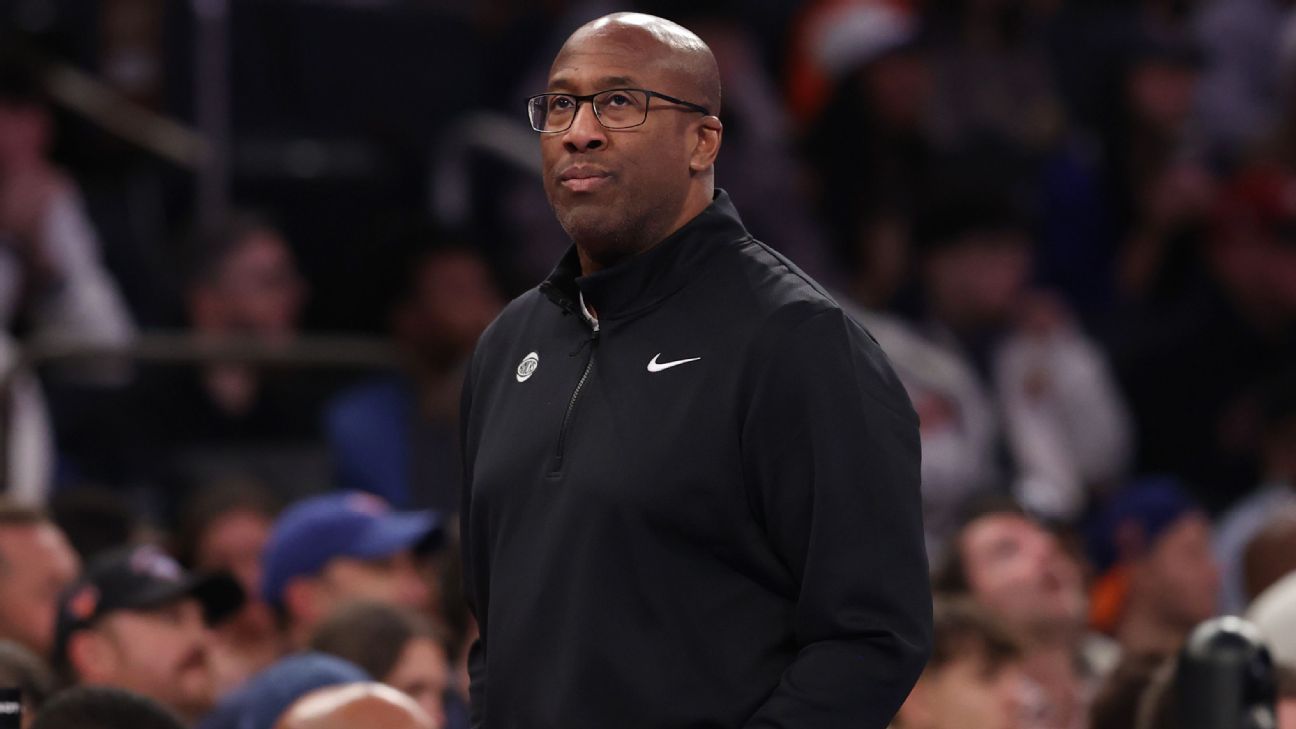
New York Knicks head coach Mike Brown addressed his team's recurring tactical vulnerabilities following a narrow defeat to the Miami Heat on Friday, warning that an ongoing pattern of conceding substantial early deficits has placed the roster in an unsustainable competitive position. Speaking in the aftermath of the contest, Brown emphasized that the team's habit of relying on late-game surges to rescue victories had become an unacceptable operational gamble over the course of a demanding National Basketball Association campaign. The defeat halted recent momentum and brought renewed internal scrutiny to New York's offensive execution during the opening halves of contests.
## Key facts
- New York Knicks head coach Mike Brown publicly called for greater offensive consistency following a close loss to the Miami Heat on Friday. - Brown characterized the team's ongoing pattern of surrendering early deficits before mounting late comebacks as "playing with fire." - The head coach explicitly stated that relying on late-game rallies to offset poor starts is not a sustainable operational strategy over a full season. - The outcome marked a setback against an Eastern Conference rival after prior games had seen the Knicks successfully overcome early multi-possession deficits. - Detailed box scores, specific scoring margins, and individual statistical totals were not disclosed in the initial post-game reporting.
## What happened
The Friday matchup between the New York Knicks and the Miami Heat developed along a trajectory that has become increasingly familiar for New York during the current competitive period. As documented in reporting by Vincent Goodwill, the Knicks once again allowed their opponents to establish an early advantage, forcing the coaching staff and rotation into a reactive posture during the opening stages of the contest.
Throughout recent fixtures, the Knicks had managed to mask early scoring droughts and defensive lapses by staging vigorous rallies in the fourth quarter. That formula faltered on Friday against Miami's disciplined structure. While New York was able to turn the game into a tightly contested affair in the closing minutes, the team was unable to complete the comeback, suffering a narrow defeat.
In his post-game media availability, coach Mike Brown confronted the underlying flaws that produced the result. Brown warned that the team has been "playing with fire" by allowing opponents to dictate tempo and establish early control. Rather than praising the late push that made the final score close, Brown pointed directly to the absence of early and sustained offensive rhythm. He stated clearly that relying on high-leverage comebacks is an unsustainable habit, directing his players to establish reliable execution from the opening tip rather than depending on late heroics.
## Why it matters
In the context of the National Basketball Association's 82-game regular season schedule, tactical habits formed during early-season and mid-season stretches often dictate a franchise's overall postseason trajectory. Brown's public warning highlights a fundamental truth of modern professional basketball: while the mathematical variance of three-point shooting permits dramatic comebacks, consistently chasing games imposes a heavy physical and emotional toll on a roster. When a team spends the third and fourth quarters operating in desperation mode, key starters are forced to log heavy minutes under maximum physical strain, dramatically compounding the risk of muscle fatigue and late-season injuries.
Furthermore, within the Eastern Conference standings, tiebreakers and home-court advantage frequently hinge on a margin of one or two victories. Dropping winnable contests due to disjointed offensive starts directly erodes a team's margin for error. Elite defensive units, such as those historically deployed by Miami, excel at bleeding clock, slowing pace, and executing half-court sets once they possess a late lead. Brown’s acknowledgment that New York's approach is unsustainable demonstrates an acute awareness that while dramatic comebacks generate spectator excitement, they rarely translate into playoff success. In a seven-game postseason series, prepared opponents exploit early systemic lapses, making structural offensive consistency an absolute prerequisite for title contention.
## The background
The competitive friction between the New York Knicks and the Miami Heat constitutes one of the most storied institutional rivalries in professional sports. Originating during the late 1990s, when former Knicks coach Pat Riley departed for South Florida to construct the Heat organization, the franchises engaged in four consecutive bruising playoff series between 1997 and 2000. Those encounters, marked by physical defense and minimal scoring margins, established an organizational culture in Miami centered on conditioning, defensive discipline, and situational execution, an ethos that has persisted across subsequent decades.
In the contemporary NBA, offensive dynamics have undergone profound structural transformations. The introduction of advanced spatial analytics, prioritized perimeter shooting beyond the 23-foot, 9-inch three-point arc, and heightened pace of play have expanded scoring swings. In previous eras governed by slower half-court post play, a double-digit deficit in the second quarter was frequently fatal. In modern professional play, a 15-point deficit can theoretically be erased within four minutes of efficient transition scoring and perimeter marksmanship.
However, this volatility creates a dangerous cognitive illusion for coaching staffs and players. Teams that possess high-end offensive shot-makers can become complacent, tacitly accepting sluggish starts under the assumption that their individual shot creation will compensate late in the contest. Head coaches operating within this modern framework must continually enforce offensive principles that generate high-quality shot distribution early in games. For New York, maintaining offensive consistency involves balancing isolation play with dynamic ball movement, setting disciplined screens, and minimizing live-ball turnovers that lead directly to transition opportunities for opposing offenses. Mike Brown's career as an NBA head coach has spanned multiple organizations where he has consistently stressed disciplined execution and structural clarity, making his critique of New York's uneven play a direct extension of his established coaching philosophy.
## Reaction
Formal organizational reaction to Friday's contest has centered primarily on Mike Brown’s pointed commentary to the media. Rather than offering platitudes regarding his team’s resilience, Brown used his post-game platform to send a direct message across the locker room. By openly describing New York's comeback-dependent identity as "playing with fire," Brown sought to strip away any false sense of accomplishment stemming from the close final margin.
Following standard league protocol, players are expected to address Brown’s critique during upcoming film study sessions and scheduled practice availabilities at the team’s training facility. Core rotational players and primary ball-handlers will face questions regarding their offensive decision-making, shot selection, and early pacing. Within the front office, team executives routinely monitor coaching assessments of this nature to evaluate whether offensive stagnation stems from tactical schematic issues or roster construction deficits. Across regional sports networks and digital media platforms, sports commentators and basketball analysts have echoed Brown’s concerns, noting that relying on fourth-quarter rallies against elite defensive opposition represents an untenable formula for a team harboring championship aspirations.
## What we don't know yet
The concise nature of the initial reporting by Vincent Goodwill leaves several key technical and statistical details unresolved. The dispatch did not specify the exact final score, the maximum point deficit faced by New York, or the scoring distribution across individual quarters. Furthermore, the report did not provide individual player statistics, leaving it unclear which starters struggled during the opening half or which rotational substitutes spurred the late rally.
Additionally, the reporting did not disclose whether any active players were sidelined by illness, rest protocols, or acute injuries, factors that regularly influence offensive rhythm and substitution rotations. It also remains unknown whether coach Brown intends to make immediate alterations to his starting lineup, adjust minutes distribution, or install specific half-court set plays ahead of the team's next scheduled fixture.
## What to watch
In the immediate aftermath of Friday's defeat, observers should monitor New York's opening-quarter execution in their next regular-season contest. Key performance metrics to evaluate will include first-quarter offensive efficiency, assist-to-turnover ratios, and the percentage of possessions that generate clean looks at the rim or uncontested perimeter attempts. Observers should also track whether Brown modifies his rotational substitutions, such as staggering the minutes of starting playmakers earlier in the first quarter to prevent secondary scoring lulls.
Over the coming weeks, the Knicks' offensive consistency will be tested as the league schedule intensifies. Analysts will watch whether the team can successfully reverse its negative early-quarter scoring differentials and establish leads before halftime. Furthermore, upcoming post-practice media availabilities and official league injury reports will offer clearer insight into the physical status of the roster and any tactical adjustments implemented by the coaching staff.
This report is based on original reporting by Vincent Goodwill.
المصدر: Vincent Goodwill